

Because I often speak positively about my experience with pain after lipedema surgery, it is important for me to tell the whole story. Not only the part where my life became better afterwards, but also the part about how demanding it actually was to get there. For me, surgery has meant an enormous amount. Today, I can walk for long days, travel, exercise and live in a way I did not think was possible when my legs were at their worst. At the same time, the road there was not simple, smooth or without complications.
I had four lipedema surgeries between 2021 and 2022. The first surgery was in September 2021, the second in November 2021, the third in February 2022 and the fourth in October 2022. These were not small procedures for my body. They were major surgeries in tissue that was already painful, swollen and affected by disease after many years. Before surgery, my legs had gradually become heavier and more fluid filled. In the last years before surgery, they almost felt like two large balloons, with constant pressure, swelling and that characteristic feeling of lactic acid in the legs. It was not an aesthetic problem. It was a physical limitation in everyday life.
When I was first diagnosed in 2012, I was 20 years old, had a BMI of 19 and was in an early stage. At that time, the toothache like pain in my legs was the most obvious symptom, and I experienced it as being linked to hormonal birth control. Over the years, my lipedema progressed. The pain, heaviness and swelling became more dominant. That is why surgery eventually became a choice I made because the disease had already taken up too much space in my life. I did not want surgery because I thought it was an easy solution, but because I needed a real reduction in tissue pressure and symptoms.
Still, I think it is important to be honest that lipedema surgery is not the same as walking into a cosmetic treatment and coming out with a new life without risk. It is surgery. It is invasive. The body is exposed to trauma, tissue is loosened, fat is removed, fluid is moved, blood vessels and lymphatic structures are affected, and the nervous system needs a long time to calm down and repair itself. For some people, this may be relatively uncomplicated. For me, it was not.
If this is the kind of honest lipedema writing you have been looking for, you can subscribe to LipedemaScience. Free subscribers receive selected articles and notes, while paid members get access to the deeper research-based essays. I write this because women with lipedema deserve more than slogans, blame and simplified before-and-after stories.
After one of the surgeries, I developed a large seroma in my thigh. A seroma is a collection of fluid under the skin, often consisting of clear or yellowish wound fluid, serum and lymphatic fluid. After liposuction, it can occur because a hollow space forms in the tissue where fat has been removed, while the body produces fluid as part of the healing process. If the fluid is not drained well enough, it can collect like a pocket under the skin. For me, this was not just a small technical complication. It was something I could feel in my body, something that made recovery more demanding and reminded me of how much the tissue had actually been through.
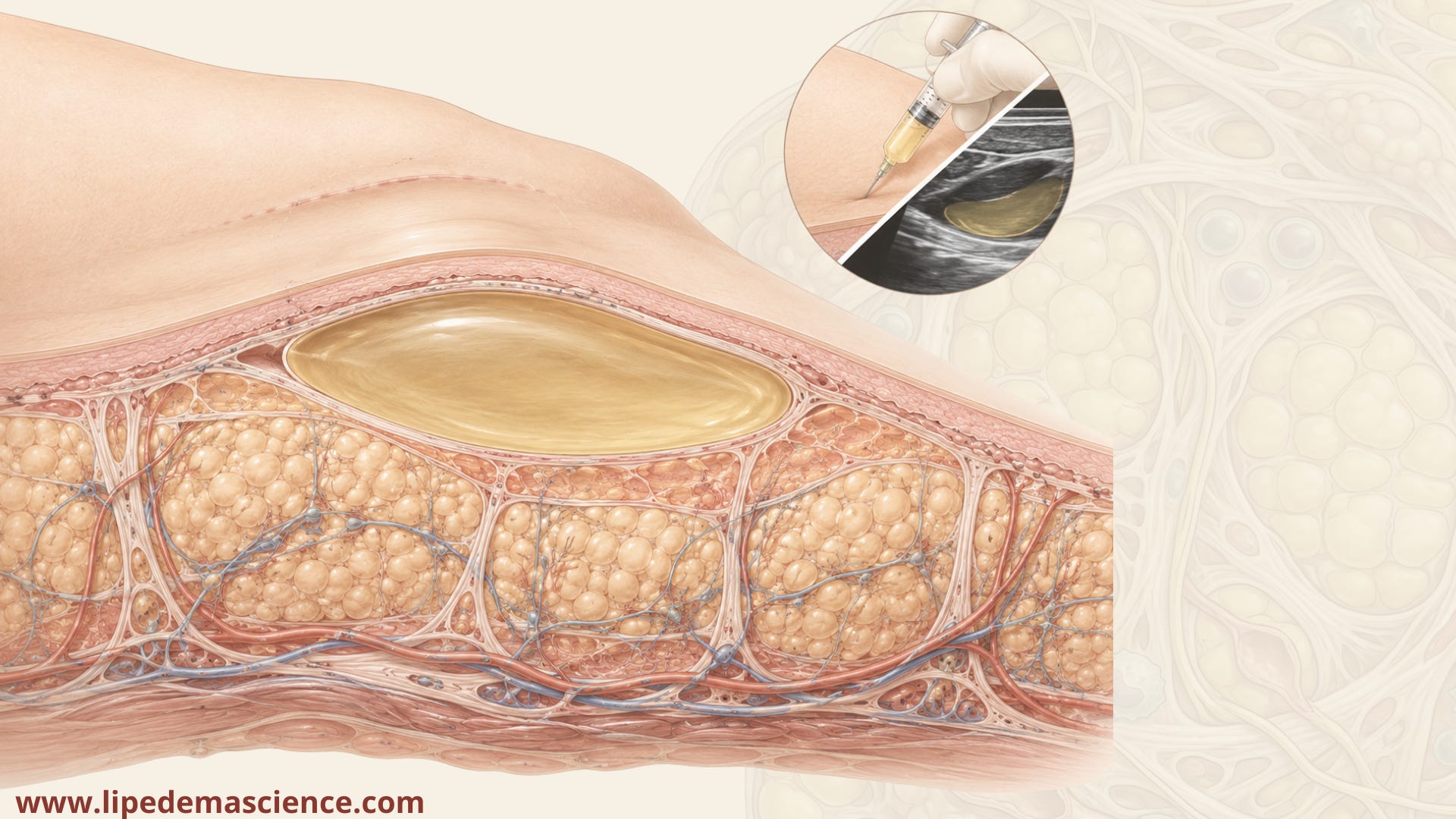
I have previously described it as a large seroma in my thigh, especially connected to the area at the front of my thigh. It gave the tissue an uncomfortable and unfamiliar feeling. Even long afterwards, the thigh could still feel different. These are exactly the kinds of things you do not always fully understand before you experience them yourself. You can read about seroma as a known complication, but it is something else to have it in your own body after an operation you have already spent so much courage, money, hope and energy on.
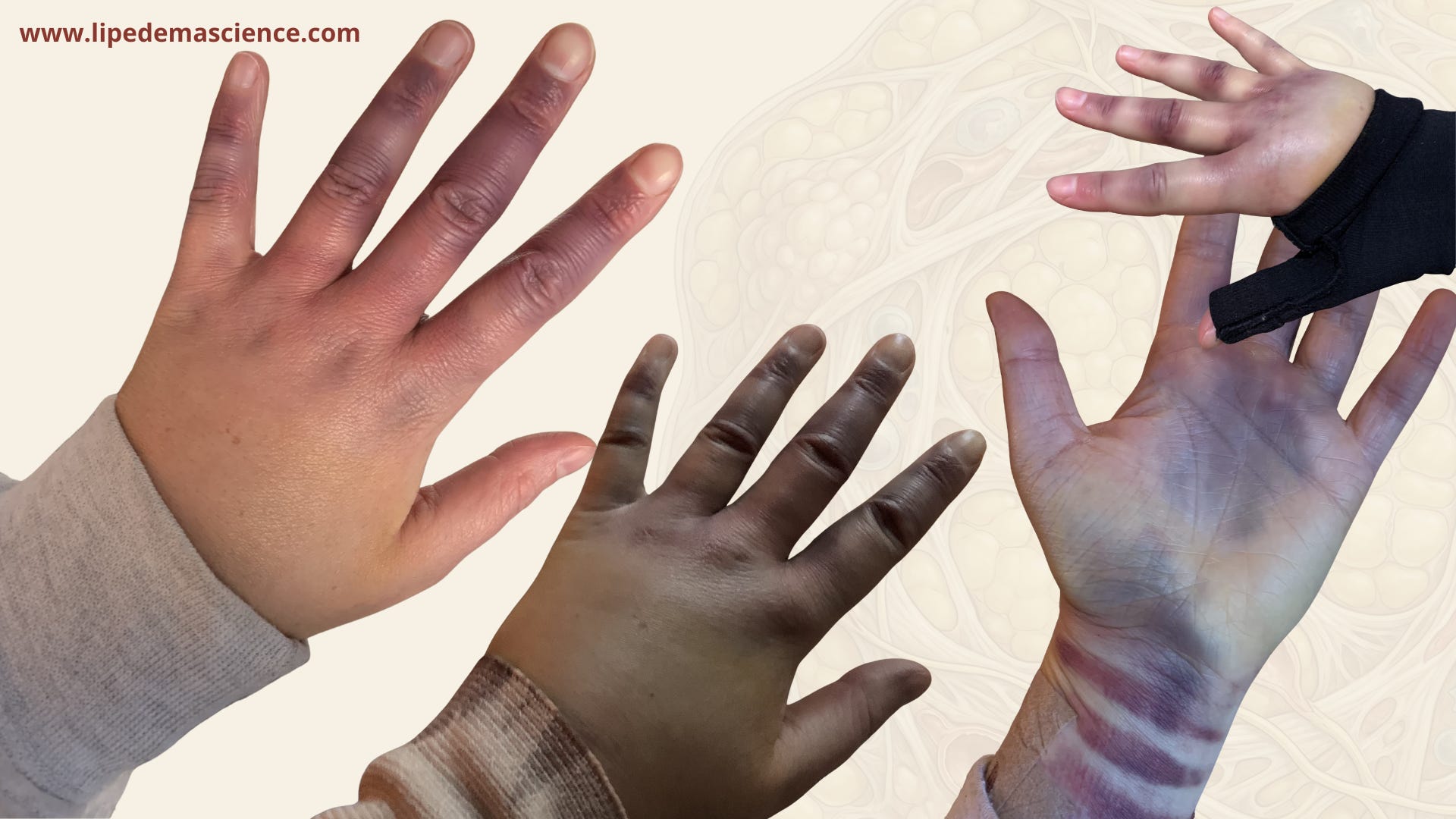
After the last surgery in October 2022, I also developed internal bleeding in both hands. That was a tough complication, and it still stays with me as an important part of my surgery story. My hands were affected in a way I had not expected. When you prepare for lipedema surgery, you naturally think mostly about the areas that are going to be operated on. You think about the legs, the thighs, the arms or the specific fat tissue involved. You may think about pain, swelling, compression, drainage and scars. But the body is a whole, and complications can also happen in ways you did not imagine.
For me, the internal bleeding in my hands was a reminder that even though lipedema surgery can be life changing, it is not risk free. I have also experienced some altered sensation and nerve damage or nerve irritation afterwards, including in the palms of my hands. These symptoms are minor compared with the pain I lived with before surgery, but they are still real. They are part of my body now. They are part of the price I paid to get better.
This is perhaps the most difficult part of speaking about lipedema surgery in a nuanced way. On one hand, I am incredibly grateful for the result. The surgeries have given me a life with far less pain, less swelling and much more freedom. I can walk around Lisbon for days without the constant lactic acid feeling in my legs. I can move in a way that would have cost me much more before. I can live more normally. That means an enormous amount.
On the other hand, I will never present surgery as a simple cure. Surgery does not cure lipedema. It does not necessarily remove all lipedema affected fat tissue, and it does not remove the underlying biological predisposition that makes the body develop lipedema. It can reduce volume, pressure, pain and functional limitations. For many, it can lead to a dramatic improvement. But that is not the same as the disease being gone, or the body never again being vulnerable to hormonal, metabolic, inflammatory or lymphatic triggers.
I think it is important that we are able to hold two thoughts at the same time. Lipedema surgery can be one of the most effective things some patients can do to reduce symptoms. At the same time, surgery can be demanding, expensive, physically exhausting and associated with complications. Both can be true at the same time. For me, surgery was completely worth it. I would choose it again. But I would never tell anyone that it was easy.
When I talk about the seroma and the internal bleeding, it is not to scare other women away from surgery. It is because I believe we need more honest conversations about what lipedema surgery actually involves. Many of us come to surgery after years of pain, disbelief, failed dieting, lack of help and the feeling of not being taken seriously. In that context, it is understandable that surgery can seem like the rescue. For some, it is also exactly what gives life back. But even when the result is good, the road there can be brutal.
My recovery was not a polished before and after story. It was long, painful and physically demanding. I travelled and lived my life along the way, but my body was working hard. I had complications. I had fluid accumulation. I had bleeding. I had strange sensations in the tissue. I had nerve involvement. I had to accept that healing is not linear, and that the body does not always follow the timeline you hope for.
If this article resonates with you, consider becoming a free or paid subscriber to LipedemaScience. The free subscription lets you follow the work, while membership supports the time it takes to read the studies, connect the science and write about lipedema with nuance. Your support helps make space for a more serious and compassionate conversation about this disease.
At the same time, it is precisely because I have experienced both the benefit and the complications that I feel so strongly about speaking about lipedema surgery in a more knowledge based way. We do not need to glorify surgery in order to acknowledge that it can help. We also do not need to reject surgery because it can cause complications. What we need is more precise information, better follow up, better research, better patient selection and more realistic expectations.
For me, this is not about being for or against surgery. It is about being honest. Today, I live in a body that functions much better than it did before surgery. The pain that once controlled large parts of my everyday life has been greatly reduced. I have regained freedom of movement, and I have regained a kind of trust in my body. But I also live with the experience that the road there involved major procedures, complications and residual damage.
That is why I always say that surgery helped me enormously, but that it did not cure my lipedema. It reduced a large part of the disease burden. It removed much of the pressure. It made my life bigger. But my body still has a lipedema history, and I still need to understand the body I live in. For me, saying that is not a defeat. It is simply the truth.
I think many people need to hear exactly this. Not a romanticised story about surgery as a miracle cure, and not a fear based story about surgery being dangerous. But a real story from a real body. My experience is that lipedema surgery can change your life, but it can also require much more from you than you expect. I am grateful for the result. I am also honest about the complications. Both are part of my story.
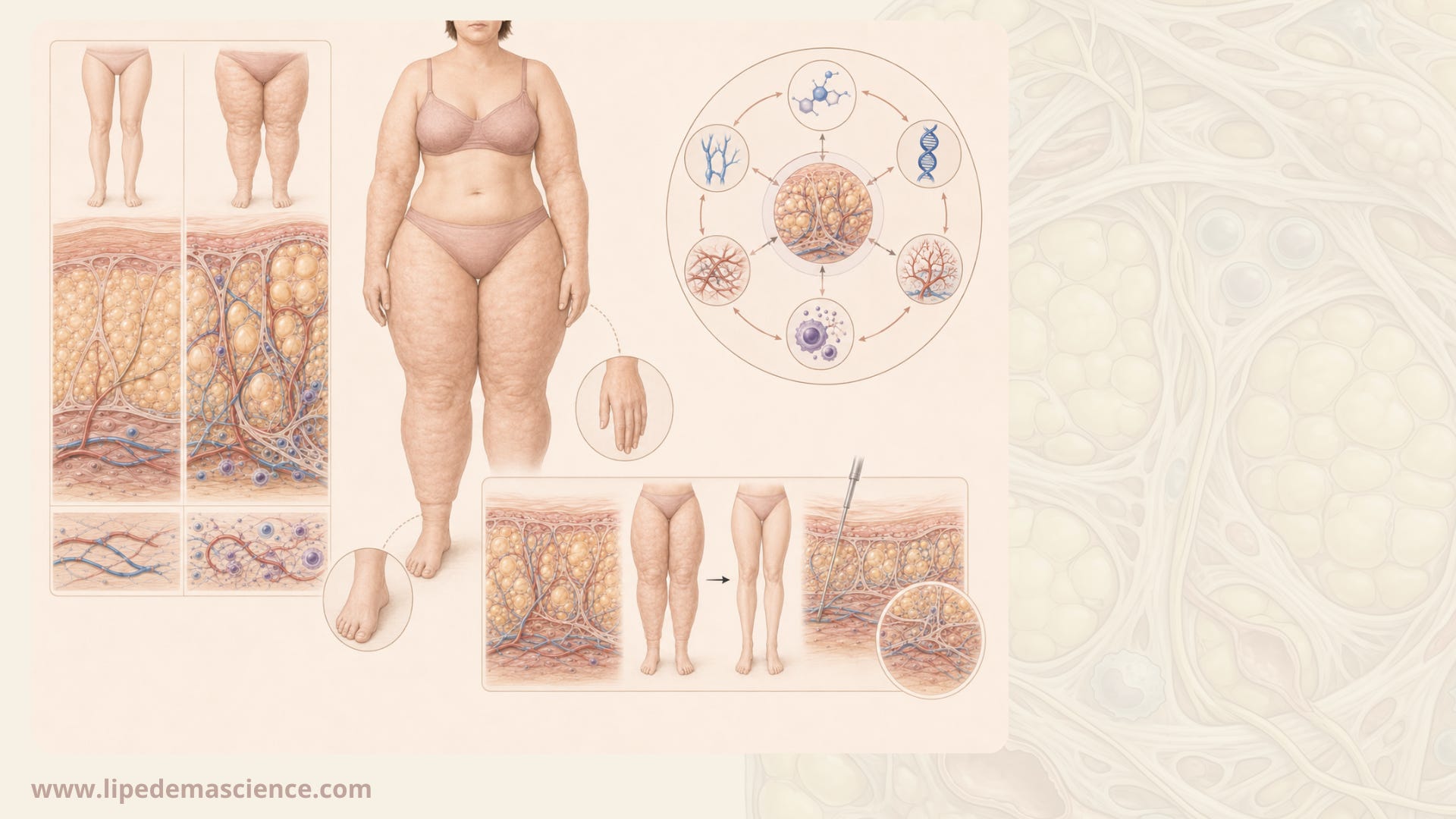
Lipedema is not simply ordinary fat that sits in the wrong place, and it is not the same as obesity. It is a chronic connective and adipose tissue disorder, most often affecting women, where the fat tissue develops in a disproportionate and painful pattern, usually on the legs, hips, buttocks and sometimes the arms, while the hands and feet are often spared. The tissue can be tender, heavy, swollen, easy to bruise and resistant to ordinary weight loss. Many patients describe a deep aching, pressure sensitivity, burning, heaviness or a feeling of lactic acid in the limbs. Research increasingly suggests that lipedema tissue is biologically different from ordinary adipose tissue, involving changes in fat cell size, microcirculation, lymphatic function, immune activity, extracellular matrix remodelling, fibrosis and pain signalling. This is why lipedema cannot be reduced to a question of body weight or discipline.
The exact cause of lipedema is still not known, but the disease appears to involve a combination of genetic susceptibility, hormonal influence, vascular and lymphatic dysfunction, inflammation, fibrosis and altered adipose tissue biology. It often begins or worsens during hormonal transitions such as puberty, pregnancy, perimenopause or menopause, which is one reason hormonal signalling is considered an important part of the picture. Liposuction can remove a significant amount of affected fat tissue and may reduce pain, pressure, swelling and mobility problems for many patients, but it does not remove the underlying biological tendency that allowed the disease to develop in the first place. That is why surgery can be life changing without being a cure. It can reduce the burden of the disease, but the body still needs to be understood and cared for as a body with a lipedema history.
LipedemaScience exists for readers who want the real story: the personal experience, the biology, the uncertainty and the emerging research. You can subscribe for free to stay connected, or become a member if you want full access to the longer science essays. Either way, your presence helps build a place where lipedema is taken seriously.


Safety and Effectiveness of Liposuction Modalities in Managing Lipedema: Systematic Review and Meta-analysis (DOI: 10.1055/a-2334-9260)
Comparing the safety and effectiveness of different liposuction techniques for lipedema (DOI: 10.1016/j.bjps.2024.07.038)
Effects of diet-induced weight loss on adipose tissue biology, body composition and metabolic health in women with obesity and lipedema, Obese-LIP (DOI: 10.2337/db24-0890)
Adipose tissue hypertrophy, an aberrant biochemical profile and distinct gene expression in lipedema (DOI: 10.1016/j.jss.2020.03.055)
Improvements in patients with lipedema 4, 8 and 12 years after liposuction (DOI: 10.1177/0268355520949775)
Long-term benefit of liposuction in patients with lipoedema: follow-up after an average of 4 and 8 years (DOI: 10.1111/bjd.14289)
Standardized Treatment Protocol for Water-Jet-Assisted Liposuction in Lipedema (DOI: 10.1016/j.bjps.2020.04.030)
Liposuction reduces the severity of symptoms and the need for conservative treatment in lipedema patients (DOI: 10.1097/PRS.0000000000008885)
A retrospective comparative study of patient-reported outcome measures pre- and 12 months post tumescent liposuction for lower-limb lipoedema (DOI: 10.1016/j.jpra.2024.05.007)
Liposuction in the Treatment of Lipedema: A Longitudinal Study (DOI: 10.5999/aps.2017.44.4.324)
Outcomes of liposuction techniques for management of lipedema: a case series and narrative review (DOI: 10.21037/atm-24-165)
Lipedema: What we don’t know (DOI: 10.1016/j.bjps.2023.05.056)
Lipedema and adipose tissue: current understanding, controversies, and future directions (DOI: 10.3389/fcell.2025.1691161)
Current Mechanistic Understandings of Lymphedema and Lipedema: Tales of Fluid, Fat, and Fibrosis (DOI: 10.3390/ijms23126621)
Thanks for this analysis. I'm talking with a surgeon this week. I'm just hoping for improvement in symptoms and preserving/improving mobility. This article aligns with my expectations, since I've had major invasive surgeries in the past for other things not related to lipedema, and it was so, so hard and took two years to feel like I had healed completely. Healing on the cellular level takes a long time and needs to be supported carefully. Surgery is never a one-and-done situation; there are always complications and long-term consequences.
I so appreciate your honesty in giving the truth of surgery risks and balancing the costs of the procedure with the benefits. Patients should always have an understanding of what the risks, benefits and recovery could look like.