

Not all calories are used the same way. Many women with lipedema experience this daily — you can eat healthy, move regularly, and still your body seems to hold on to fat in your legs and hips. This isn’t a sign of weakness; it’s biology.
New research shows that fat tissue in lipedema has a unique metabolism influenced by hormones, inflammation, and genetics. The body stores and releases energy in a way that differs from those without lipedema — and this is key to understanding why the traditional advice to “eat less and move more” often fails.
Fat tissue is not just storage — it’s an active organ
Today we know that fat tissue is not simply a passive energy store. It’s a hormonally and immunologically active organ that communicates with the entire body. It produces hormones like leptin and adiponectin, influences insulin, and responds to estrogen and progesterone signals.
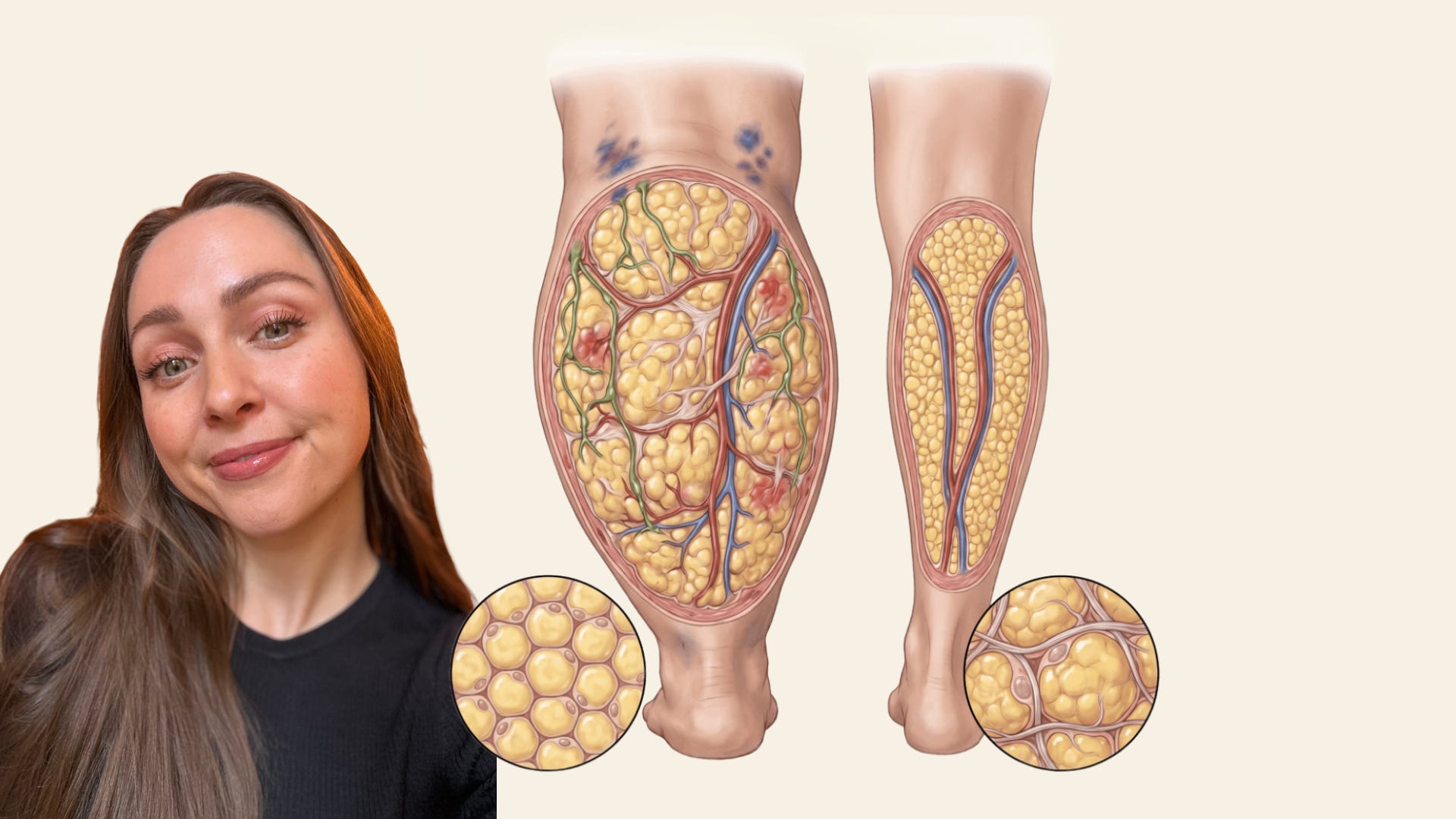
In lipedema, fat cells are enlarged and surrounded by inflammatory markers. Studies show that this tissue has more fluid, weaker microcirculation, and higher sensitivity to female sex hormones. This combination leads to reduced fat burning, increased fat storage, and a metabolism that doesn’t follow “normal” rules.
