

There is a particular kind of exhaustion that comes from being told, over and over again, that your tissue is simply fat. That the heaviness in your legs is a lifestyle problem. That the pain, the bruising, the nodules pressing beneath your skin, the relentless resistance to all the things that are supposed to work, that all of it can be explained by ordinary fat biology. Many of us with lipedema have spent years in that space, caught between what our bodies are clearly telling us and what the medical system has been willing to acknowledge. What we have needed, and what research has been slowly, sometimes frustratingly slowly, beginning to provide, is a more serious biological account of what is actually happening in this tissue.
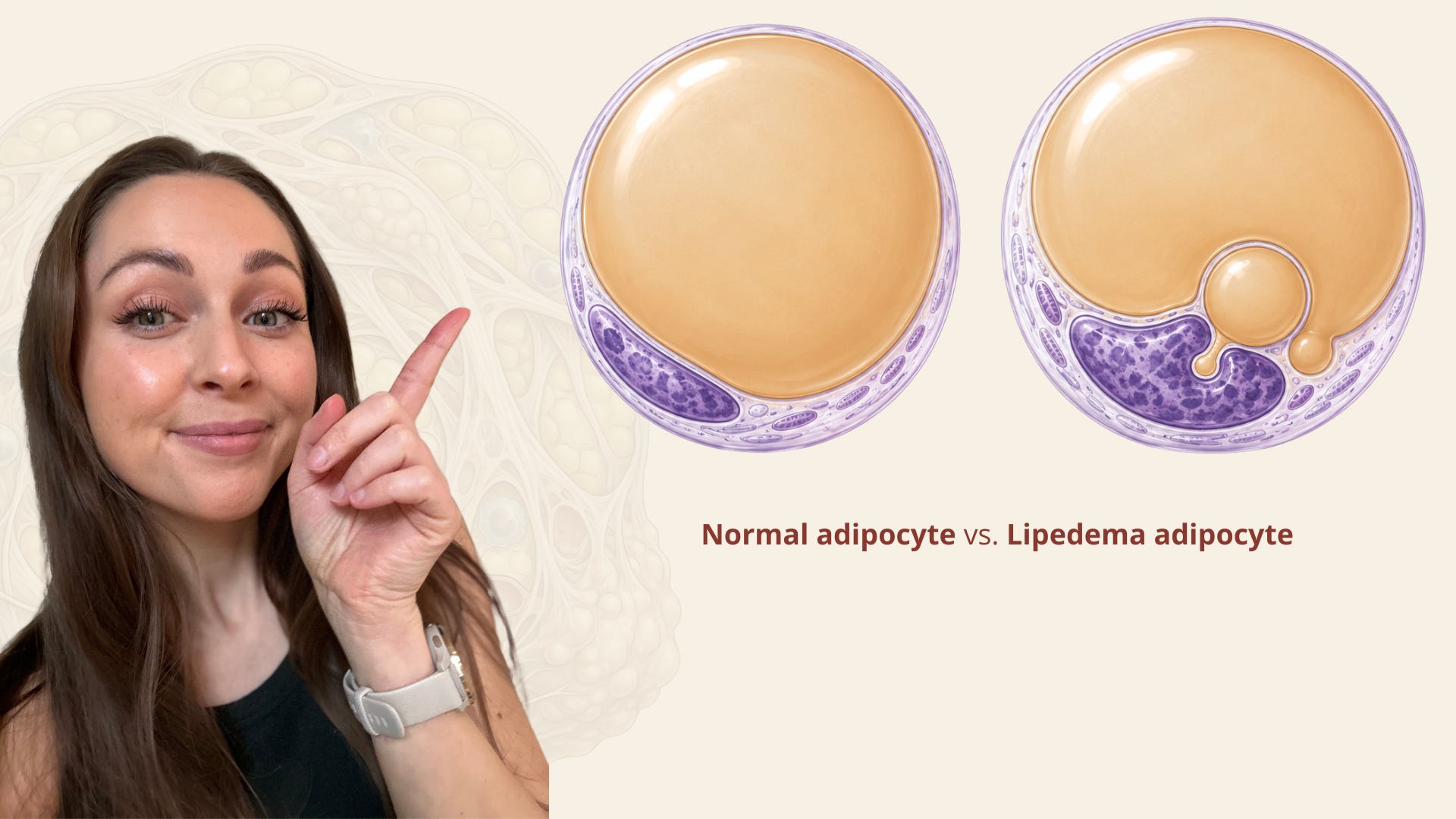
A study published just a few weeks ago gives us something I did not expect to find in 2026: a completely new way of looking at lipedema, quite literally. Not at the whole tissue, not at inflammatory markers in the blood, not at lymphatic architecture or connective tissue changes, but at something much smaller and, in some ways, much more fundamental. The researchers looked inside the fat cells themselves. And what they found there, under very high magnification, is something that raises questions about lipedema biology that I do not think anyone has properly asked before.
