

One of the most important things I have learned from living with lipedema for almost 15 years is that my triggers are not always my triggers.
That probably sounds contradictory. Refined sugar, for example, is something I identified as a personal trigger very early, around the time I was diagnosed in 2012. I noticed that there were occasions when eating a lot of refined sugar seemed to be followed by more pain and sensitivity in my tissue. I did not learn this from a lipedema community, because I did not have one at the time. It was simply something I noticed by paying attention to my own body.
Yet even something I consider a relatively consistent trigger does not affect me identically every time. There are periods when my body seems more sensitive and I notice relatively small deviations from my usual habits. There are other periods when I am sleeping well, eating well, exercising, feeling happy and experiencing little psychological stress, and I seem able to tolerate considerably more without noticing the same increase in symptoms.
For years I thought about this mainly as a personal observation. Now, with what we know about stress physiology, pain, immunology and neuroendocrinology, I think there is a much more interesting way of looking at it. Perhaps we should stop thinking about our bodies as static systems in which one input reliably produces one output.
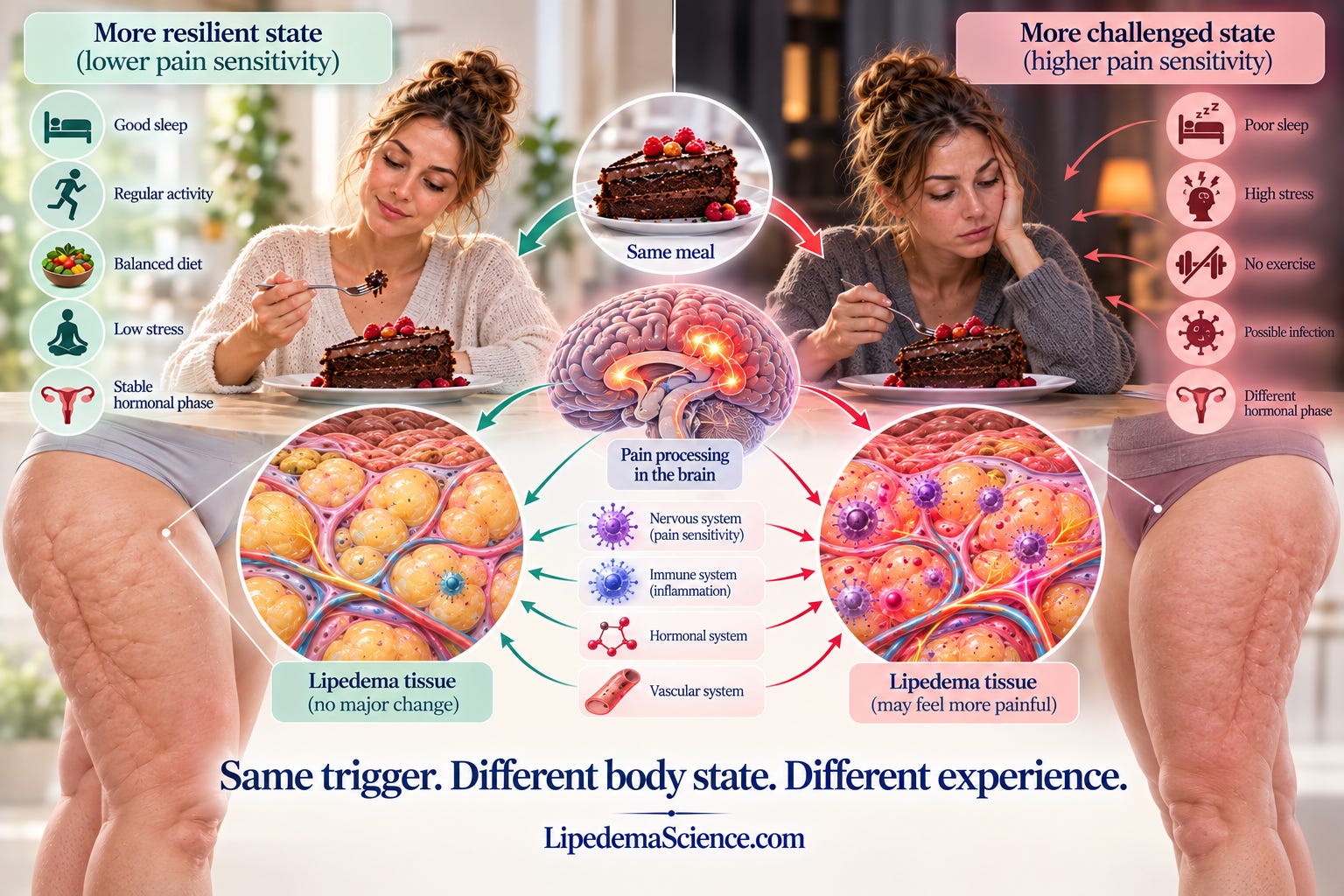
The chocolate cake is approximately the same chocolate cake. The body eating it is not necessarily in the same physiological state.
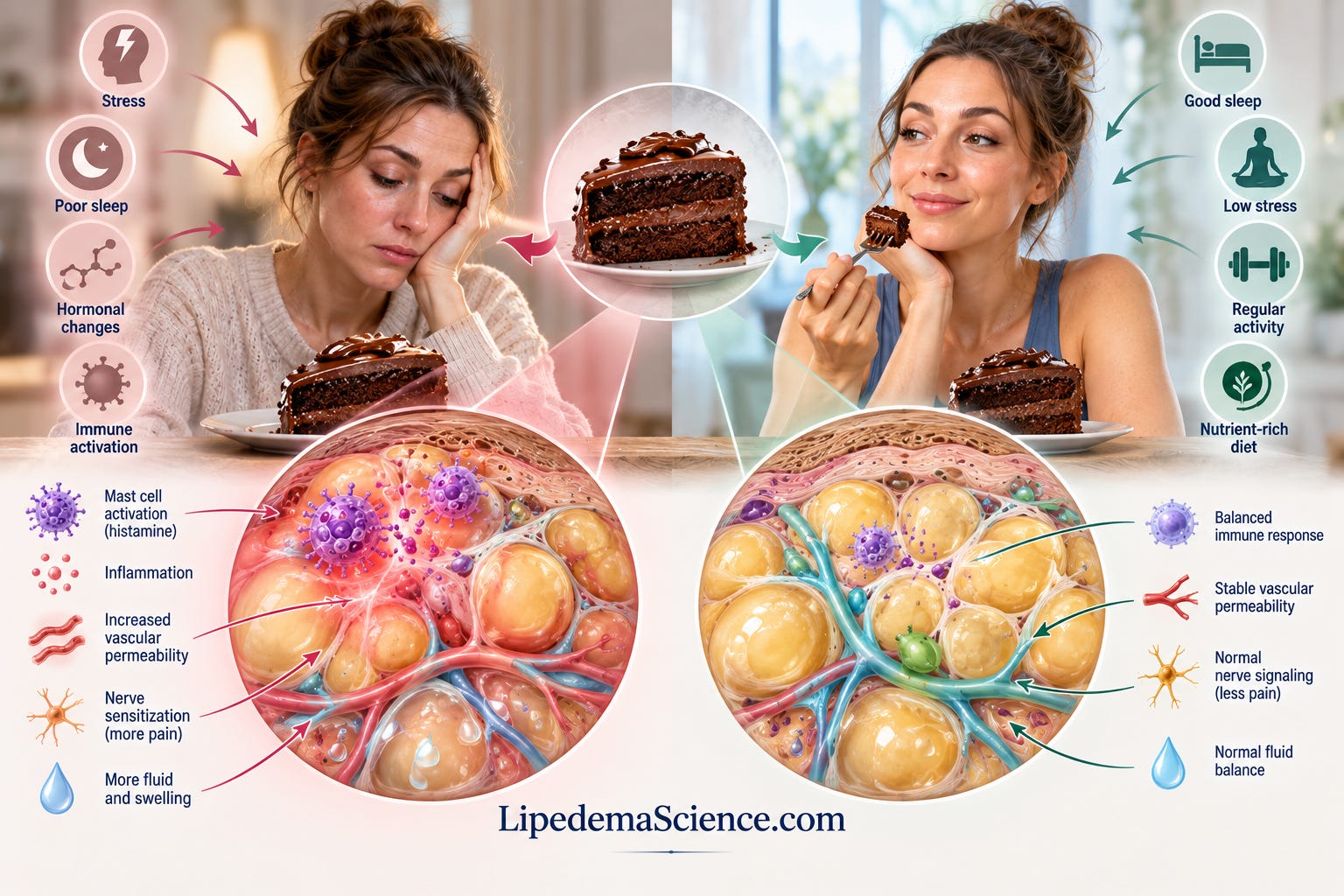
This distinction matters when we talk about lipedema triggers because people with lipedema are exposed to an enormous number of claims about what causes inflammation. Sugar causes inflammation. Carbohydrates cause inflammation. Stress causes inflammation. Estrogen causes inflammation. A certain food causes swelling. Another food causes pain. Sometimes these claims are based on research, sometimes they are extrapolated far beyond the research, and sometimes they are based almost entirely on personal experience.
I think there is another possibility worth discussing. A trigger may not operate independently of everything else happening in the body. Its effect may depend partly on the physiological environment into which it arrives.
We can see this dynamic biology in other conditions
This idea becomes easier to understand when we temporarily leave lipedema behind.
Consider herpes simplex. After someone becomes infected with herpes simplex virus, the virus can remain latent in sensory neurons. During the months or years when that person has no outbreak, the virus has not disappeared. The underlying susceptibility remains, but its clinical expression changes.
Psychological stress has been studied as one factor associated with herpes recurrence. A meta-analysis of prospective studies found a statistically significant, although relatively small, association between psychosocial stress and subsequent symptomatic HSV recurrence. Importantly, the authors also found that psychological distress appeared more strongly associated with recurrence than exposure to stressful events themselves.
This does not make herpes a psychological disease. Stress does not create HSV, and relaxation does not eliminate a latent viral infection. What it illustrates is that an existing biological vulnerability can behave differently depending on the environment in which it exists.
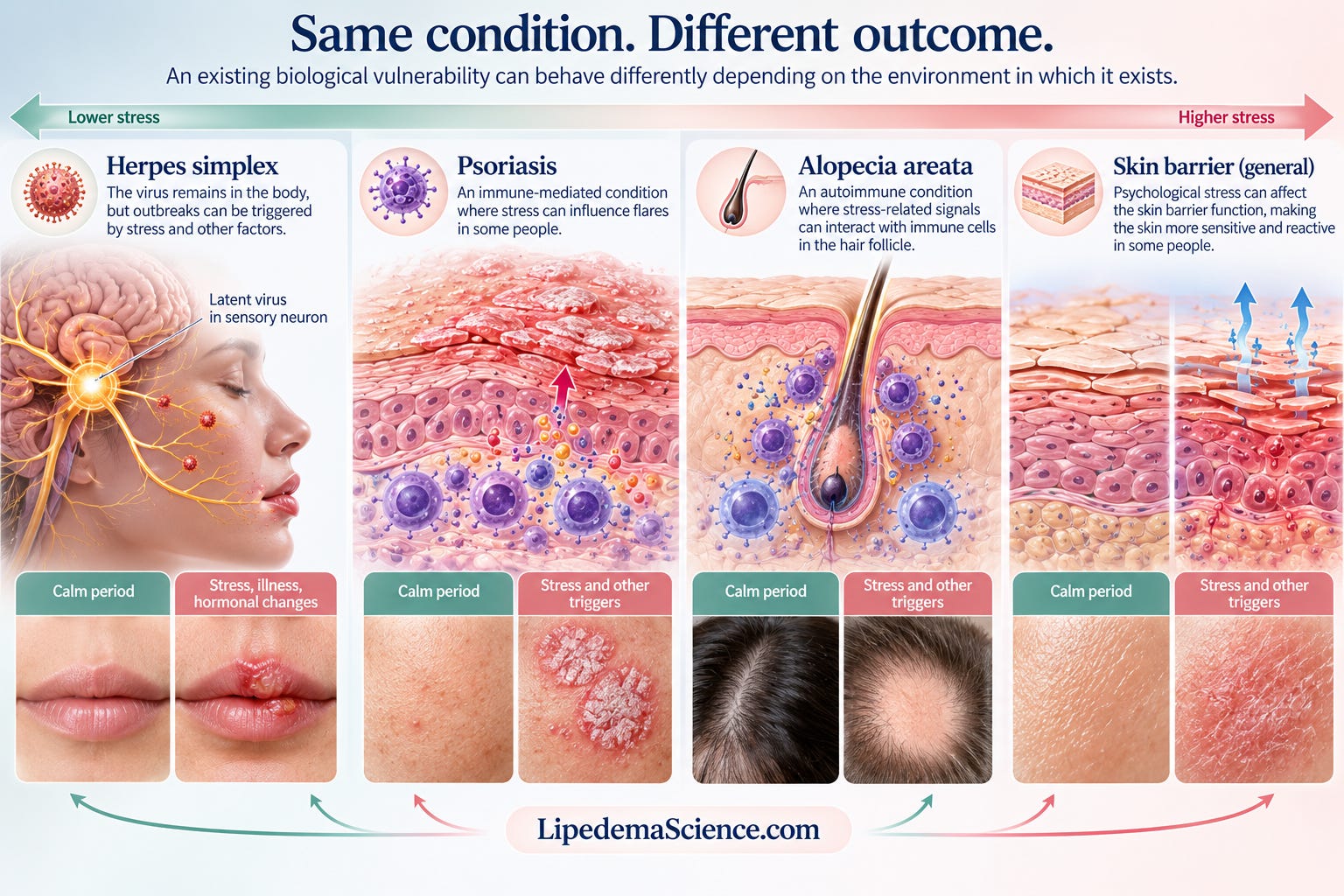
Psoriasis gives us another, more complicated example. It is an immune-mediated disease involving genetic susceptibility and dysregulated immune signaling. People with psoriasis commonly report stress as relevant to their disease, but the research is less definitive than this is sometimes presented. A systematic review and meta-analysis including 39 studies and more than 32,000 patients found that many people reported preceding stressful events, but much of the evidence was retrospective and methodologically limited. The authors concluded that convincing evidence for a strong relationship between preceding stress and psoriasis onset or exacerbation was lacking.
I actually think this uncertainty makes psoriasis a more useful comparison, not a less useful one. Biology does not require us to choose between “stress causes psoriasis” and “stress has absolutely nothing to do with psoriasis.” A disease can have a clearly biological pathology while its expression may still interact with sleep, stress physiology, immune regulation, treatment, infection and many other factors.
Alopecia areata provides another example of this type of interaction. It is an autoimmune disease involving disruption of the immune privilege of the hair follicle. Researchers have investigated how stress-associated mediators, including corticotropin-releasing hormone and substance P, might interact with immune and follicular biology. That does not establish emotional stress as the cause of alopecia areata, but it illustrates how closely the nervous, endocrine and immune systems can communicate.
The skin itself provides particularly interesting evidence. An evidence-based review of 21 studies found that psychological stress can affect epidermal barrier function through HPA-axis activation and local and systemic stress-hormone signaling, with changes including reduced epidermal lipid production, lower stratum-corneum hydration and increased transepidermal water loss. An earlier human experiment followed students through periods of lower stress and final examinations and found that worsening perceived stress occurred alongside impaired recovery of the skin permeability barrier. When stress subsequently declined, barrier recovery improved again.
These examples involve very different biological processes. Herpes is not psoriasis. Psoriasis is not alopecia. Alopecia is not lipedema. We should therefore not borrow mechanisms from one disease and pretend they have been demonstrated in another.
What they do show is something more fundamental: disease expression takes place inside a changing biological system.


Your body is constantly adapting
One useful scientific concept for understanding this is allostasis.
Homeostasis is often described as the body’s tendency to maintain internal stability. Allostasis expands that idea by recognizing that maintaining stability often requires change. Heart rate changes when we exercise. Cortisol follows a daily rhythm and responds to challenges. Immune activity changes when we encounter an infection. Energy metabolism changes depending on whether we have eaten, fasted, exercised or slept.
The body survives precisely because it is able to adapt.
The neuroscientist Bruce McEwen described allostasis as “stability through change.” He also developed the concept of allostatic load, the physiological burden that can arise when adaptive systems are activated repeatedly, fail to switch off efficiently, or become poorly coordinated over time. These adaptive systems involve the nervous, endocrine and immune systems rather than one isolated “stress pathway.”
I find this framework much more useful than the language of being either “inflamed” or “not inflamed.”
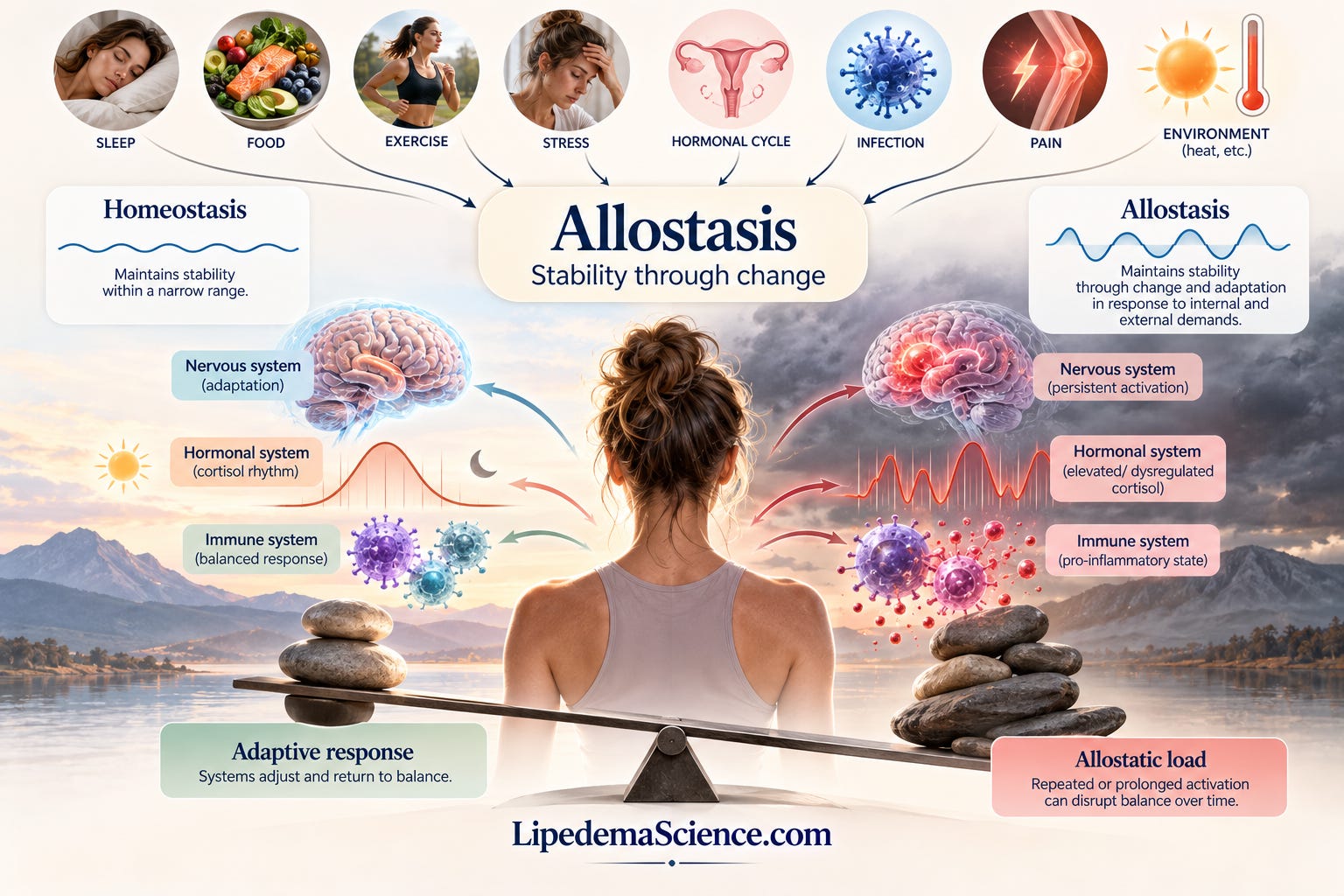
At any particular moment, your physiology reflects what has been happening before that moment. How did you sleep last night? What phase of your menstrual cycle are you in? Have you recently been ill? Are you recovering from hard exercise? Have you eaten enough? Are you under sustained psychological pressure? Are you experiencing pain? Has that pain been present for years?
None of these questions gives us a single measurement of “inflammation.” Together, however, they illustrate why the physiological background against which we experience a potential lipedema trigger is continuously changing.
Why the same lipedema trigger may feel different
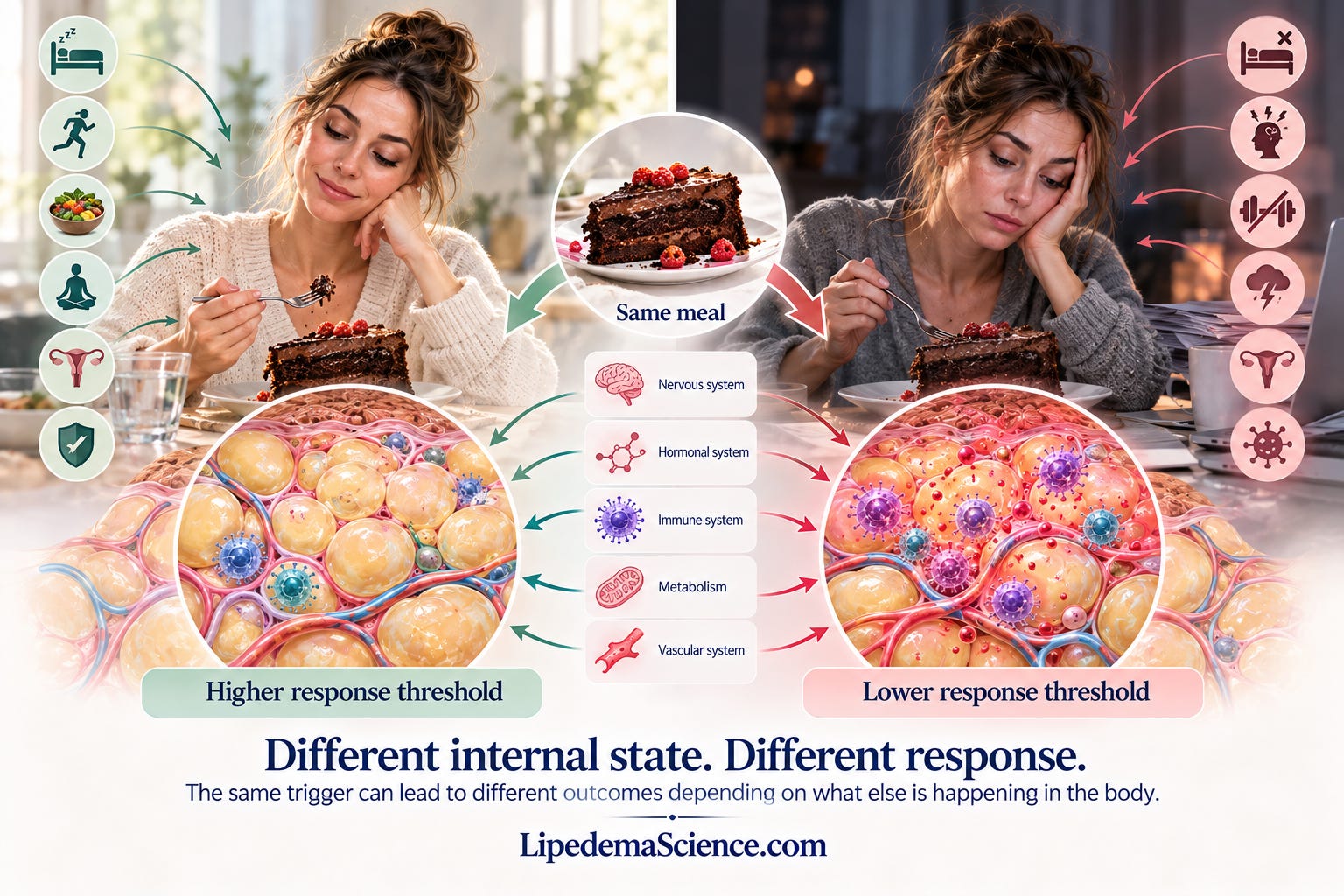
Imagine the same woman during two different weeks.
During the first, she has been sleeping well, moving regularly, eating normally and feeling psychologically well. Her life is relatively calm and her body is recovering adequately between periods of activity.
Several weeks later, she has slept badly for five nights. Work is unusually stressful. She is worried about something in her personal life. Her normal exercise routine has disappeared because she is exhausted. She happens to be in a different hormonal phase and may also be fighting a minor infection without realizing it.
On Saturday evening during both periods, she eats the same meal she personally associates with increased lipedema symptoms.
It is tempting to think of the meal as the experiment and everything else as background noise. Physiologically, everything else may be part of the experiment.
This is where I think the idea of a response threshold becomes more useful than thinking about triggers as switches. The nervous system, HPA axis, endocrine system, immune system, metabolism and pain-processing systems are continuously interacting. A stimulus arriving when several of these systems are already being challenged may not necessarily be experienced in the same way as that stimulus arriving during a period of recovery and relative stability.
That does not mean that we can say someone has accumulated a “cytokine overload” until a piece of cake pushes them over an inflammatory threshold. Cytines do not behave like water filling a bucket. Inflammation is an extraordinarily complicated network involving immune cells, cytokines, chemokines, vascular signaling, lipid mediators, endocrine signaling and neural regulation. Different inflammatory conditions also involve different pathways. The IL-17-dominated biology relevant to psoriasis cannot simply be transferred to lipedema, just as antiviral immune surveillance in herpes cannot be treated as equivalent to inflammation in adipose tissue.
This distinction is particularly important because the inflammatory phenotype of lipedema itself remains incompletely characterized. We do not currently have evidence demonstrating that stress creates a particular inflammatory state in lipedema tissue that subsequently makes sugar, salt or another proposed trigger more inflammatory.
The threshold model is therefore a framework for thinking, not an established lipedema mechanism.
Sometimes what changes may be pain, not inflammation
There is another possibility that I think is particularly important for lipedema.
When my tissue becomes more painful after a stressful period, my intuitive interpretation may be that my lipedema has become more inflamed. But pain cannot tell me how much inflammation is present in my adipose tissue.
Pain is also influenced by the nervous system, and pain sensitivity itself is dynamic. Sleep deprivation, psychological stress, previous pain and central sensitization can influence how sensory information is processed. The same peripheral stimulus does not necessarily produce the same subjective experience under every physiological condition.
This has become especially interesting because new lipedema research published in 2026 has begun examining central sensitization directly. A cross-sectional study published this summer compared women with lipedema with healthy controls and investigated central sensitization, pressure-pain thresholds and psychosocial variables. A second case-control study published in Pain Medicine in September 2026 similarly examined central sensitization alongside pain, sleep and quality of life in women with lipedema.
These studies do not show that the nervous system causes lipedema, nor do they establish the direction of the relationship. Years of painful peripheral input could potentially influence central pain processing, altered processing could contribute to symptom severity, or several processes could coexist.
But they make one point increasingly difficult to ignore: variation in lipedema pain does not necessarily mean that the adipose tissue itself has undergone an equivalent change in inflammation.
That is important when interpreting our own triggers. If something appears to produce more pain during a difficult month than during a good month, several things could have changed. Inflammation is one possibility. Pain sensitivity is another. Sleep, hormonal state, physical activity and psychological stress may be interacting with both.
The body works through feedback loops, not isolated pathways
The more I learn about physiology, the less useful I find the traditional separation between the “physical” and the “mental.”
This does not mean that disease is created by our thoughts. It means that thoughts, emotions and psychological experiences occur within a biological organism.
A stressful experience can activate the sympathetic nervous system and HPA axis. Hormones released through those systems can interact with immune cells. Immune mediators can signal back toward the brain. Pain can disturb sleep. Poor sleep can increase pain sensitivity. Persistent symptoms can create psychological stress, which can then alter sleep and behavior further.
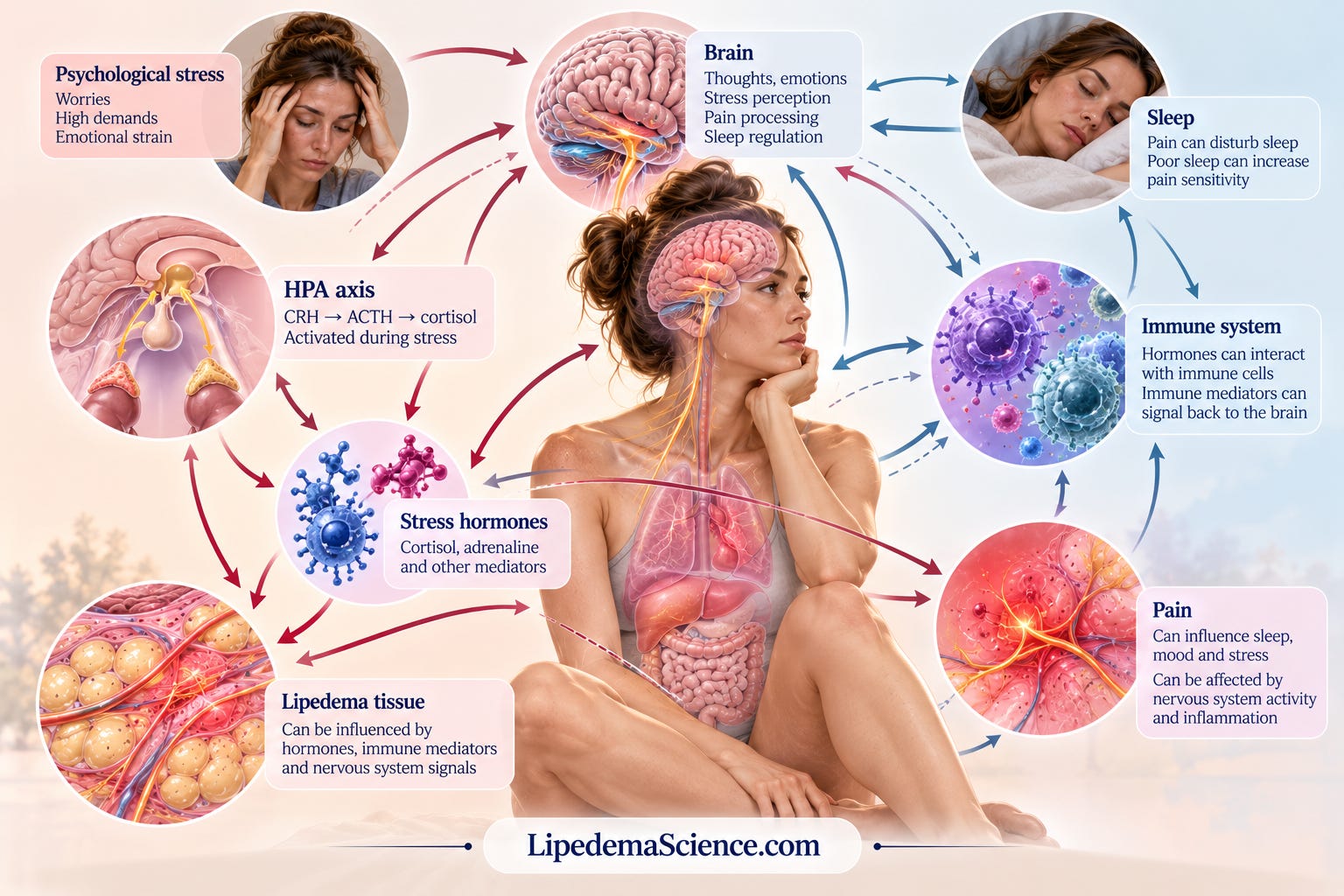
The direction is therefore rarely simply brain to body or body to brain. It is reciprocal.
This is why chronic disease can create feedback loops. Someone with psoriasis may become psychologically distressed because their skin disease is worsening, while stress-related physiology may simultaneously interact with processes relevant to their skin. Someone experiencing recurrent herpes may become anxious about another outbreak, while stress itself is associated with recurrence. Chronic pain can interfere with sleep, and insufficient sleep can subsequently increase pain sensitivity.
None of this means the original disease was caused by the person’s psychological state.
And this distinction matters enormously to me, because otherwise the conversation about stress and chronic disease can become surprisingly cruel.


This is what holistic means at LipedemaScience
LipedemaScience has an academic approach. When I read a paper, I want to know what was actually measured. I want to know how many participants were included, whether there was a control group, whether the study was observational or experimental, whether researchers measured inflammation or merely asked about symptoms, and whether an association is being quietly transformed into causation.
I also think holistically.
Those positions are not contradictory.
For me, holistic medicine does not mean abandoning biology for intuition or accepting every alternative explanation because it sounds plausible. It means recognizing that lipedema does not exist inside an isolated pair of legs.
Lipedema tissue exists inside a human being with a nervous system, immune system, endocrine system, lymphatic system, cardiovascular system, muscles, gastrointestinal tract and brain. That person sleeps, eats, exercises, menstruates, ages, becomes ill, recovers, experiences relationships, goes through grief and excitement, changes jobs, travels, worries, laughs and adapts continuously to the environment around her.
All of those systems communicate.
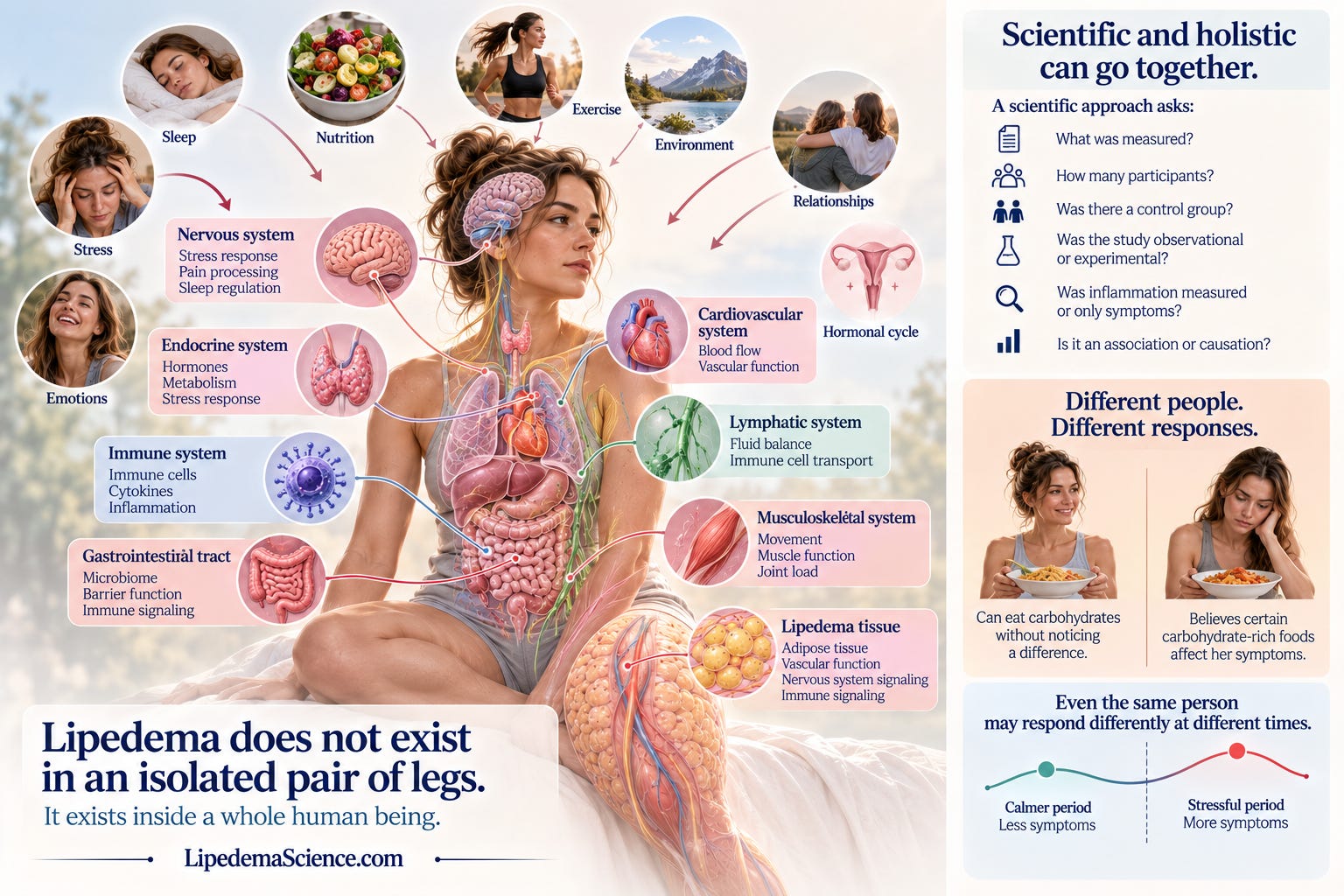
This is also why I am interested when two people with lipedema report completely different experiences rather than assuming that one of them must be wrong. One woman may eat carbohydrates without noticing any difference in her symptoms, while another consistently believes that certain carbohydrate-rich foods affect her. One woman may thrive on high-intensity exercise while another finds that the same type of training temporarily aggravates her symptoms.
Even the same woman may respond differently at different times.
That does not mean every perceived trigger has a biological mechanism. Human beings are exceptionally good at finding patterns, including patterns that are not really there. But personal observations can still generate useful questions. The scientific task is then to investigate whether those observations correspond to measurable biology.
Why this changes how I think about lipedema management
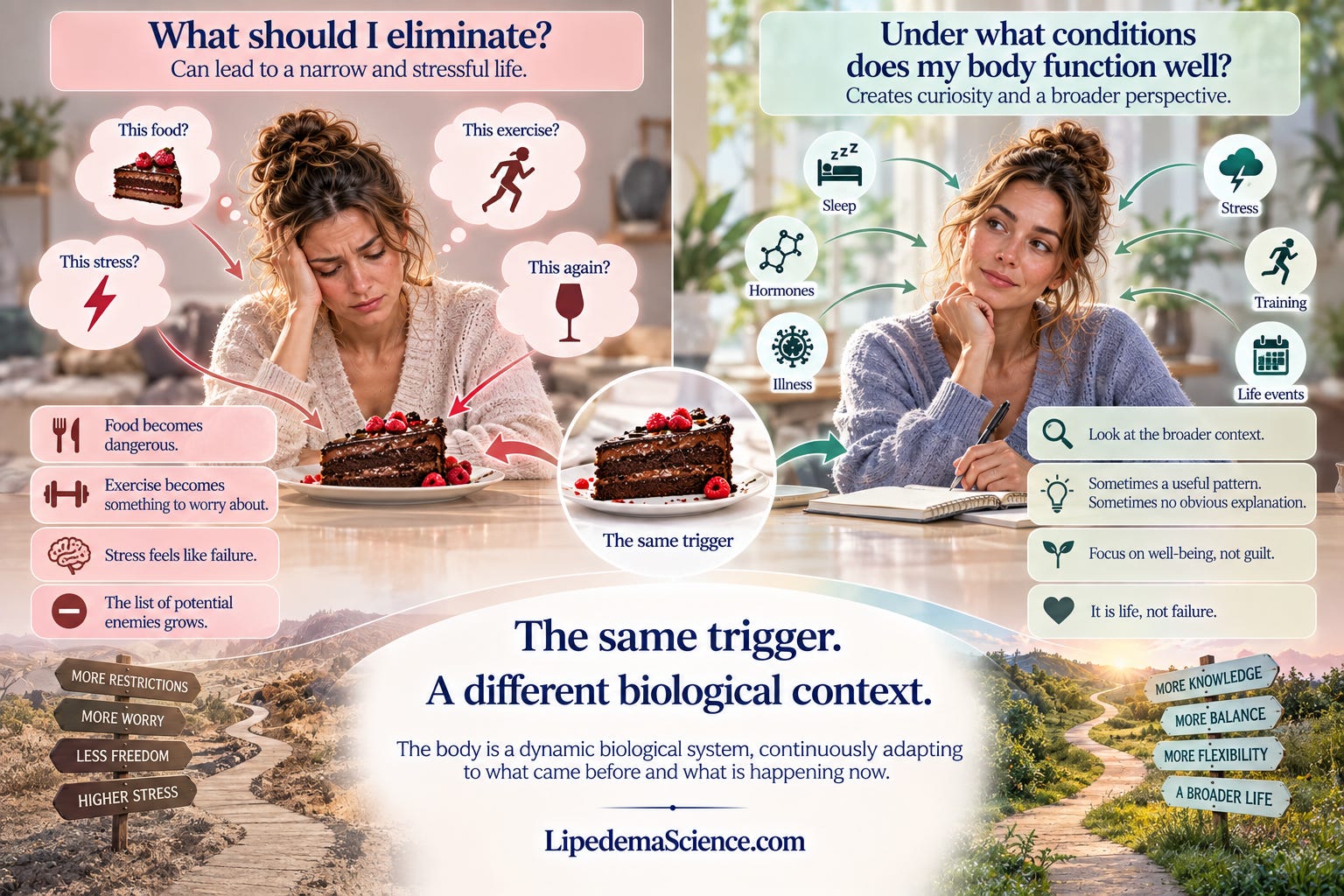
For me, this perspective has gradually changed the question from What should I eliminate? to Under what conditions does my body function well?
Those are very different approaches.
The first can easily lead to an increasingly narrow life. If every episode of pain requires us to identify something we ate, did or failed to do, the list of potential enemies becomes enormous. Food becomes dangerous. Exercise becomes something we worry about doing incorrectly. A stressful week becomes evidence that we have failed to regulate our nervous system.
The second approach creates curiosity.
If my lipedema symptoms increase, I can look at the broader context. Have I been sleeping badly? Has something hormonal changed? Am I unusually stressed? Have I changed my training? Have I recently been ill? Have several things changed simultaneously?
Sometimes I may identify a useful pattern. Sometimes there will be no obvious explanation.
That uncertainty is part of living in a biological system rather than a laboratory.
It is also why I promote well-being over guilt at LipedemaScience. Understanding that stress can affect physiology should never become another instruction telling women with lipedema that they need to be perfectly calm. Nobody chooses every stressor in their life. A psoriasis flare does not mean someone failed to meditate. A herpes outbreak is not evidence of poor nervous-system regulation. Alopecia is not caused by insufficient positive thinking. And an increase in lipedema pain during a difficult period does not mean you have failed to manage your disease.
There will be periods when you exercise less than you wanted. There will be nights when you sleep badly. There will be foods you eat because you enjoy them, even if they are not nutritionally perfect. There will be difficult relationships, demanding jobs, illness, travel, celebrations and periods when simply getting through the week takes priority over optimizing every aspect of your health.
That is life, not failure.
I will therefore never tell you exactly how you have to live with lipedema. My role with LipedemaScience is different. I want to give you enough knowledge to understand the biology, distinguish evidence from speculation and recognize where the science still has enormous gaps. I will share my own experiences as one person who has lived with lipedema for almost 15 years, but I do not expect your body to behave exactly like mine.
Your journey is yours.
What I hope the science gives us is a better way of interpreting that journey. The body is not a machine waiting for one wrong food or one stressful day to break it. It is a dynamic biological system, continuously adapting to what came before and what is happening now.
Perhaps that is one reason our triggers sometimes seem so inconsistent. The trigger may look the same.
The biological context in which it arrives is not.