I want to start by giving a warm welcome to all my new subscribers.
This platform, which now has its own domain, www.lipedemascience.com, is growing rapidly. So to everyone who is new here, I will add some recommended lipedema articles below, so you have a good place to start.
I have now been in Portugal for one and a half weeks, and it is my first time here. And honestly, I love this country. Why have I not been here sooner?
The food is amazing, the people are incredibly friendly, there are so many beautiful places, and even the traffic feels surprisingly calm and easy compared with many other places I have visited. I will also bring you a little bit into my food routines here, because they are slightly different from how I eat when I am in Spain.
I have found so many nice products here, such as water kefir and kombucha without too much sugar, beetroot juice, ginger tea and other products that are usually very expensive in Norway and often only available in health food stores.


I have shared before that I tend to seek nutrition more than I count calories or macros. Coming from a background in human nutrition, with a bachelor’s degree, and food science, with a master’s degree, I almost automatically evaluate what I have in front of me on the table.
For example, I know that eating a lot of nuts, olive oil, cheese and similar foods can add quite a lot of calories. But I also know that these foods contain many beneficial components. So I still include them in my diet. For me, food is not only about calories.


Yesterday, I gave an introduction to cytokines, and this is exactly why I find food so interesting. Food is more than macros. It is even more than micronutrients. It affects our body in so many different ways. The growing lipedema literature is also pointing in this direction. An observational study has reported that women with lipedema who score higher on the Dietary Inflammatory Index, and lower on the Mediterranean diet score, tend to show greater systemic inflammation. It is a cross-sectional finding, so it cannot prove causation, but it adds to a wider body of evidence suggesting that food composition interacts with the inflammatory landscape of this disease.

If you follow along here, I will help you grow your knowledge about food from a science perspective, but also from the perspective of someone who manages lipedema every single day.
We will talk about bioactive compounds, antinutrients, redox reactions and why antioxidants matter, polyphenols, microorganisms and gut health, leaky gut, meal composition, ultra-processed food, food processing in general, food additives, mycotoxins, pesticides and microplastics in food.
Yes, all of this is part of food science.
Human nutrition is a different scientific field, where the focus is often more on lifestyle diseases, dietary patterns, macronutrients and micronutrients. I love having the combination of both backgrounds. But what I find especially interesting is that these two research fields do not always talk to each other. They often live in their own little microcosmos.
And that is often how science works.
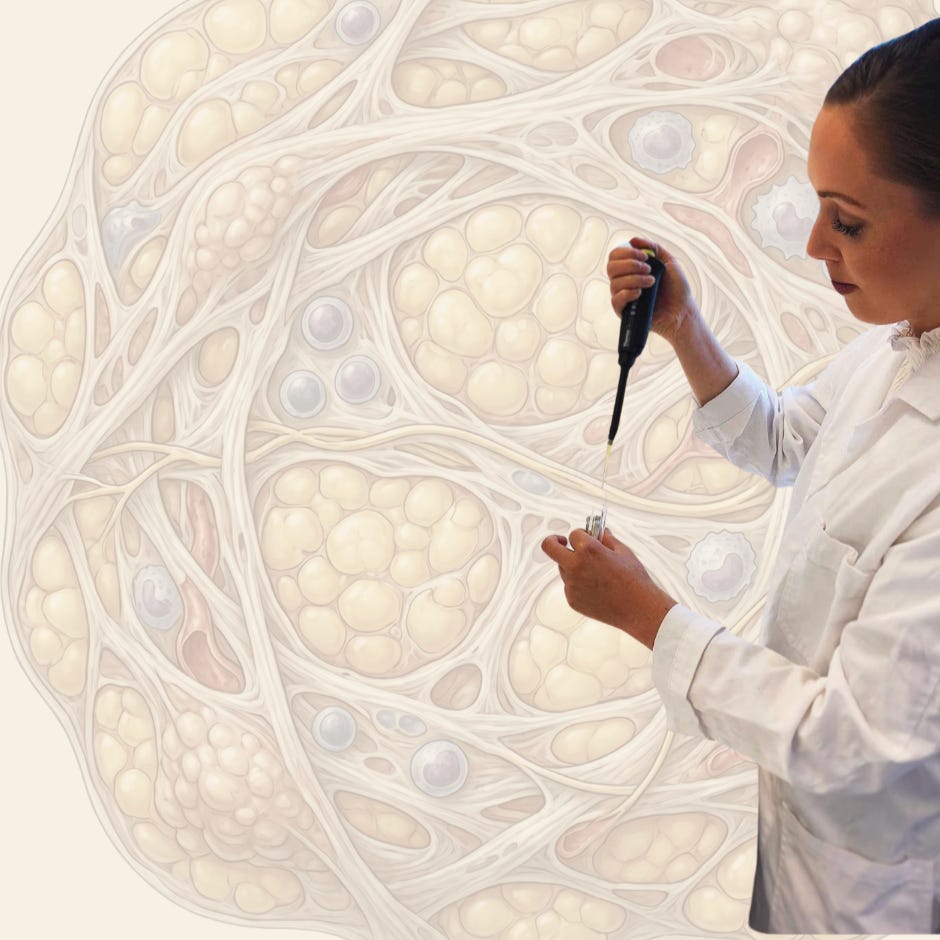
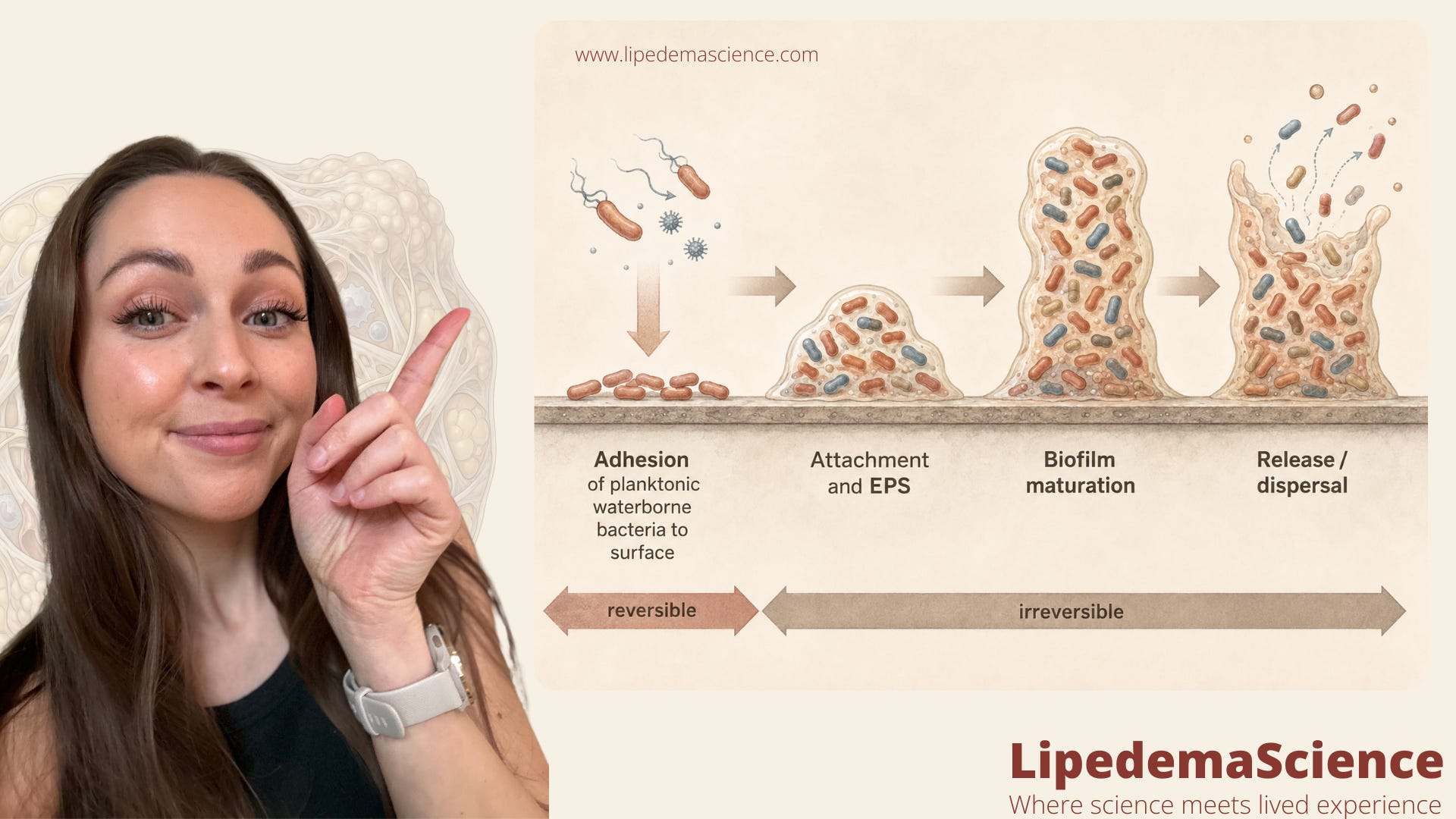
For example, I have worked a lot with biofilm from a specific bacterium that has the ability to build an entire infrastructure on stainless steel in the food industry. I worked on a scientific project on this specific “super bacterium” for three to four years, and I became a co-author on a publication in the journal Foods, where we used whole genome sequencing to map the genetic mechanisms of that bacterium.
I am a science geek, so I love attending events where different scientific topics are discussed.
One time, I attended an event where the topic was gut health, viewed from different scientific perspectives. One research group talked about fasting and autophagy. Another talked about ulcerative colitis. One talked about fermented foods. Another talked about using archaeal soil bacteria. And one group talked about fecal microbiota transplantation.
At one point, I overheard the last three groups discussing why bacteria did not seem to “stick” in the intestine after fecal transplantation. And then I came in with a fourth scientific perspective, from my work with pathogenic bacteria in the food industry.
That was when I really realized how much we all work in silos.
Lipedema research, in many ways, has lived inside similar silos. Vascular medicine has studied capillary fragility and microangiopathy. Lymphology has examined lymphatic flow and tissue fluid. Adipose biology has looked at adipocyte hypertrophy, M2-like macrophages and progressive fibrosis with advancing stage. Endocrinology is now exploring estrogen receptor signaling and the role of menopause. And more recent multi-omics work has started to tie these threads together by mapping adipokine, metabolic and mitochondrial changes in lipedema tissue. None of these fields alone can explain the disease, but they each hold a piece of the puzzle.

And this brings me to healthcare and the information we receive about lipedema management.
Healthcare professionals can be extremely important resources, but healthcare itself is often divided into specialties, time limits and systems that do not always communicate well with each other. Your GP, physiotherapist, surgeon, dietitian or specialist may all hold valuable pieces of the puzzle, but they may not necessarily have the time or structure to follow every new development in lipedema research around the world.
That is why people with a real passion for digging deep are so important in a field like lipedema management.
We need healthcare. We need good clinicians. We need researchers. But we also need to stay informed ourselves and use healthcare as one of our resources, not as the only driver of our lives.
For me, lipedema management is not about handing over the driver’s seat to one professional, one treatment or one single explanation. It is about staying active, informed and engaged in my own body and my own long-term health.
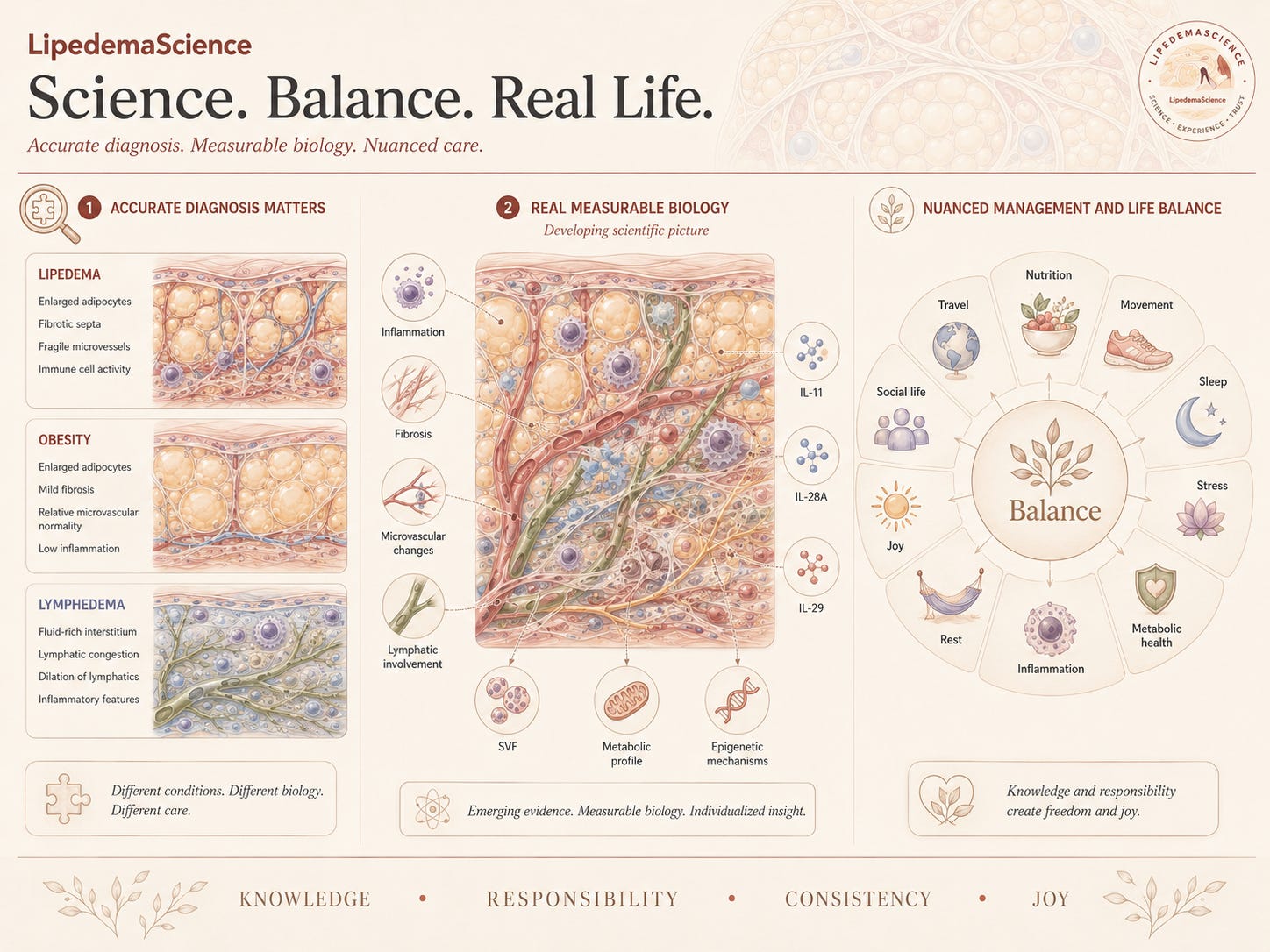
We are also seeing an important shift in the science. Lipedema is increasingly being understood as a distinct tissue disorder, not simply a matter of weight or obesity. Lipedema can exist in people with a normal BMI, and it can also coexist with overweight or obesity. These are not the same thing. Clinical cohort studies have shown that a meaningful proportion of women with lipedema fall into the slim or healthy weight range when measured by waist-to-height ratio, even when their BMI suggests otherwise. At the tissue level, biopsy studies have described larger adipocytes, progressive fibrosis and increased macrophage activity that intensify with disease stage, and an observational study using lymphoscintigraphy reported that, at lower BMI ranges, women with lipedema generally had normal lymphatic function, which supports the idea that lipedema is not the same as lymphedema, even if the two can eventually overlap.
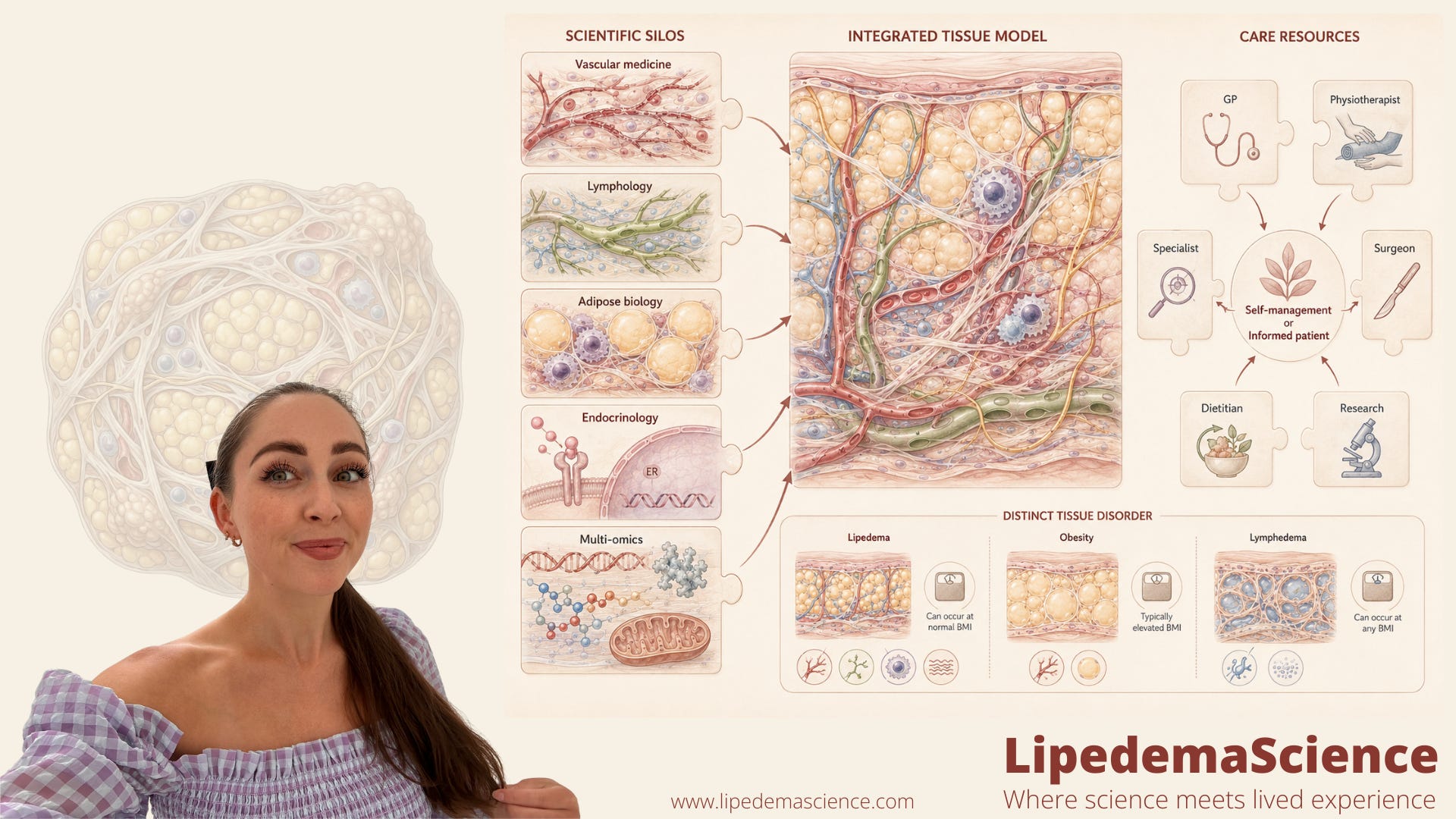
This is why accurate diagnosis matters.
Lifestyle is also part of the conversation, but I think we need to talk about it in a nuanced way. Nutrition, movement, metabolic health, inflammation, sleep, stress and overall tissue load may all influence symptoms, function, pain, swelling and quality of life. Whether and how these factors influence long-term disease progression still needs more research, but I do believe that what we do consistently matters.
Inflammation, fibrosis, microvascular changes, lymphatic involvement, metabolic health and possibly epigenetic mechanisms are all part of the broader scientific conversation around lipedema. We do not have all the answers yet, but the biology clearly deserves a much deeper discussion than simply talking about weight. Some studies have observed altered cytokine signaling, including elevated IL-11, IL-28A and IL-29, and a distinct metabolic profile in the stromal vascular fraction of lipedema adipose tissue. Other research has reported abnormal vessel phenotypes in the skin of women with earlier-stage lipedema, suggesting that microvascular dysfunction may appear before more visible tissue changes. Most of these findings come from small studies with modest sample sizes and limited replication, so they should be read as a developing scientific picture rather than a settled story. But the direction is clear. Lipedema involves real, measurable biology.
At the same time, there is also more to life than lipedema. Give yourself space to enjoy your life. Eat the beautiful food. Travel if you can. Rest when you need to. Laugh. Be social. Live. But stay committed most of the time. For me, that is the balance. Knowledge, responsibility and consistency, but also joy.
Well, now that we have looked at pictures of what I have eaten at home during the past week, let’s take a look at what I ate when I went to restaurants here in Portugal, along with a few glimpses of what my life here has looked like.
I have been working out a lot at the gym. I really like this gym, partly because it is located in a fishing village, and in the evening you can actually smell the fresh fish coming in.

Right next to the gym, there is an all-you-can-eat sushi restaurant with so much high-quality fish and seafood. And I think this is such a good example of how you can go out to eat, enjoy yourself, and still choose a lot of healthy food. Food can be both nourishing and fun.
If you look at the images below, you will also see that I enjoy red meat, some white bread, Portuguese wine and sangria, potatoes and other foods that are not necessarily part of a “perfect” anti-inflammatory diet on paper.
But that is also the point.
If you live by an 80/20 approach, you can go out to eat. You can enjoy the restaurant, the people, the atmosphere, the food and the wine. And if you decide to go for fish or seafood for dinner, you may still be choosing something highly nutritious while also living your life.
For me, that is the balance I want to show here. Lipedema management is not about making life smaller. It is about building routines that support your body most of the time, while still giving yourself room to enjoy the world around you.