

Taylor Nash is 30 years old, a mother of two, a registered nurse, a personal trainer, and a woman living with lipedema in Perth, Western Australia.
Her days are full. Her husband works away, which means much of the daily rhythm at home falls on her. She looks after two young children, manages the house, works, trains, and continues to build an online space where women with lipedema can feel less alone.
But Taylor’s relationship with her body began long before she had a name for what was happening.
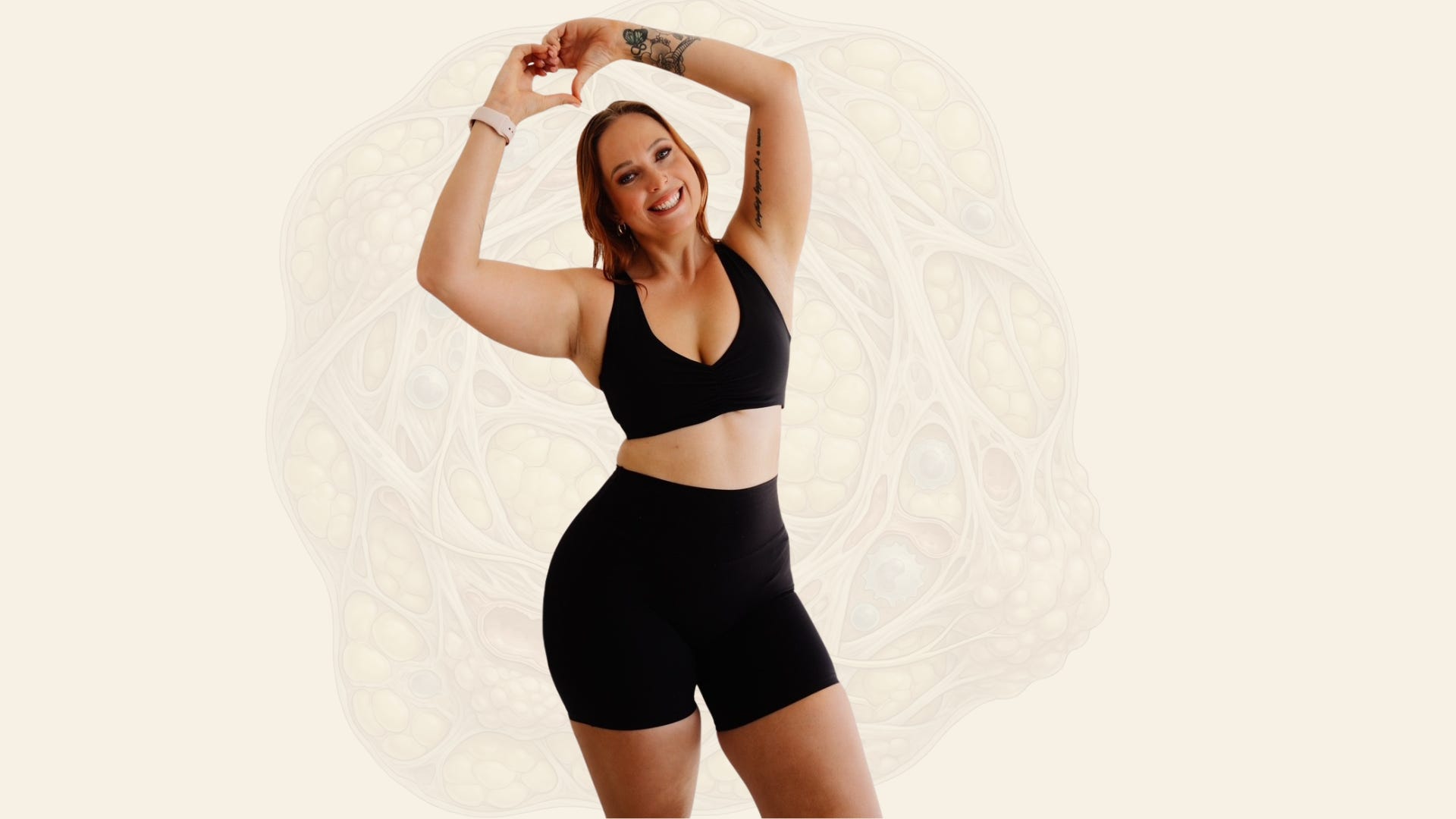
Growing up, she was always active. Sport was part of her life from as early as she can remember, and she joined her first gym while still in high school. Movement became familiar, consistent, and important to her. But even with that consistency, something about her body never seemed to respond the way she expected.
She was a size 8 on top and a size 12 in her legs. People commented on her shape. Some framed it as a compliment, especially during the era when curvier bodies were becoming more visible in popular culture. But Taylor did not experience those comments as compliments. To her, her legs felt different, disproportionate, and confusing.
She also bruised extremely easily. For years, she saw doctors and specialists, trying to understand why. Her blood tests, scans, and investigations kept coming back normal. Instead of answers, she was left feeling as though she might be overreacting.
So she stopped talking about the pain.
She assumed maybe everyone’s legs hurt like that. Maybe her legs were sore because she trained hard. Maybe this was just what her body was like.
For many women with lipedema, this is where the story becomes painfully familiar. The symptoms are real, but the explanations are missing. The body keeps sending signals, but the medical system often does not yet know how to read them.
Taylor’s fitness journey deepened after the birth of her first child, when she started F45 HIIT training and fell in love with it. That experience eventually led her to study personal training alongside nursing. During that period, she also gave birth to her second child and had hip reconstruction surgery, something she now wonders may have been connected to her lipedema.
That surgery changed the way she understood movement. It taught her about rehabilitation, injury, and how to exercise in a way that supports rather than punishes the body. It opened up a new side of personal training that she became deeply passionate about.
Still, her own body remained difficult to understand.
Taylor became a personal trainer partly because she wanted answers for herself. She wanted to know how to train properly. She wanted to understand the body well enough to finally change her own. Her clients were getting strong results, but her own legs still did not respond in the same way.
That was emotionally difficult.
She had spent years pushing herself in the gym, yet her cellulite always seemed worse than other people’s. Her legs remained disproportionate. Her confidence suffered deeply. She avoided the beach for years. She stayed away from social situations involving pools. Even taking her children to swimming lessons became mentally hard.
Over time, this developed into a painful relationship with food, over exercising, and binge eating.
After her second child and hip surgery, Taylor’s legs felt worse than ever. She did not want to leave the house. She did not want to wear shorts. She felt low in a way that affected her life, her family, and her children.
Then, in 2024, she came across an Instagram page run by a personal trainer who had just been diagnosed with lipedema.
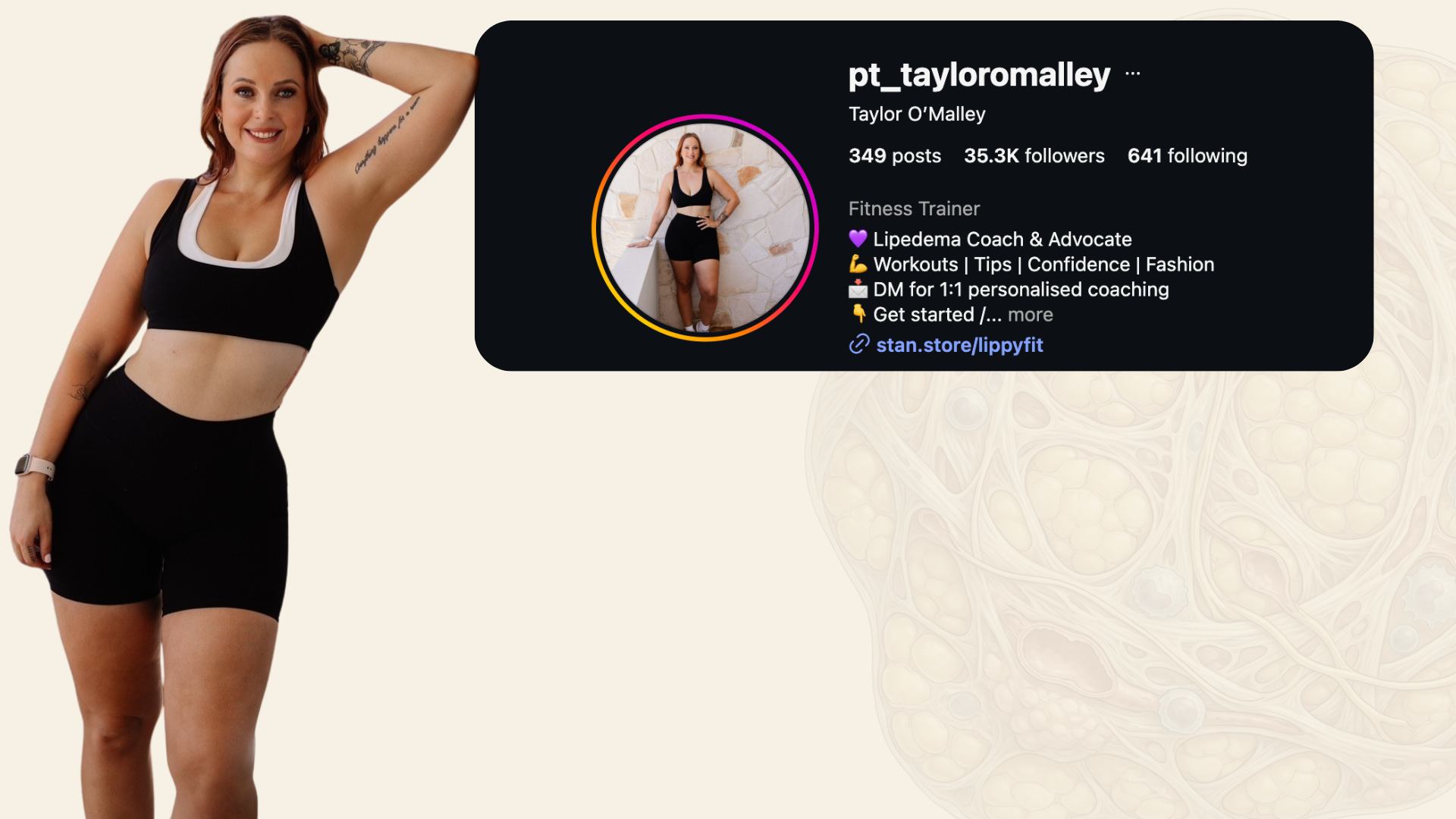
For the first time, Taylor heard someone describe symptoms that sounded like hers.
She began researching. The more she learned, the more convinced she became that lipedema explained what she had lived with for years. But no one around her had heard of it. Even as a registered nurse working closely with doctors, she found that many people in healthcare did not know about the condition.
That lack of awareness made her hesitate.
She worried about paying to see a specialist only to be told again that she was fine.
So she made a deal with herself. She would commit fully to training and nutrition for four months. If her body still did not change, she would seek help.
Four months passed. Her body had not changed much. Other people doing similar challenges were seeing impressive results, but Taylor’s legs remained stubbornly the same.
She booked an appointment with her GP. Her doctor admitted she did not know much about lipedema, but she was willing to help Taylor find someone who did.
At the time, they could only find two people in Perth who could diagnose the condition. The first doctor responded by suggesting Taylor was probably just obese and should keep trying before spending money at the clinic.
Then Taylor found a physiotherapist who specialised in lipedema and lymphedema.
She waited four months for the appointment.
The physiotherapist diagnosed her within the first three minutes.
Taylor remembers feeling relieved. Heard. Validated. For the first time, it was not all in her head.
The first month after diagnosis was emotional. But it also became the beginning of something much bigger. Taylor shared one post about her diagnosis on social media, and that single post went viral. Messages poured in. Magazines reached out. Women saw themselves in her story.
That was when Taylor decided that raising awareness about lipedema had become part of her purpose.
After diagnosis, everything changed.
She started adjusting her lifestyle. She changed the way she trained. She changed her diet. She learned about lymphatic drainage. She stopped treating her body like something that needed to be forced into submission and began learning how to support it.
About four weeks later, she noticed a shift.
Her legs felt different. The pain she had assumed was normal was suddenly reduced. Her weight was dropping. Her energy improved. For Taylor, it was a moment of shock and clarity.

Progress no longer meant chasing a goal weight.
Today, she measures progress through pain levels, muscle growth, energy, confidence, and self love.
Taylor still trains, but not the way she used to. Before diagnosis, she would strength train six times per week, often for two hours per session. She did CrossFit and F45 HIIT for years, which she now believes may have worsened her symptoms.
Now, her approach is different.
She focuses on low impact strength training around three times per week, with a fourth day only if her body feels ready. She swims when she can. She walks daily. She uses cycling, rebounding, vibration, and recovery strategies to support her lymphatic system and manage symptoms.
For Taylor, strength training is still important. But the intensity, frequency, and recovery have changed.
Her advice to women with lipedema who are afraid to train because of pain or swelling is simple. Start small. One session per week is enough. Even 20 minutes is enough. The goal is not to overwhelm the body. The goal is to build gradually without increasing inflammation.
Taylor also uses supportive tools, including a vibration plate, a trampoline for rebounding, and a stationary bike. She discovered many of these through research and social media. When she uses her vibration plate consistently, she notices less aching and pain. If she stops for several days, she can feel the difference.
Rebounding has also become part of her routine. She usually follows YouTube videos and hopes to learn more, eventually creating her own rebounding exercise series.
Her stationary bike is another regular tool. She often cycles 5 to 10 kilometres before a strength session or as her cardio for the day.
Still, she is honest that learning the balance has been difficult. There is a fine line between movement that reduces swelling and movement that triggers it.
Flare ups are part of her life too. She notices that high carbohydrate meals can sometimes worsen pain in her feet and legs. On those days, she focuses on simple supportive strategies. She elevates her legs against the wall several times per day, eats anti inflammatory foods, uses vibration morning and night, and wears compression for as long as she can.
A realistic good week for Taylor includes three strength sessions, one abdominal session, one swim, two rebounding sessions, daily vibration, and at least 8,000 steps per day.
But the hardest part has been learning how to balance discipline with listening to her body.
The gym has always been her escape. As a FIFO wife and mostly solo parent, training is her time to herself. Cutting back has been mentally difficult. She is still learning new ways to look after herself without relying on constant intensity.
Her relationship with her body has changed, too.
The validation of diagnosis and the support of her online community have helped her confidence grow. She now wears shorts most days and feels almost a responsibility to do so, because she wants other women to feel that they can too.
She still has bad days. But now she accepts them as normal. On those days, she dresses in a way that makes her feel comfortable and moves through it with more compassion.

If she could speak to the younger version of herself, the one who was frustrated and confused about her legs, she would tell her not to give up.
There is light at the end of the tunnel.
Taylor wants more people to understand that fitness with lipedema is not only about aesthetics. It is about preventing progression, supporting mobility, reducing symptoms, and protecting quality of life.
Her mission now is twofold.
First, she wants women to understand lipedema and feel more confident in their own bodies. Second, she wants to raise awareness so that the condition becomes known and recognised across healthcare.
She hopes women take confidence, self love, and practical education from her journey. She wants them to know that simple changes can make a meaningful difference, even without surgery.
And for the future, Taylor’s hope is clear.
She wants lipedema to be taught in medical school.
She wants healthcare professionals to recognise it.
And she wants health insurance companies to help cover the cost of treatment.
Taylor’s story is not only about transformation. It is about recognition. It is about what happens when a woman who has spent years blaming herself finally receives an explanation that makes sense.
And perhaps most importantly, it is about learning that the body does not always need to be pushed harder.
Sometimes, it needs to be understood.
Want to read more stories from women with lipedema?
Check out these stories, or go to the front page, then the top bar, and click Stories to read them all.


