

A new Norwegian-led study gives us another important piece of the puzzle, and at the same time raises an even more interesting question: if improved insulin regulation does not explain the reduction in lipedema pain, what does?
This is very interesting.
The study published on 15 September 2026 comes from a Norwegian-led research group with researchers from institutions including the Norwegian University of Science and Technology (NTNU), the University of Bergen, St. Olavs Hospital, the University of Copenhagen and the University of Alabama at Birmingham. I have personally met members of this research group and have previously interviewed them for LipedemaScience. I follow their work closely because much of their research focuses on nutrition, metabolism and lipedema, and they are now building several scientific analyses from the same controlled dietary intervention.
The new paper is called Glucose and insulin dynamics following low-carbohydrate and low-fat diets in females with lipedema and obesity. What makes it particularly interesting is not simply that the low-carbohydrate diet produced some favorable metabolic changes. We already knew from an earlier publication from this clinical trial that the women assigned to the low-carbohydrate diet experienced a greater reduction in pain than those following the low-fat diet. The important question was therefore: why?
One possible explanation was insulin.
This new study tested that hypothesis. The answer was not what we might have expected.
Before we discuss the results, one study is never the whole answer
Whenever I write about a new lipedema study, I think it is important to repeat this: one scientific study is not enough to establish that something is true.
Science becomes stronger when different research groups can reproduce findings, when different study designs point in the same direction, and when clinical observations are supported by research that helps us understand the underlying biology. Human intervention studies can tell us whether something appears to work in people. Observational studies can identify patterns. Laboratory studies using cells and tissues can help us investigate mechanisms. Animal models can sometimes answer questions that cannot initially be studied directly in humans.
Not every question needs every type of model, and animal or cell studies cannot replace good human clinical research. What matters is the total body of evidence.
This is especially important in lipedema because the scientific field is still relatively young. We do not yet have decades of large clinical trials investigating nutrition, pain, adipose tissue biology, hormones, vascular function, lymphatic function and metabolism. Every well-designed study therefore becomes one additional brick in a much larger scientific structure.

That is why I think we should discuss individual studies without turning each new publication into a new rule for how everyone with lipedema should live.
For me, this also connects directly to sustainable lipedema management. First comes awareness. Then there has to be a desire to make changes. After that we need knowledge, followed by the practical ability to apply that knowledge in our own lives, and finally reinforcement so that useful habits can actually be maintained.
Research helps build the knowledge part of that process. It does not make the individual decision for us.
Patient experiences matter too. If hundreds of women repeatedly describe similar responses to certain foods or dietary patterns, that information should not simply be dismissed because it has not yet been explained scientifically. Patient observations can generate research questions and can be extremely valuable when learning how our own bodies respond. At the same time, experiences cannot establish cause and effect in the way controlled research can.
We need both perspectives, while understanding what each can and cannot tell us.
What did the researchers actually study?
This new paper is a secondary analysis of an existing randomized controlled trial. That distinction is important. The researchers did not recruit a completely new group of women for this publication. They went back to biological data collected during the original dietary trial and asked a new question about glucose and insulin regulation.
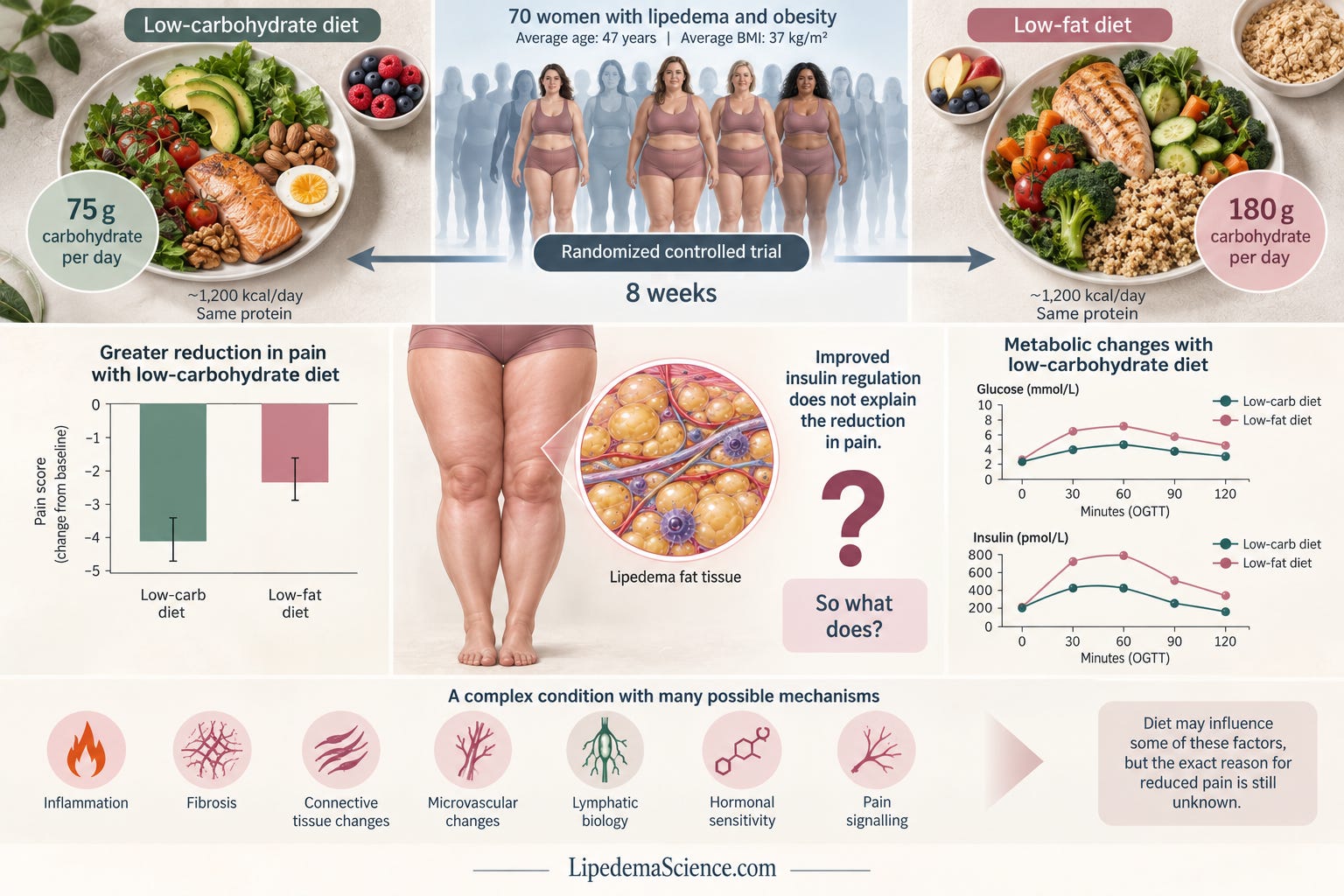
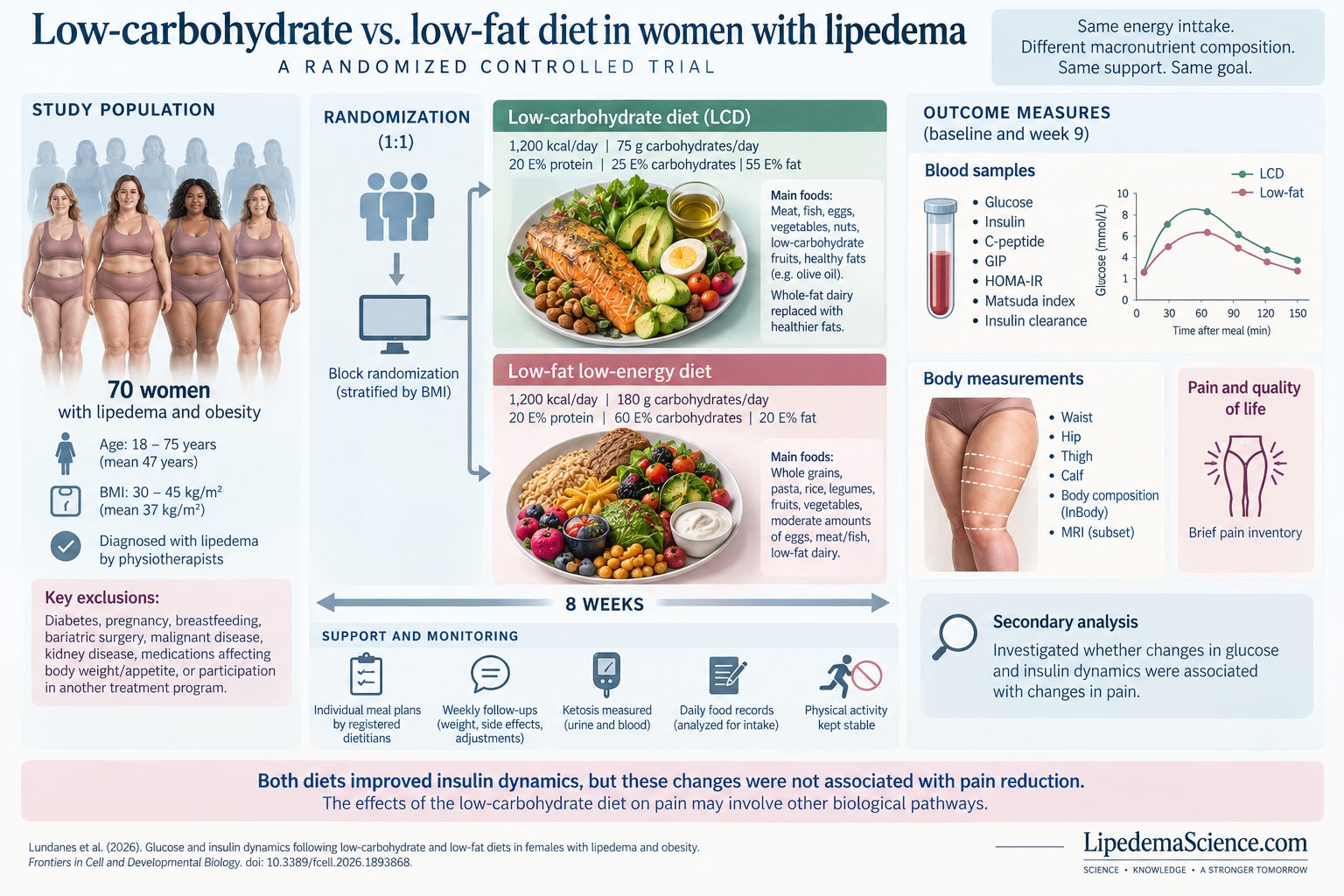
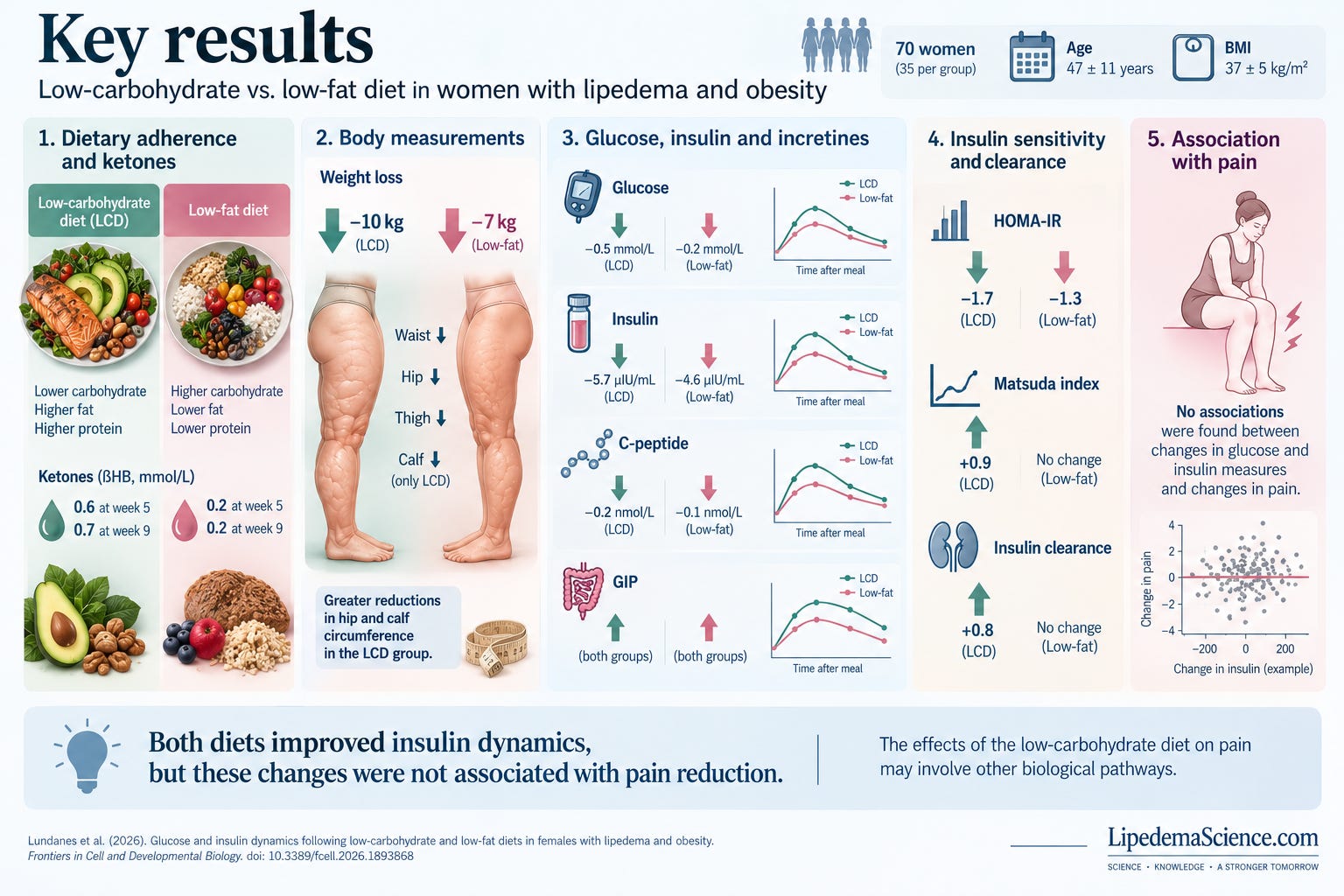
The study included 70 women with lipedema and obesity. Their average age was 47 years and their average BMI was approximately 37 kg/m². They were randomly assigned to one of two diets for eight weeks.
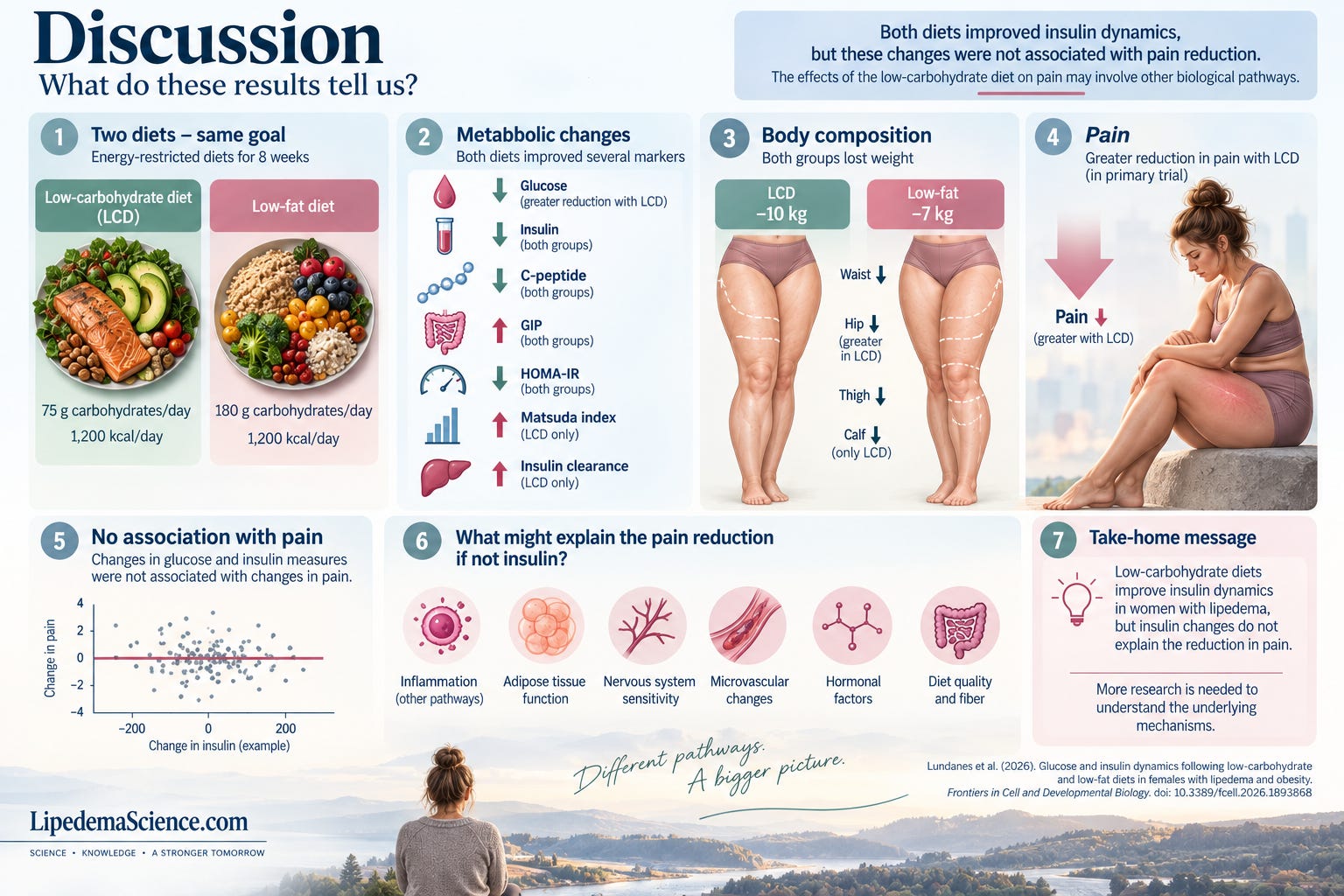
Both diets provided approximately 1,200 kcal per day. The low-carbohydrate diet provided 75 grams of carbohydrate per day, while the low-fat diet provided 180 grams. The prescribed protein intake was the same, while the main difference was therefore the distribution between carbohydrate and fat. The women received structured meal plans and regular follow-up throughout the intervention.
This is important context. This was not simply a comparison between people who happened to eat more or fewer carbohydrates in everyday life. It was an intensive, energy-restricted dietary intervention.
It is also important when we later ask whether these findings should change what women with lipedema eat.
Why were the researchers interested in insulin?
The original trial had already produced an intriguing finding. Women following the low-carbohydrate diet experienced a greater reduction in several measures of pain than the women following the low-fat diet.
For the measure described as “pain now”, the low-carbohydrate group experienced a 33% reduction, and the difference between the groups was statistically significant. Importantly, the researchers did not find that greater weight loss explained the reduction in pain.
That raised the obvious next question. What was happening biologically?
One proposed mechanism was improved insulin regulation.
Insulin is a hormone that helps regulate how glucose is handled after we eat, but its effects extend far beyond blood glucose. Insulin also influences fat storage, fat release and many other metabolic processes. Researchers have therefore proposed that changes in insulin sensitivity or insulin signaling could potentially influence lipedema symptoms. The new study tested this possibility much more directly.
The researchers measured fasting glucose, insulin and C-peptide, but they did not stop there. They also examined what happened after the women consumed a standardized meal. This allowed them to study the body’s metabolic response over time rather than looking only at a single fasting blood sample.
They calculated several measures of insulin regulation, including HOMA-IR and the Matsuda index, which are commonly used estimates of insulin sensitivity. They also estimated insulin clearance, meaning how efficiently insulin is removed from the circulation.
Both diets improved several metabolic markers
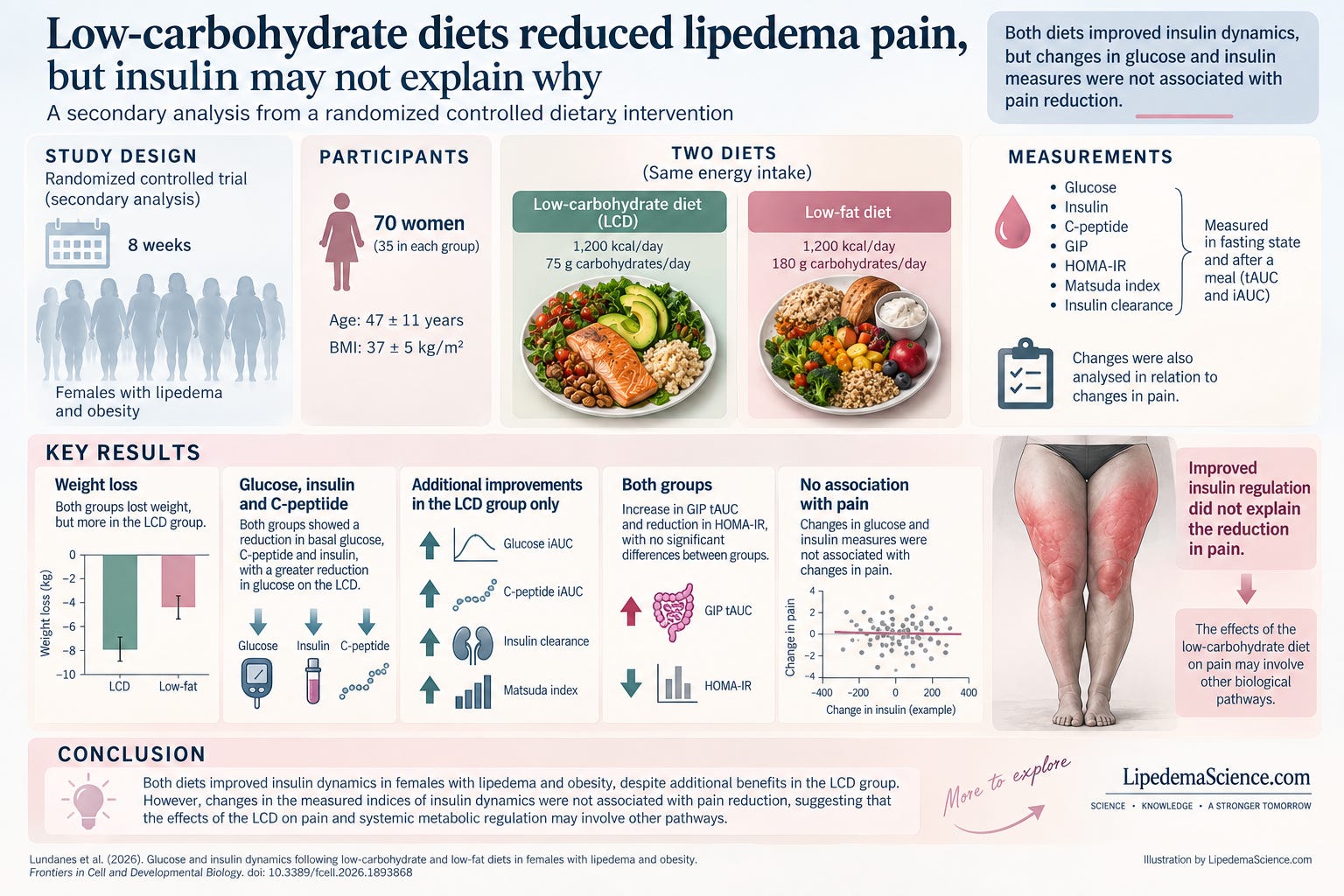
After eight weeks, both groups had lost a substantial amount of weight. The average weight loss was approximately 10 kg in the low-carbohydrate group and 7 kg in the low-fat group.
Both groups also showed reductions in fasting glucose, insulin and C-peptide. Fasting glucose decreased by approximately 0.5 mmol/L in the low-carbohydrate group and 0.2 mmol/L in the low-fat group, and this difference between the diets was statistically significant.
HOMA-IR, another estimate of insulin resistance, improved in both groups without a significant difference between them.
Some additional changes appeared only within the low-carbohydrate group. The Matsuda index, which estimates whole-body insulin sensitivity after eating, improved, and estimated insulin clearance increased. The pattern suggested that after the dietary intervention the body could handle the meal with less circulating insulin.
However, there is an important statistical detail here. A change being statistically significant within one group but not within another group does not automatically mean that the two groups are significantly different from each other. Some of the metabolic findings therefore provide interesting signals rather than proof that low carbohydrate intake is superior across every measure of insulin regulation. This distinction matters when reading nutrition research.
Then came the most important result
The researchers compared the changes in glucose and insulin regulation with the changes in pain. They found no significant association. Women whose insulin measures improved the most were not necessarily the women whose pain improved the most. None of the measured markers of glucose and insulin dynamics showed a significant relationship with the reduction in pain. That changes the interpretation considerably.
The low-carbohydrate diet had previously been shown to reduce pain more than the low-fat diet in this group of women. The new analysis shows that the low-carbohydrate intervention also produced several favorable changes in metabolic regulation. But the two effects did not appear to travel together.
In other words, better insulin dynamics do not currently appear to explain why the low-carbohydrate group experienced greater pain reduction.
That does not prove that insulin has no involvement in lipedema pain. The researchers are careful about this. Insulin biology is complex, and the measurements used in the study cannot capture every aspect of insulin signaling inside adipose tissue, nerves or other tissues.
But the simple hypothesis that “low carbohydrate reduces insulin, and lower insulin therefore reduces lipedema pain” is not supported by these results. And that is exactly why this study is so interesting.
The study eliminates one simple explanation and opens several better questions
Scientific progress does not only happen when an experiment confirms a hypothesis. Sometimes the most useful result is discovering that a plausible explanation does not fit the data.
The researchers had already investigated another possible explanation: inflammation. In an earlier analysis from the same dietary intervention, the greater pain reduction following the low-carbohydrate diet was not explained by the measured inflammatory markers either. The authors therefore now have at least two relatively straightforward hypotheses that have not been able to explain the pain response: systemic inflammation, as measured in their previous analysis, and glucose-insulin dynamics, as measured in this new study. This pushes the research into more interesting biological territory.
Another analysis from the same research programme, published earlier in 2026, examined plasma fatty acids. Changes in some fatty acids were associated with changes in pain, although an association cannot tell us whether the fatty acids themselves caused the pain reduction. The larger picture is therefore becoming more complex, not less.
Carbohydrate restriction changes much more than glucose. It changes substrate use, fatty-acid metabolism, ketone production, insulin signaling and potentially many downstream processes. Changes in diet may also influence adipose tissue itself, tissue fluid, vascular and lymphatic function, nerve signaling and other biological pathways that are currently poorly understood in lipedema.
The pain response may therefore not come from one pathway at all.
What do the researchers want future studies to investigate?
This is perhaps my favorite part of the paper. The authors specifically state that future studies should investigate the mechanisms behind both the pain reduction and the metabolic changes seen after low-carbohydrate diets in women with lipedema. They also highlight an important unanswered question about the adipose tissue itself.
The current results suggest improved whole-body insulin sensitivity, but the researchers did not directly measure insulin sensitivity or insulin signaling inside lipedema-affected adipose tissue. They therefore state that future studies should use direct physiological and molecular measurements of adipose tissue to determine whether the changes reflect improved insulin sensitivity or altered adipose tissue function locally. That distinction could become extremely important.
Blood tests tell us what is happening systemically. Lipedema, however, is a disease involving specific subcutaneous adipose tissue. It is entirely possible for systemic metabolic measurements and local tissue biology to tell different stories.
The researchers also point out that HOMA-IR and the Matsuda index are indirect estimates of insulin sensitivity. More mechanistic studies could use techniques such as the euglycemic-hyperinsulinemic clamp, which is considered the reference method for measuring insulin sensitivity. They also recommend longer studies and better control of weight loss between dietary groups so that future researchers can separate the effect of carbohydrate intake from the effect of losing more weight.
This is where I think the research becomes particularly exciting. Instead of asking only, “Does low carbohydrate help?”, the scientific question becomes, “What biological process changes when it helps?” That is a much more useful question.
There is another major limitation we should not overlook
All women in this study had both lipedema and obesity. The average BMI was approximately 37 kg/m², and the participants showed relatively high HOMA-IR values at baseline.
We therefore cannot assume that the same metabolic response would occur in women with lipedema who have a BMI of 20, 23 or 25, or in women who are already highly insulin sensitive.
This matters enormously in lipedema research because lipedema occurs across a wide range of body sizes and metabolic profiles.
The results tell us something important about women with lipedema and obesity undergoing a substantial energy-restricted dietary intervention. They do not tell us how every woman with lipedema should eat.
This study is not evidence that everyone with lipedema should eat keto
I think this distinction is particularly important because nutrition research can very quickly turn into diet rules online.
The intervention provided 75 grams of carbohydrates and only 1,200 kcal per day, with weekly professional follow-up. The researchers recorded average blood ketone concentrations consistent with nutritional ketosis in the low-carbohydrate group, but this was still a highly controlled eight-week research intervention.
It therefore cannot answer whether someone should follow a strict ketogenic diet for five years, ten years or for the rest of her life. Those are completely different scientific questions.
A dietary pattern can produce a meaningful biological effect in an eight-week clinical trial and still not be the best long-term strategy for every individual. Sustainability, nutritional adequacy, food preferences, metabolic health, social life, exercise, symptoms and quality of life all matter.
For some people, a ketogenic or very-low-carbohydrate period may be useful. Others may find that a less restrictive carbohydrate intake gives them similar symptom control and is substantially easier to maintain. Others may not experience a meaningful difference at all.
The best long-term diet is not automatically the diet that produces the largest short-term physiological change. It is a nutritionally adequate pattern that supports your health and symptoms and that you can realistically maintain.
That is why knowledge about your own body matters alongside scientific knowledge.
What I take from this study
I do not read this paper as evidence that insulin does not matter in lipedema. I also do not read it as evidence that carbohydrates are either “good” or “bad”. I read it as something much more useful.
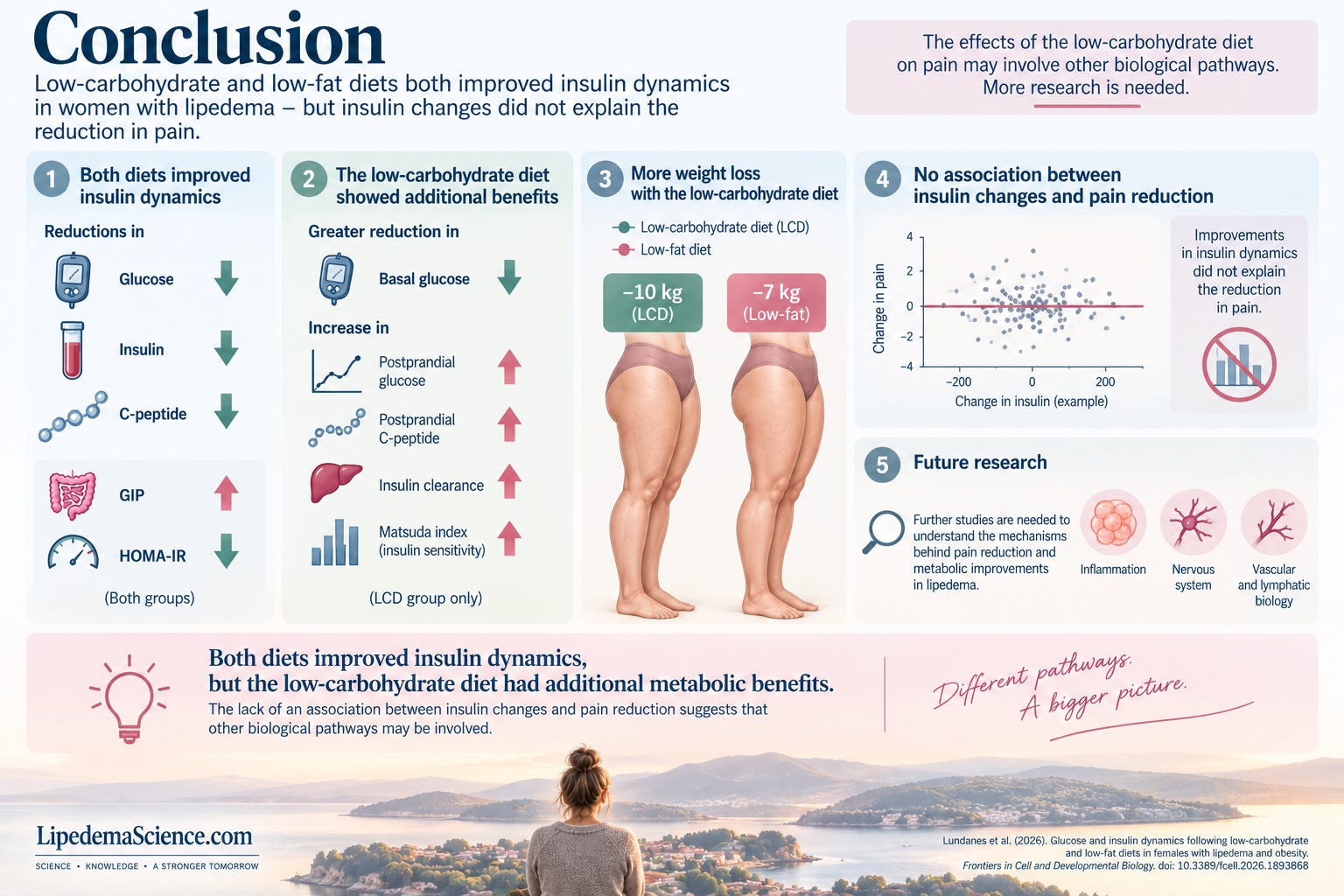
A low-carbohydrate dietary intervention reduced pain more than a low-fat intervention in this group of women. It also improved several aspects of glucose and insulin regulation. But the improvement in insulin dynamics did not explain the improvement in pain.
That means we need to keep looking. We need to understand what happens inside lipedema adipose tissue, how metabolic changes interact with pain pathways, whether fatty-acid metabolism is involved, what happens to local insulin signaling, whether different metabolic phenotypes of lipedema respond differently to diet, and whether the same effects can be reproduced in women without obesity.
This is how science should work.
Not one study giving us the final diet.
One study giving us a better question.
And one more important brick in the much larger picture of lipedema.
Lipedema Diet and the Biology of Pain A Researcher’s Perspective from NTNU

Julianne Lundanes is a Norwegian researcher with a background in movement science and clinical health science from NTNU. Her academic interests have long centered on metabolic health, obesity, physical activity, and diet. During her master’s work on nutrition after bariatric surgery, she became connected to Siren, who was then planning a project on lipe…
Glucose and insulin dynamics following low-carbohydrate and low-fat diets in females with lipedema and obesity (DOI: 10.3389/fcell.2026.1893868)