

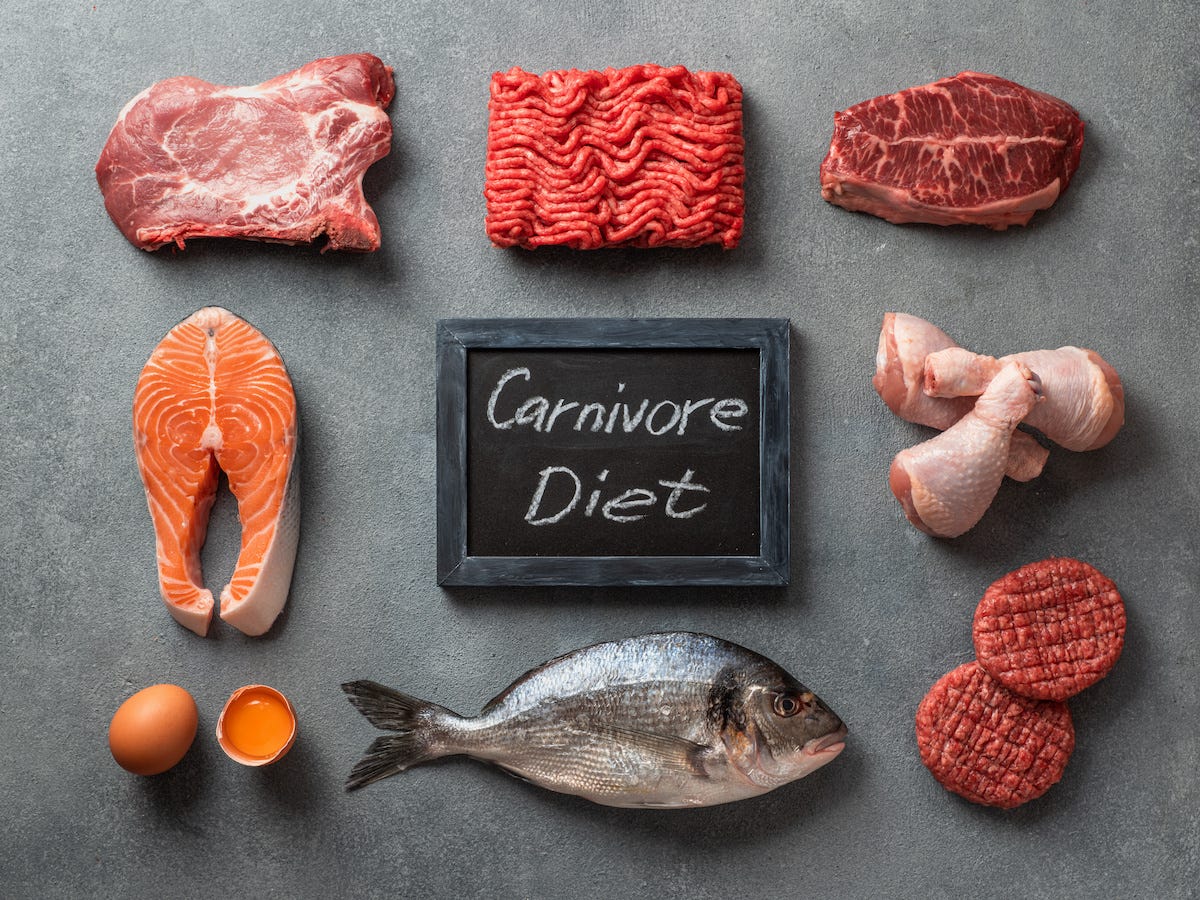
There are many reasons I would never go fully carnivore as a food scientist living with lipedema.
The first is very personal: I simply don’t think it would be sustainable for me. I’m a foodie. I love discovering different cultures through their cuisines. Going to restaurants is genuinely one of my hobbies. Food is pleasure, curiosity, tradition and social connection for me, and I don’t want to build a way of eating that makes me feel restricted from participating in those things.
But there is also a nutritional reason.
Animal foods can be extraordinarily nutritious. Fish, eggs, meat and dairy can provide high-quality protein and important vitamins, minerals and fatty acids. I eat animal foods myself, and this is not an argument against them.
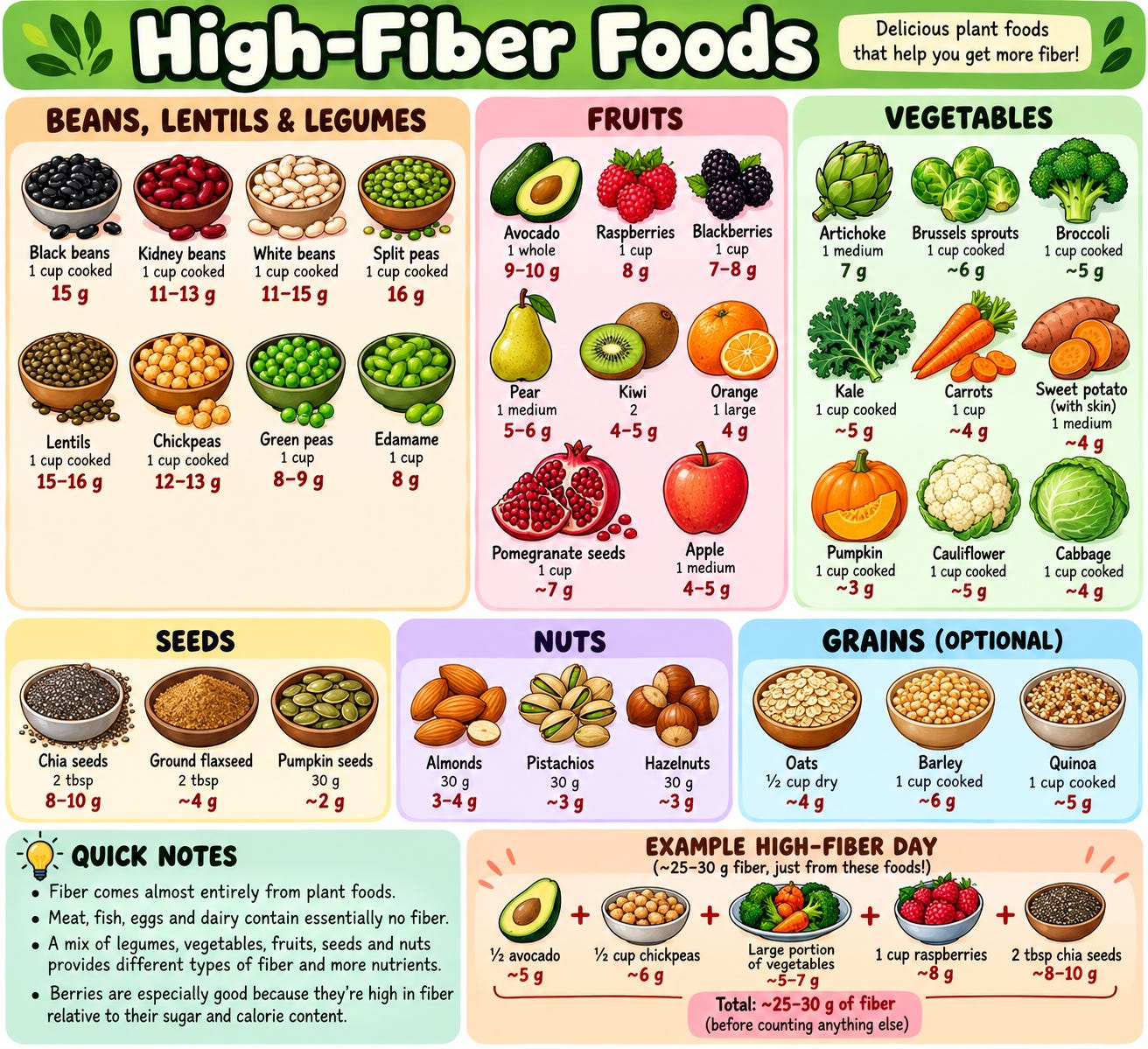
But plants bring things to the table that meat simply does not.
Plants provide an enormous variety of polyphenols, carotenoids and other bioactive compounds. They are also where we get something I think deserves much more attention when we talk about nutrition and lipedema:
Fiber.
And fiber is fascinating, because it reminds us that food is much more complicated than calories, protein, carbohydrates, fat, vitamins and minerals.
As a food scientist, this is something I find particularly interesting. When you work with food in the laboratory, you quickly realise that foods are incredibly complex biological matrices. We often reduce nutrition to numbers because numbers are easy to communicate: 30 grams of protein, 500 calories, 10 grams of carbohydrate. But there are many components in food that influence physiology without fitting neatly into the usual macro- and micronutrient conversation.
Fiber is one of them.
Fiber is not just something that makes you poop
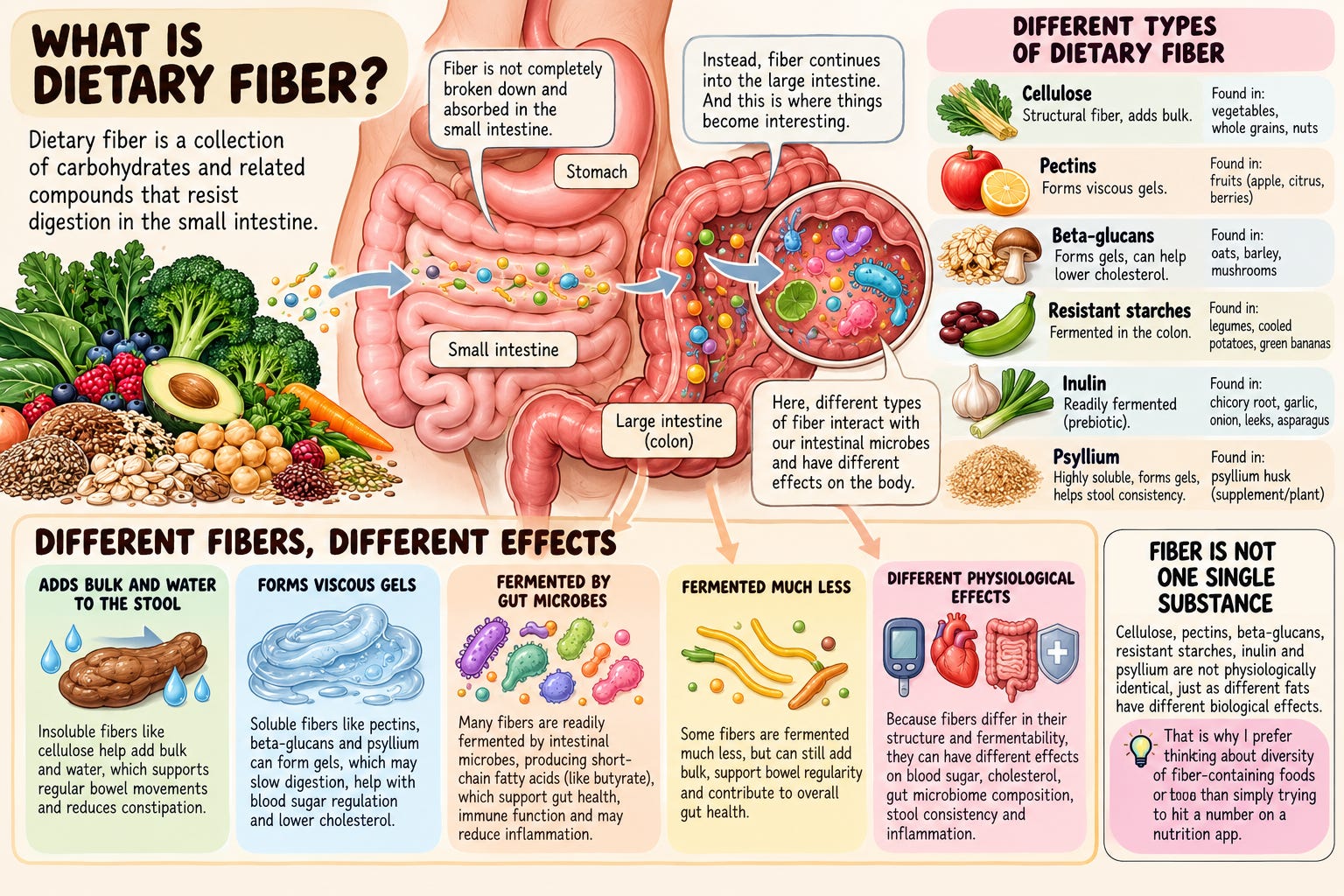
Dietary fiber is essentially a collection of carbohydrates and related compounds that resist digestion in the small intestine. Instead of being completely broken down and absorbed there, they continue into the large intestine.
And this is where things become interesting.
Some fibers contribute bulk and water to the stool. Others form viscous gels. Some are readily fermented by our intestinal microbes, while others are fermented much less. Different fibers therefore have different physiological effects.
This is why I don’t particularly like talking about “fiber” as though it were one single substance.
Cellulose, pectins, beta-glucans, resistant starches, inulin and psyllium are not physiologically identical. In the same way that we wouldn’t describe all fats as having exactly the same biological effects, we shouldn’t assume that all fibers behave identically either.
That is also one reason I prefer thinking about diversity of fiber-containing foods rather than simply trying to hit a number on a nutrition app.
Your bacteria can eat what you cannot
One of the coolest things about fiber happens after it reaches the colon.
We cannot digest certain fibers ourselves, but some of the microorganisms living in our intestine can.
When gut bacteria ferment these carbohydrates, they produce metabolites including the short-chain fatty acids acetate, propionate and butyrate. Butyrate is particularly interesting because colon cells can use it as an important energy source, and short-chain fatty acids are involved in intestinal barrier function, immune signalling and metabolic regulation.
Human intervention studies show that dietary fibers can modify the gut microbial ecosystem and influence short-chain fatty-acid production, although the response depends considerably on the type of fiber and the individual microbiome.
