
When the immune system starts building fat
How macrophages and cytokines shape lipedema—and what that means for daily management.

The Immune Cells Hidden in Lipedema Fat
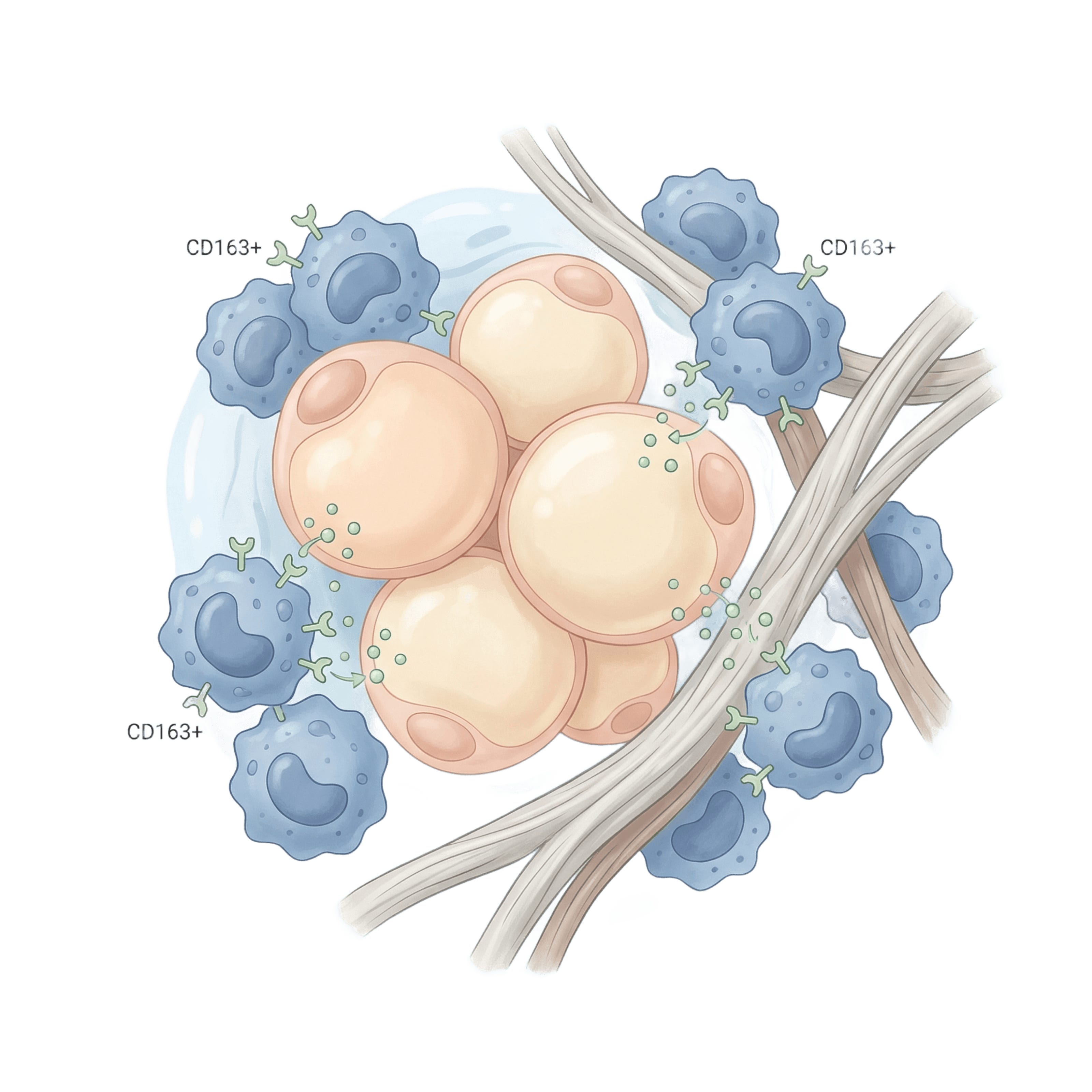
Inside lipedema tissue, researchers have found more than swollen fat cells. They’ve discovered an overactive community of immune cells called macrophages. Normally, these cells act as caretakers—cleaning up damage and calming inflammation. But in lipedema, many of them shift into a state known as M2 polarization, identified by the surface marker CD163. Instead of restoring balance, these M2 macrophages release signals that encourage fat tissue to grow and hold on to fluid.
This means lipedema isn’t simply about “fat that won’t go away”—it’s also about how the immune system is communicating with your fat cells. When the conversation between them goes wrong, fat tissue behaves differently: it grows, stiffens, and becomes painful.
The Language of Cytokines
Cytokines are the chemical “words” macrophages use to talk to other cells. In lipedema, this language becomes distorted. The studies you’ve just read about show that M2 macrophages release anti-inflammatory cytokines that, paradoxically, don’t switch inflammation off—they keep it smoldering. These signals stimulate new fat-cell formation (adipogenesis) and change how connective tissue is built, leading to fibrosis and swelling.
It’s like having a team that’s always trying to repair the same wall—adding more layers instead of removing the damaged ones. Over time, this constant remodeling makes the tissue thicker and more painful.
How Scientists Reversed the Effect in the Lab
One recent study discovered that when researchers blocked a specific pathway called PI3Kγ—which drives the M2 macrophages—they could “re-educate” these cells. When that happened, stem cells from lipedema tissue stopped overproducing fat. The tissue acted more like healthy fat again.
