

One of the most difficult things about lipedema is that the body often refuses to fit into the categories medicine gives it. A woman can have painful, heavy, swollen legs, yet normal routine blood tests. She can have a BMI that places her in one category, while her actual body composition, fat distribution and symptoms tell a more complicated story.
This is why a new 2026 study on lipedema metabolism caught my attention. The study does not give us a final answer, and it does not prove that lipedema has a diagnostic blood signature. But it asks an important question. Do women with lipedema have a different fasting metabolic profile from women without lipedema who have a similar BMI?

That question matters because many lipedema studies are difficult to interpret when the comparison groups are very different in body size. If women with lipedema are compared with much leaner controls, it becomes hard to know whether a finding is related to lipedema itself or simply to differences in weight, fat mass or obesity related metabolism. In this study, the researchers compared 24 premenopausal women with clinically confirmed lipedema with 21 BMI matched controls. That does not make the study perfect, but it makes the question much more useful.
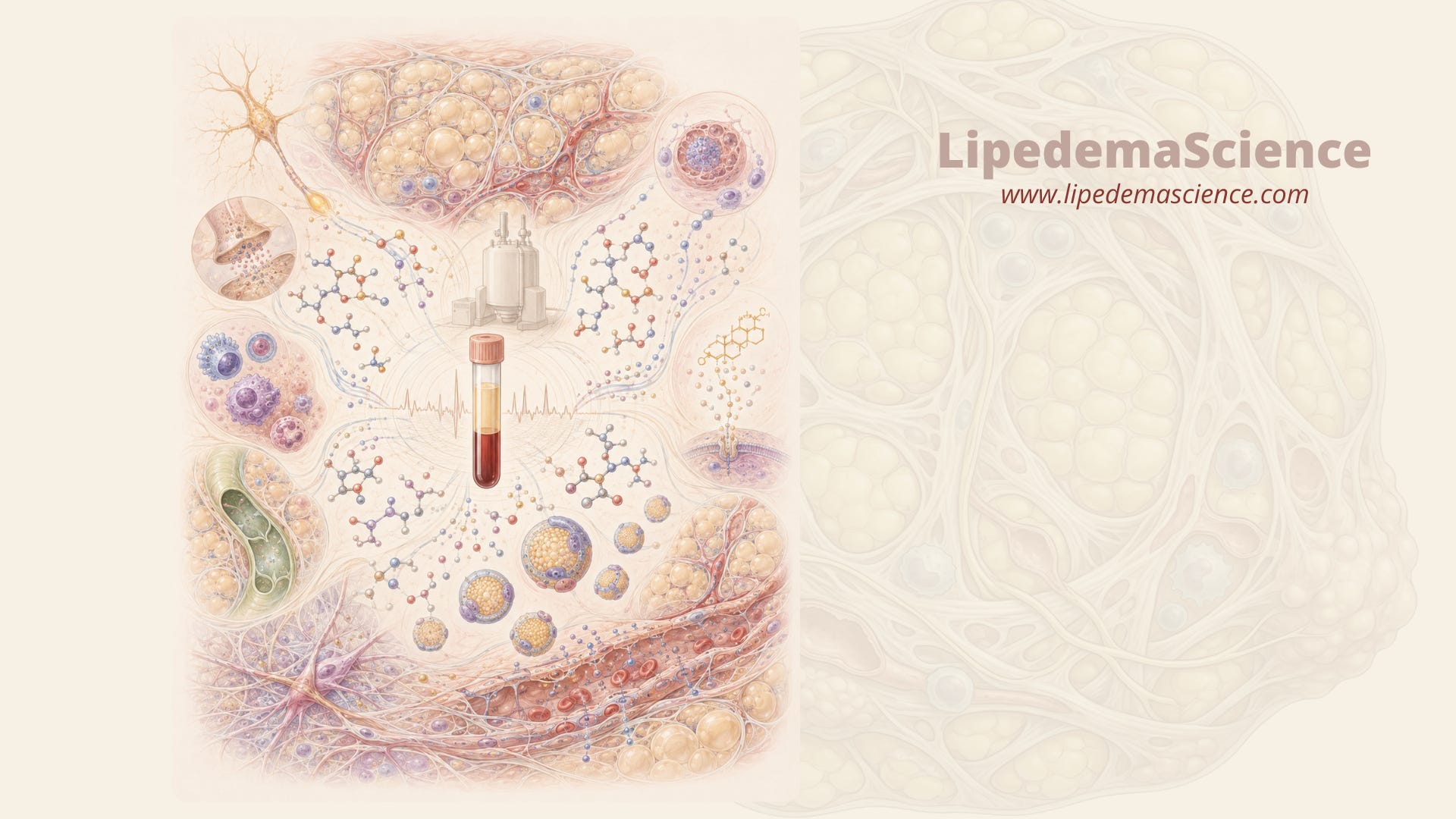
The researchers used NMR metabolomics, a method that can measure many small molecules in the blood. Instead of looking only at standard clinical markers, they examined a broader biochemical picture of fasting metabolism, including amino acids, glycolysis related metabolites, ketone bodies and lipoprotein markers. This is the kind of approach that may become important in lipedema research, because lipedema is unlikely to be explained by one isolated blood value. It appears to involve adipose tissue, connective tissue, blood vessels, lymphatic function, pain, hormones and metabolism at the same time.
The first important finding was about body shape. Even though the lipedema group and the control group had similar BMI, the women with lipedema had lower waist circumference, lower waist to hip ratio and lower waist to height ratio. In other words, their fat distribution was more peripheral. This supports something many patients already know from lived experience. BMI can make two bodies look similar on paper while hiding major biological differences.
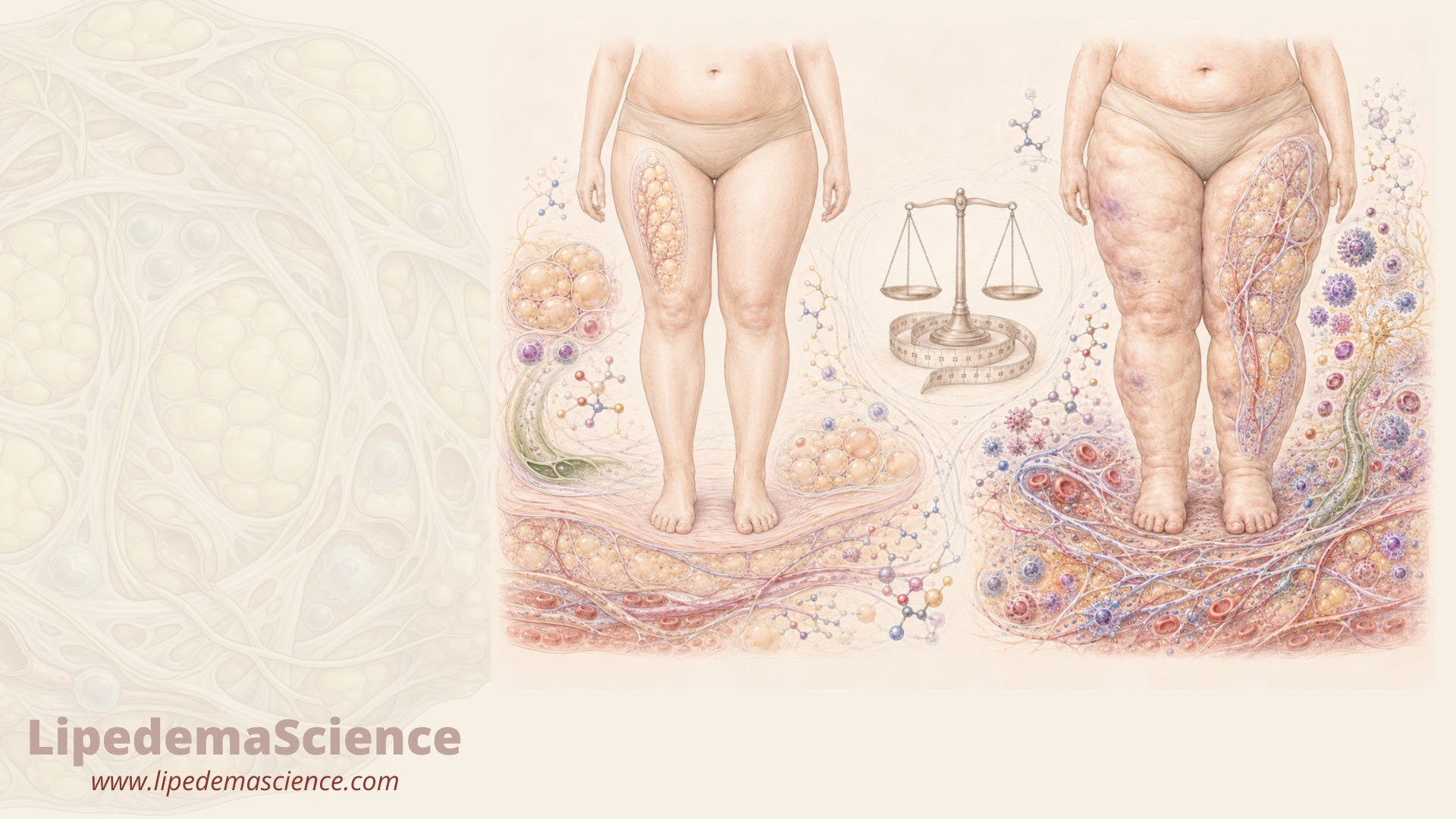
This matters because BMI does not tell us where fat is stored. It does not tell us whether tissue is painful, fibrotic, pressure sensitive or prone to bruising. It does not tell us whether fat is stored around the abdomen or disproportionately in the limbs. For lipedema, those distinctions are not minor details. They are central to the disease.
