

Humans are not created to lose weight, we have not adapted for that. Evolutionary we are meant to gain weight. But evolution did not predict the modern society we are living in today. I think that might be the real key behind lipedema. This is just my belief. I think evolutionary we were able to store more fat, which was beneficial in the old days.
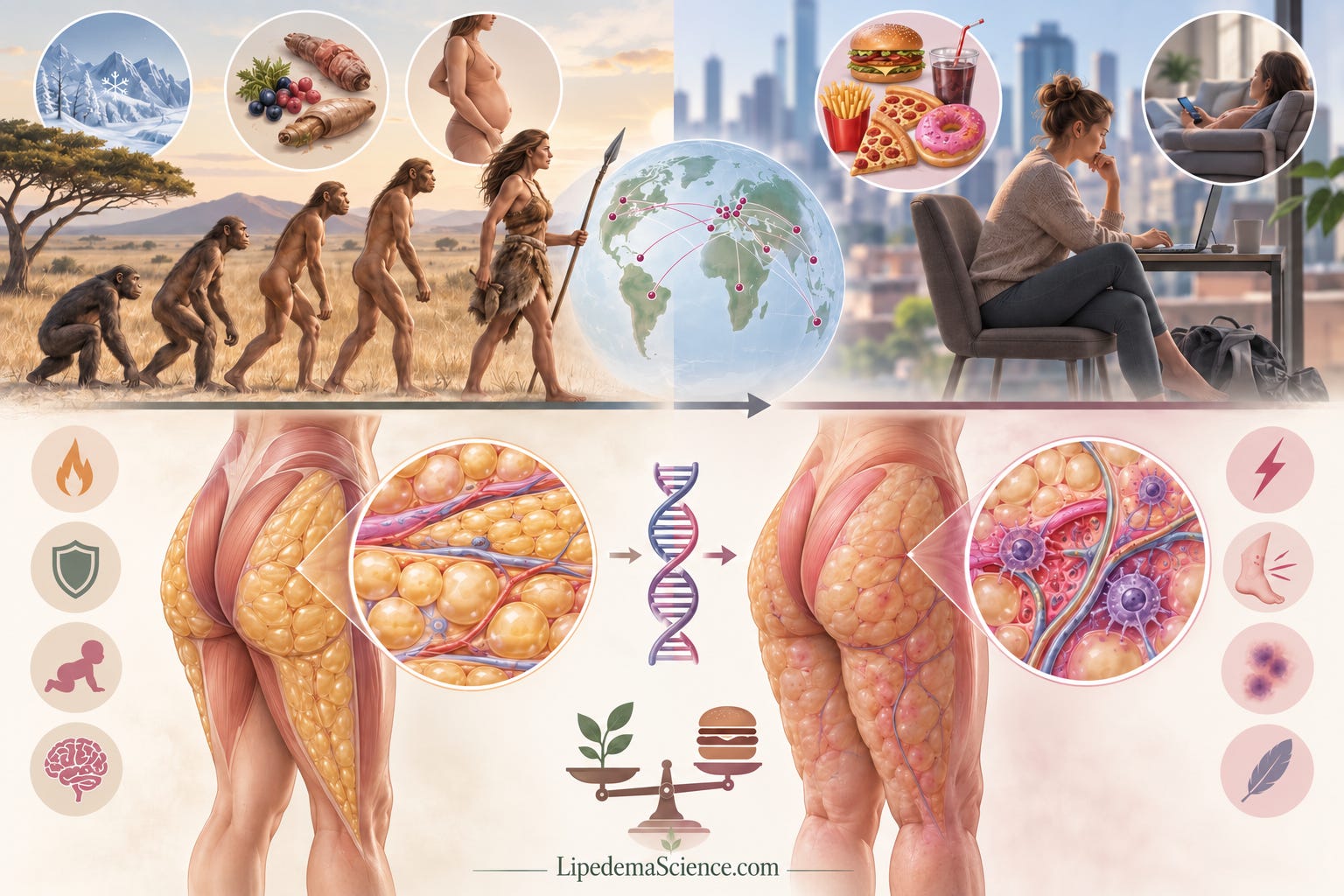
Could lipedema be an old fat storage system gone wrong?
That is my belief, stated as a belief. This article is me testing it rather than defending it.
The idea is tempting because lipedema affects the same lower body fat depot that female bodies seem to protect most strongly. But a tempting idea is not the same as a true one. So I want to lay out the strongest version of the argument, the evidence that supports it, the boring explanations that have to be ruled out first, and the places where the idea breaks. The idea already has a name
The general shape of this belief is not new. In 1962, James Neel proposed the thrifty gene hypothesis. The idea was that genes promoting efficient fat storage may have been useful when famine was common, but harmful once famine stopped arriving. It became one of the most repeated ideas in metabolic medicine. It has also been under attack for many years.
John Speakman argued that famine mortality may not have been strong enough to select for this kind of fat storage, and that if thrifty genes had been strongly selected, almost everyone should become obese in a modern food environment. Andrew Prentice has argued back that fertility may matter more than survival, because famine can suppress fertility more strongly in lean women.
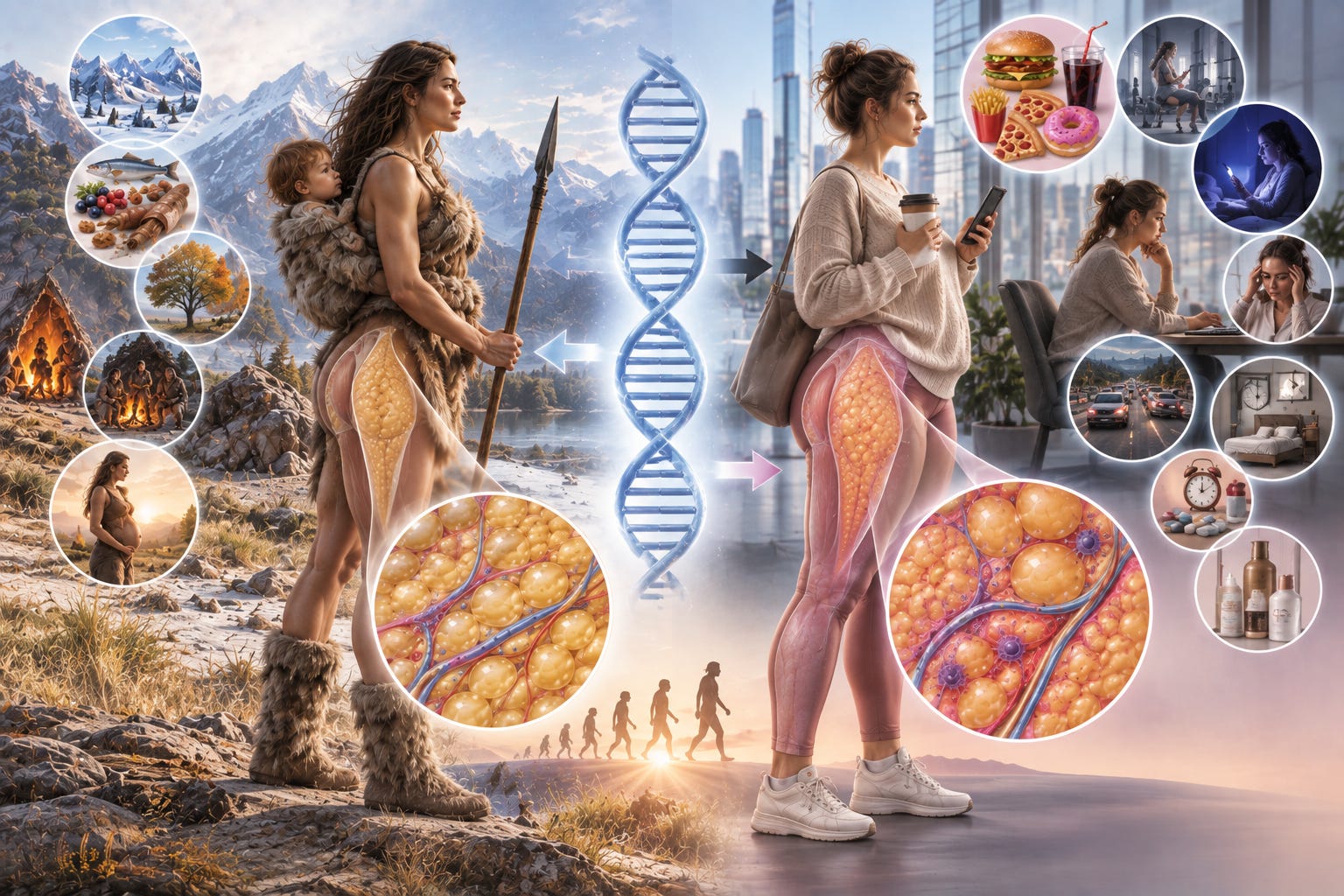
The honest answer is that the field has no clear winner. My belief inherits that uncertainty. None of this is primary lipedema data. But the same idea has already been applied to lipedema. Alexandre Amato published an editorial in Cureus in July 2025, describing lipedema as an ancestral energy storage mechanism that becomes maladaptive in modern abundance. In that version, gynoid fat may once have supported pregnancy, lactation, temperature regulation and metabolic protection.
