

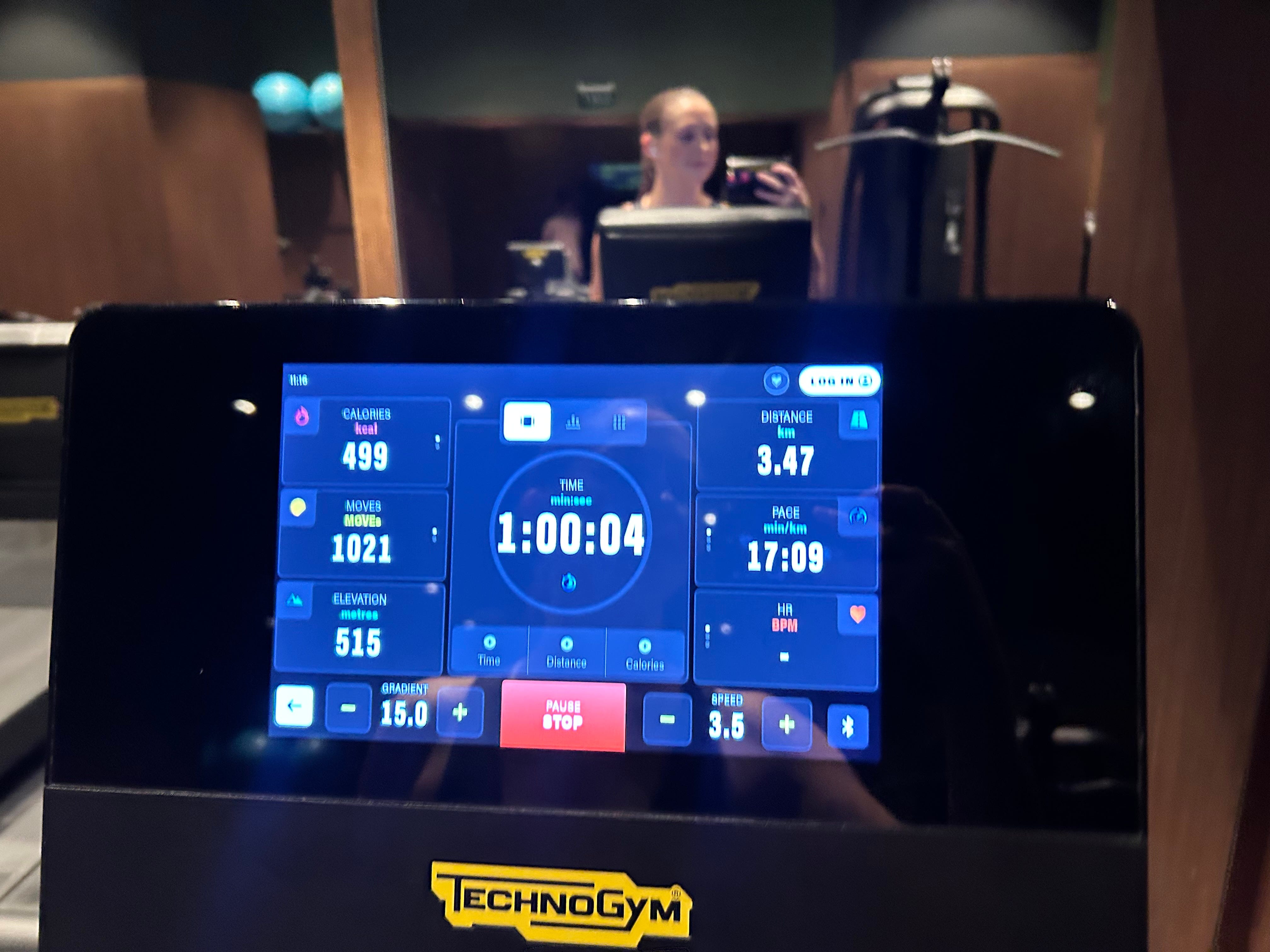
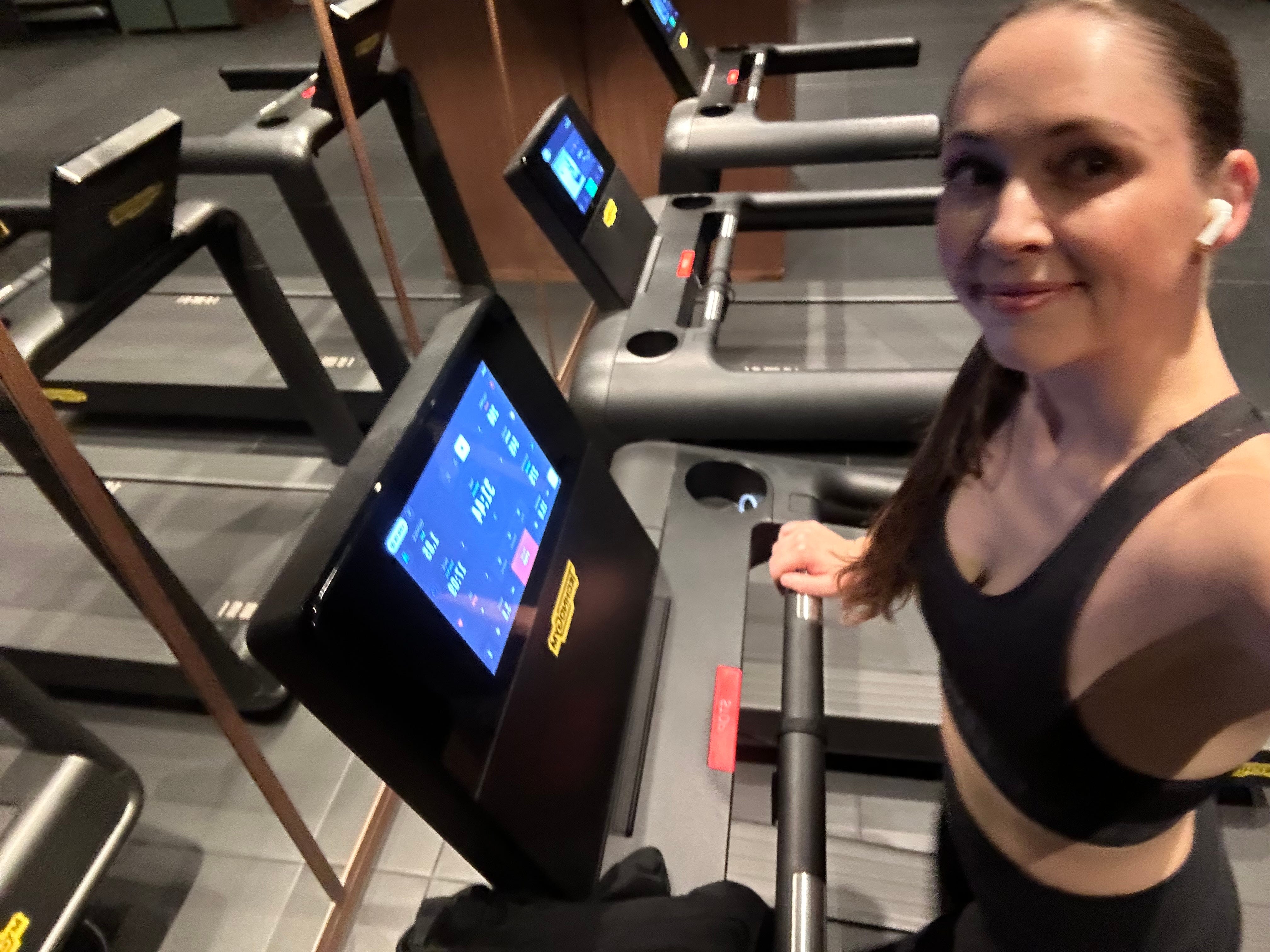
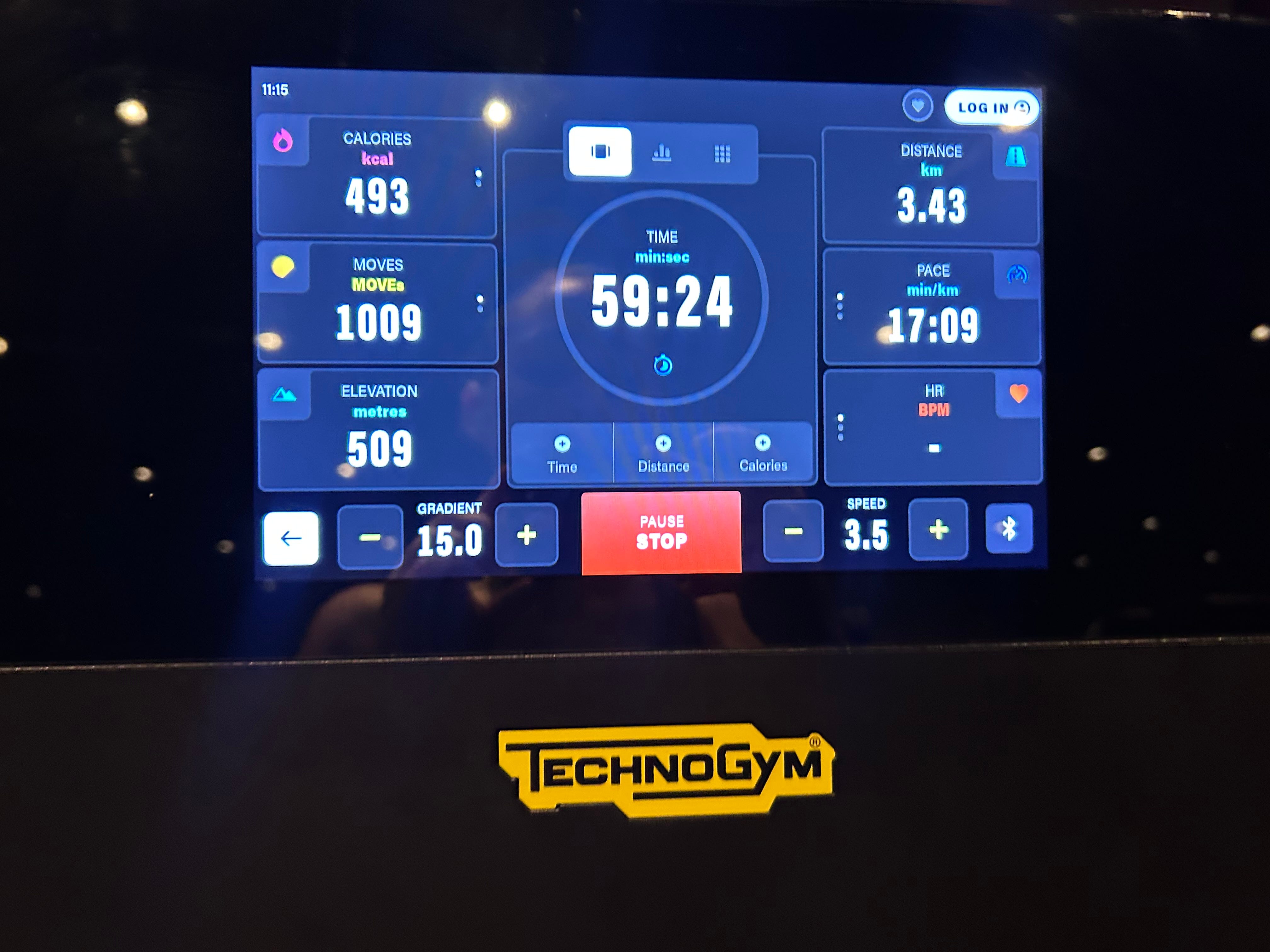
I often walk for 60 minutes on the treadmill at a 15 percent incline. I like it because I can get a proper workout without running, and because it feels very different from simply taking a walk outside on flat ground. My heart rate rises, my legs are working, I am sweating, and after an hour I certainly do not feel as though I have been doing “light exercise”. At the same time, I can often still read, work on an article or think through something while I am walking, which is considerably harder to do while running.
That made me curious about what is actually happening physiologically when we walk uphill. Is steep incline walking simply a more difficult version of walking, or can it genuinely replace some of what we normally associate with running? What happens to calorie expenditure, fat oxidation, cardiovascular fitness, muscles, mitochondria, circulation and bone? And perhaps most interesting for this community, is there anything about uphill walking that makes it particularly useful if you have lipedema?
The answer is more nuanced than “walking is good” or “running burns more calories”. At a sufficiently steep gradient, walking can become a substantial aerobic workout, while still producing considerably less impact than running. That combination makes it interesting, particularly for people who want to increase their cardiovascular fitness and energy expenditure but do not enjoy running or find repeated impact uncomfortable.
There are, however, things running does better, things resistance training does much better, and several claims about exercise and lipedema that have travelled considerably further than the research supporting them.
So let us walk uphill for a while.
A 15 percent incline is not ordinary walking
When you walk on level ground, most of the work involves moving your body forward. Once you increase the gradient, you also have to repeatedly lift your body against gravity. That sounds obvious, but metabolically it makes a surprisingly large difference.
Using the standard American College of Sports Medicine walking equation, walking at a 15 percent incline at approximately 3.5 km/h corresponds to an estimated oxygen consumption of around 25 ml/kg/min, or a little over 7 METs. At 4 to 5 km/h, the predicted demand rises toward approximately 8 to 10 METs. These calculations become somewhat less precise at very steep gradients because our gait changes, but they illustrate how quickly the workload increases.
For context, exercise above 6 METs is conventionally considered vigorous physical activity. A treadmill may therefore tell you that you are “walking”, while your cardiovascular system is dealing with a workload firmly outside what most people would describe as a leisurely stroll.
There is also enormous individual variation. Someone with excellent endurance fitness may walk at 15 percent while having a conversation without much difficulty, while another person may reach a very high heart rate at half that gradient. This is why I would not tell everyone with lipedema to set the treadmill to exactly 15 percent. The gradient is simply a way of manipulating workload. Breathing, heart rate and perceived exertion tell you much more about how hard you are actually exercising.
What does that mean in calories?
At 15 percent incline and around 3.5 km/h, the standard prediction equation gives an energy expenditure of approximately 7.5 kcal per kilogram of body weight per hour. That works out to roughly 450 kcal for a person weighing 60 kg, about 525 kcal at 70 kg and around 675 kcal at 90 kg.
Again, these are estimates rather than laboratory measurements, but the point is not the exact number. The point is that a steep walk can create a meaningful amount of energy expenditure without requiring you to run.
We also have a useful laboratory comparison from the now rather famous 12-3-30 treadmill workout, where people walk at a 12 percent gradient at 3 mph, or approximately 4.8 km/h, for 30 minutes. Researchers compared the workout with self-paced treadmill running while matching the total amount of energy expended. Participants used roughly 308 kcal during 12-3-30 and 310 kcal during running, but the runners reached that amount faster. Running used approximately 13.1 kcal per minute compared with 10.2 kcal per minute during the incline walk.
So yes, running remains more time-efficient. If you want to use 300 kcal as quickly as possible, running will usually get you there first. But if you prefer walking, a steep gradient can bring the metabolic cost much closer to running than flat walking ever would.
But does walking uphill burn more fat?
This is probably where incline walking receives the most enthusiastic marketing, because “fat burning” is an extremely effective phrase if you want people to click on something.
There is a physiological basis for part of the claim. During exercise, our bodies use a mixture of carbohydrate and fat to provide energy. At lower and moderate intensities, fat generally supplies a larger proportion of that energy. As exercise becomes harder, carbohydrate contributes increasingly because it can provide ATP more rapidly.
In the 12-3-30 study, fat supplied approximately 40.6 percent of the energy during incline walking compared with 33.1 percent during self-paced running. On first inspection, you might conclude that incline walking is therefore substantially better for fat loss. But the absolute difference in energy from fat was only around 20 to 25 kcal during the entire session, corresponding to only a few grams of fat. The most likely explanation for the higher fat percentage is also rather ordinary: the incline walk was performed at a lower absolute intensity than the run.
This is where it helps to separate fat oxidation during exercise from loss of body fat over time. They are related concepts, but they are not interchangeable.
If you burn a greater proportion of fat during a workout, the body can compensate later by changing which fuels it uses. Likewise, a hard exercise session may rely heavily on carbohydrate while you are exercising but still contribute perfectly well to fat loss over weeks if your total energy expenditure exceeds your energy intake. The human metabolism is constantly shifting between substrates throughout the day.
Fun fact: a workout can therefore be excellent for fat loss even if it is not particularly impressive in the “percentage of fat burned” department. The body is annoyingly unwilling to organize its metabolism according to fitness-influencer graphics.
For long-term body-fat reduction, what matters much more is how the activity contributes to total energy expenditure, whether your diet creates an appropriate energy balance, whether you preserve muscle, and whether the exercise is something you can actually repeat consistently.
This is one reason I find incline walking useful. It can increase energy expenditure substantially without making every session a hard running session that requires considerably more recovery.
What about lipedema fat?
This question deserves more care because the old statement that “lipedema fat cannot be lost through diet or exercise” is still repeated frequently.

A 2025 study by Cifarelli and colleagues examined women with obesity and lipedema before and after approximately 9 percent diet-induced weight loss. The researchers measured body composition, insulin sensitivity and adipose-tissue biology. Leg fat decreased along with total fat mass, with broadly similar relative reductions in abdominal and leg fat. At the same time, the biological characteristics of the adipose tissue did not simply normalize: markers associated with inflammation and fibrosis remained altered.
This gives us a more sophisticated picture of lipedema adipose tissue than the idea that it is completely metabolically untouchable. Lipedema-affected regions can lose fat during negative energy balance, but losing fat does not necessarily remove the characteristic body-fat distribution or reverse the underlying tissue abnormalities.
For incline walking specifically, we have no clinical study demonstrating that it selectively mobilizes lipedema adipose tissue. We also do not have evidence that a particular treadmill gradient, heart-rate zone, fasting state or training intensity preferentially reduces lipedema fat. It is more scientifically reasonable to treat incline walking as a way of increasing overall energy expenditure and improving fitness, rather than as a disease-specific fat-burning method.
That does not make it less useful. It simply puts the mechanism in the right place.
Your heart does not care whether the treadmill calls it “walking”
One of the reasons I wanted to write about this is that many people still associate cardiovascular fitness with running. If you cannot run, do not like running or experience discomfort when you run, it can feel as though you are choosing an inferior form of exercise.
Physiologically, that is not how the cardiovascular system works.
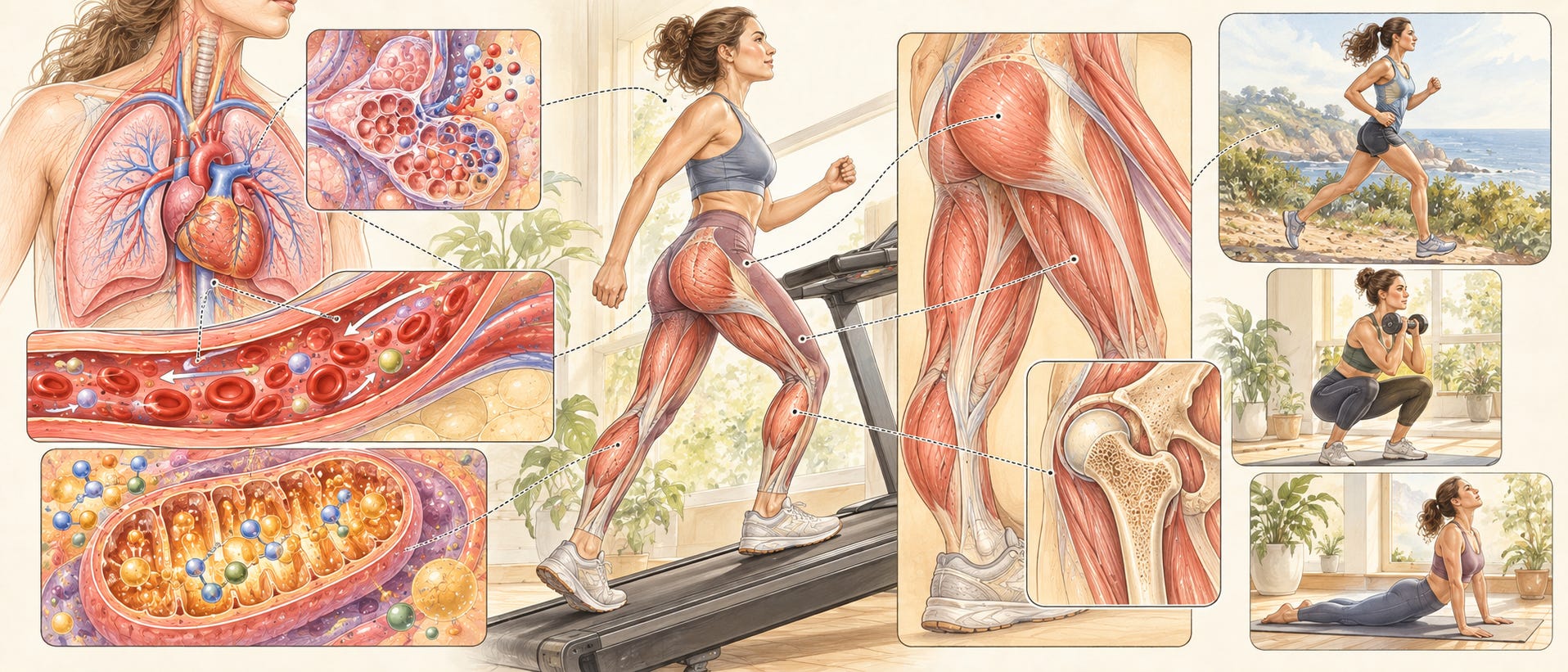
Your muscles require oxygen during exercise. As that requirement increases, heart rate rises, cardiac output increases and blood flow is directed toward the working muscles. Over time, repeated aerobic training can improve stroke volume, vascular function, oxygen delivery and the muscles’ ability to extract and use oxygen. Whether you produced the workload by running, walking steeply uphill, cycling or rowing is much less important than the actual physiological demand.
A steep incline allows you to create that demand without increasing speed to the point where you have to run.
This can be especially useful if you want to accumulate a large amount of aerobic exercise each week. Running has an obvious advantage because it produces a high workload quickly, but the mechanical cost is also higher. If you can comfortably do 45 to 60 minutes of incline walking several times per week while a similar amount of running leaves your joints or lower legs unhappy, the walking may ultimately allow you to accumulate more aerobic training.
There is no prize for using the exercise mode that looks hardest if it means you do half as much of it.
The mitochondrial side of the story
Mitochondria have become fashionable enough that they occasionally seem to be blamed for, or credited with, almost everything that happens in human health. They are nevertheless genuinely important when we talk about aerobic exercise.
Mitochondria are central to oxidative energy production inside our cells, and skeletal muscle adapts strongly to repeated endurance exercise. Research in general exercise physiology indicates that training volume is an important stimulus for increasing mitochondrial content, while higher-intensity exercise can provide additional adaptations related to mitochondrial respiratory capacity.
This is where incline walking can fit nicely into a broader fitness program. A relatively comfortable uphill walk can allow someone to accumulate 40, 50 or 60 minutes of continuous aerobic work without the same impact as running. Harder intervals, whether performed through running, fast incline walking, cycling or another activity, can then provide a separate high-intensity stimulus.
For lipedema, however, this is currently an extrapolation from general exercise physiology. The 2024 SISMeS/SIF consensus discusses mitochondrial function, lymphatic drainage and inflammation as possible mechanisms through which exercise may benefit people with lipedema, but the same consensus also acknowledges that standardized exercise prescriptions for lipedema are lacking.
That difference between plausible mechanism and demonstrated clinical effect is important throughout lipedema research. Exercise unquestionably affects mitochondria. What has not been demonstrated is that a particular form of exercise specifically corrects a mitochondrial abnormality in lipedema.
Your glutes, hamstrings and calves will notice the hill
Walking uphill also changes muscular recruitment. Compared with level walking, the hip extensors and calf muscles have to contribute more as you repeatedly propel your body upward. This is why a steep treadmill walk often produces much more noticeable work in the glutes, hamstrings and calves than a flat walk at the same speed.
For people who are sedentary or returning to exercise, this can improve muscular endurance and general lower-body capacity. For someone who already trains regularly, however, incline walking should not be confused with progressive resistance training. The muscles may work hard, but the mechanical stimulus is very different from gradually increasing loads in exercises such as squats, deadlifts, split squats, hip thrusts or calf raises.
If body recomposition is one of your goals, this is worth remembering. Incline walking can help increase energy expenditure and cardiovascular fitness, while resistance training provides the stronger signal to maintain or build muscle.
A useful way to think about the different roles is:
Incline walking: aerobic volume, energy expenditure and muscular endurance with relatively low impact.
Harder cardiovascular work: higher cardiorespiratory intensity and VO₂max development.
Resistance training: muscle, strength, glucose-disposal capacity and skeletal loading.
Yoga or mobility work: flexibility, balance, movement control, breathing and recovery.
You do not have to choose one and declare it the winner. A healthy body needs more than one type of stimulus.
Lower impact is one of incline walking’s biggest advantages
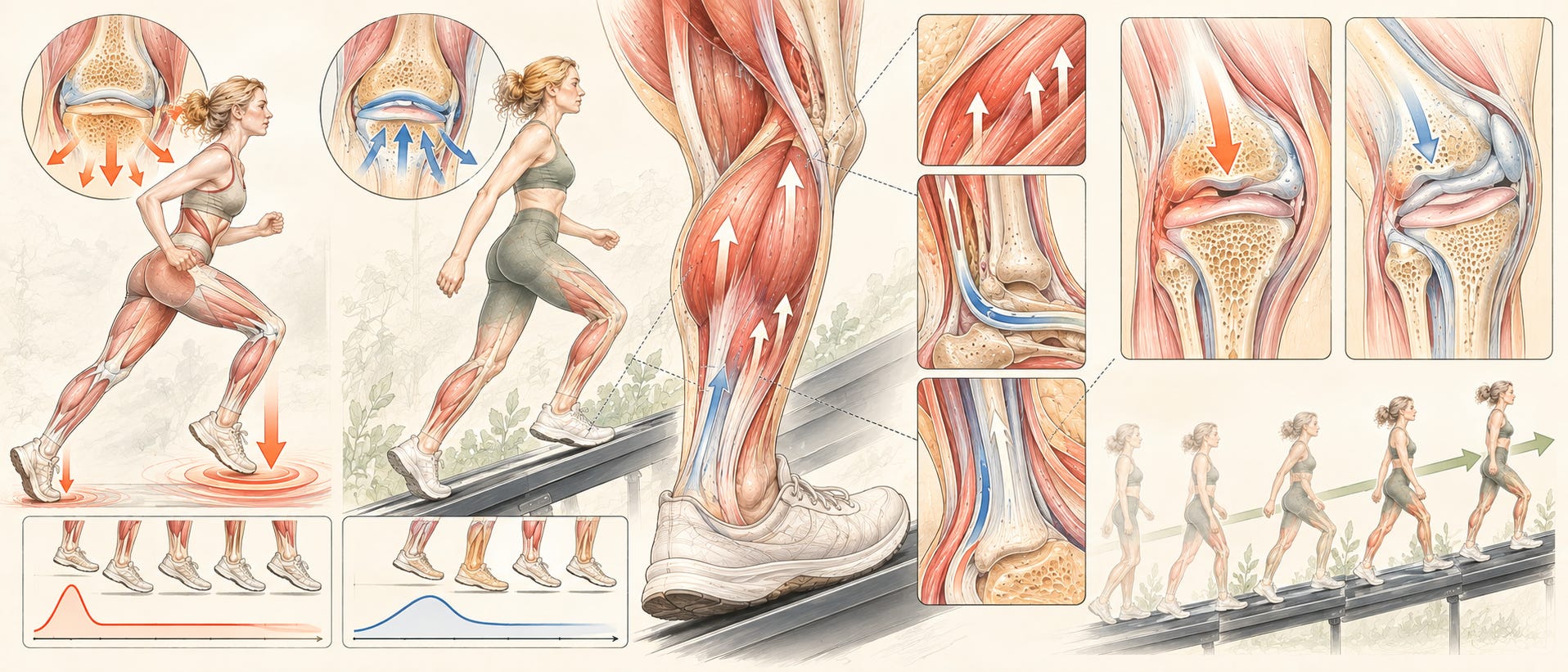
Running creates greater ground-reaction forces than walking, even when the cardiovascular workload is relatively similar. That is not automatically a disadvantage. Mechanical loading is part of how the body adapts, and impact has particular value for bone. But if repeated impact contributes to pain or limits how much exercise you can tolerate, steep walking offers an interesting alternative.

Biomechanical studies show that uphill walking can substantially increase metabolic demand without producing the same impact profile as running. Some studies have also found reductions in particular measures of knee loading when people walk more slowly uphill compared with walking faster on level ground.
This does not mean a 15 percent incline is effortless for the musculoskeletal system. The workload is redistributed rather than disappearing. Calves and plantar flexors work considerably harder, ankle position changes and the Achilles tendon experiences repeated loading. Someone who suddenly progresses from occasional flat walking to an hour at a very steep gradient can therefore develop problems even if the cardiovascular system feels completely capable of continuing.
This is one area where enthusiasm and connective tissue may have slightly different timelines.
Increasing either duration, speed or gradient gradually gives muscles and tendons time to adapt.
Where running has the advantage: bone
If incline walking sounds extremely favourable so far, there is an important limitation.
Walking is not particularly powerful as a bone-building exercise.
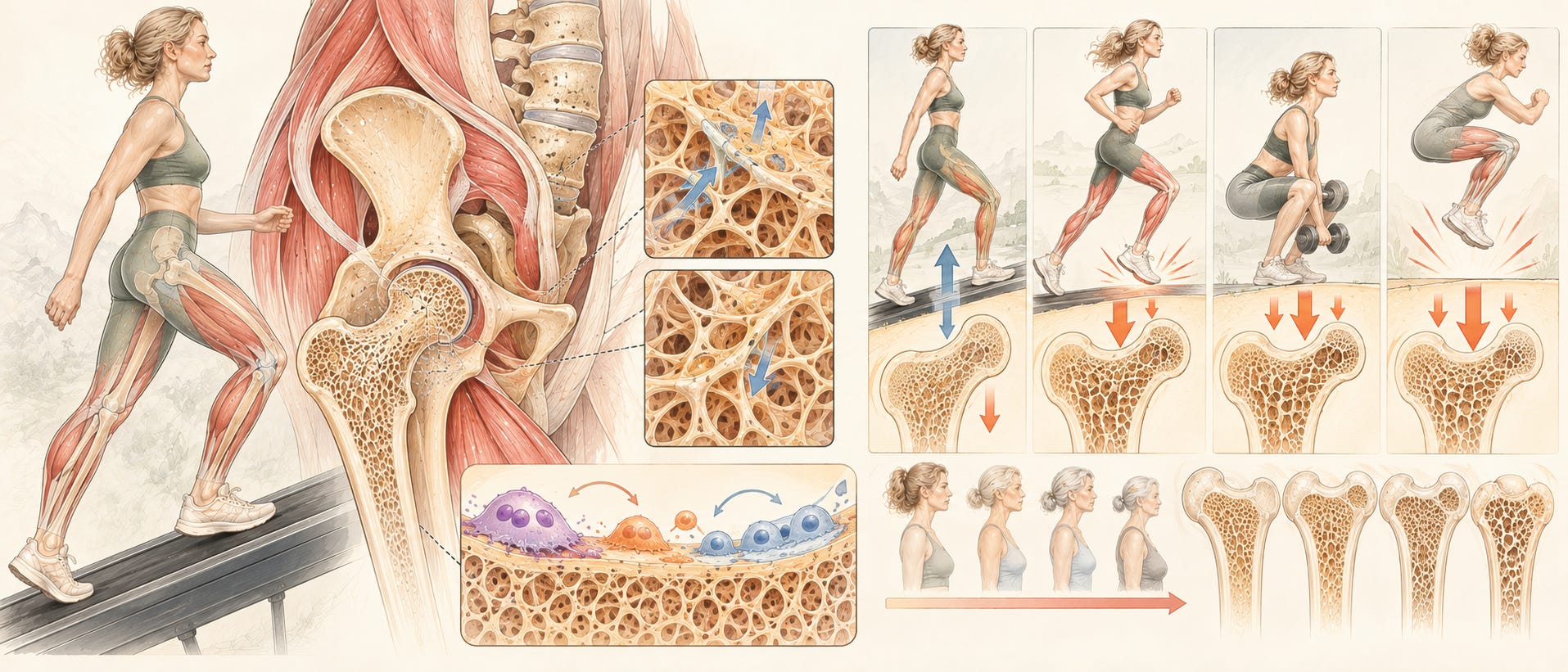
Bone adapts to mechanical loading, particularly when the forces are relatively high, rapidly applied or different from the loads the skeleton experiences every day. Running creates a stronger impact stimulus than walking, while jumping and progressive resistance training can provide even more targeted skeletal loading.
Walking studies generally show relatively modest effects on bone mineral density, particularly at the spine. Some benefits are seen at the hip, especially with longer-term activity, but we currently have no evidence showing that steep incline walking suddenly behaves like running from a bone perspective.
So someone can absolutely choose incline walking instead of running for cardiovascular exercise, but I would not assume that it replaces every physiological benefit of impact.
If bone health is important, progressive resistance training becomes even more valuable. For people who can tolerate it, smaller amounts of running, jumping, hopping or other impact activity can also complement an otherwise low-impact training routine.
This becomes particularly relevant as women age and estrogen levels change, because preserving both muscle and bone becomes increasingly important.
Hormones: more exercise is not automatically healthier
Exercise has enormous benefits for metabolic health, insulin sensitivity and cardiovascular function, but there is a point at which the conversation about “burning more calories” can become counterproductive.
Women who combine high exercise volumes with insufficient food intake can develop low energy availability. The body then has insufficient energy to support both training and normal physiological functions optimally. Reproductive signalling can change, menstrual cycles may become irregular, estrogen exposure can fall and bone health can be affected.
The important point is that this is not unique to running.
A person who performs long incline-walking sessions every day while aggressively restricting food can create the same basic problem. If an hour of steep walking uses several hundred calories, that energy expenditure still has to be considered as part of the overall energy budget.
This is especially relevant for women who are already relatively lean but want to improve body composition. Reducing fat mass while preserving or increasing muscle is a very different goal from simply trying to make body weight as low as possible. For recomposition, resistance training, adequate protein, sufficient energy availability and gradual changes are generally much more useful than trying to maximise treadmill calories every day.

What about circulation and lymphatic flow?
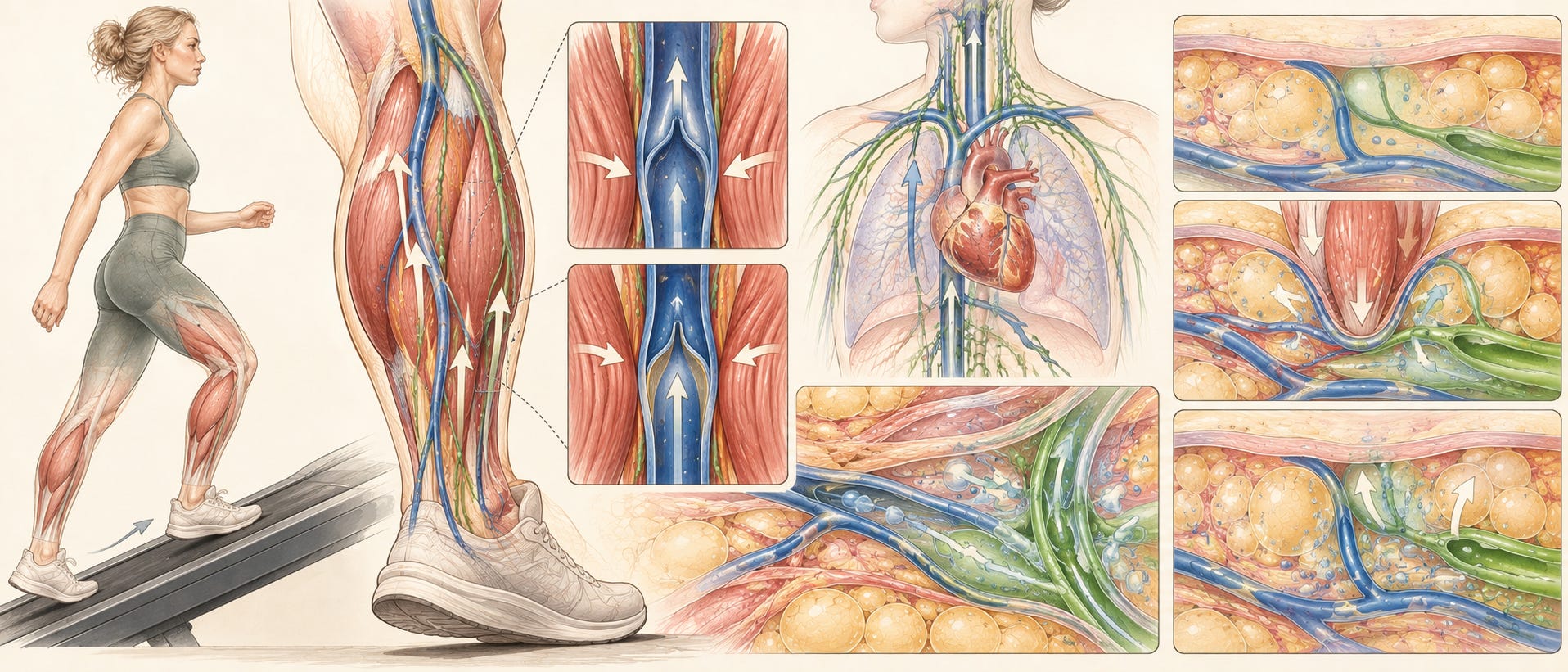
Walking has another physiological feature that is particularly interesting in the context of lipedema: every step repeatedly activates the muscles of the lower leg.
The calf muscle pump plays an important role in helping venous blood return from the lower extremities toward the heart. Skeletal-muscle contractions also influence interstitial fluid movement and lymphatic flow, and human studies outside lipedema show that lymph flow can increase substantially during exercise.
Because uphill walking increases the demand on the plantar flexors and calf muscles, it is reasonable to think that these pumping mechanisms are active during incline walking. What we cannot currently say is that a particular gradient produces a disease-specific lymphatic benefit in lipedema. No study has directly measured lymphatic transport during 15 percent treadmill walking in women with the condition.
So there is a physiologically plausible reason to be interested in walking and circulation, but the research does not support turning that into claims that incline walking specifically “drains” lipedema tissue.
And this is where the lipedema research becomes surprisingly thin
Considering how often exercise recommendations are given to women with lipedema, there are remarkably few intervention studies.
A systematic review published online in 2025 identified only six exercise-training studies including a total of 115 women with lipedema. Across those studies, exercise appeared to improve outcomes such as pain, other symptoms, quality of life, functional performance and in some cases limb volume or circumference. Effects sometimes appeared greater when exercise was combined with compression, but the authors emphasized the small sample sizes, heterogeneous interventions and need for considerably better trials.
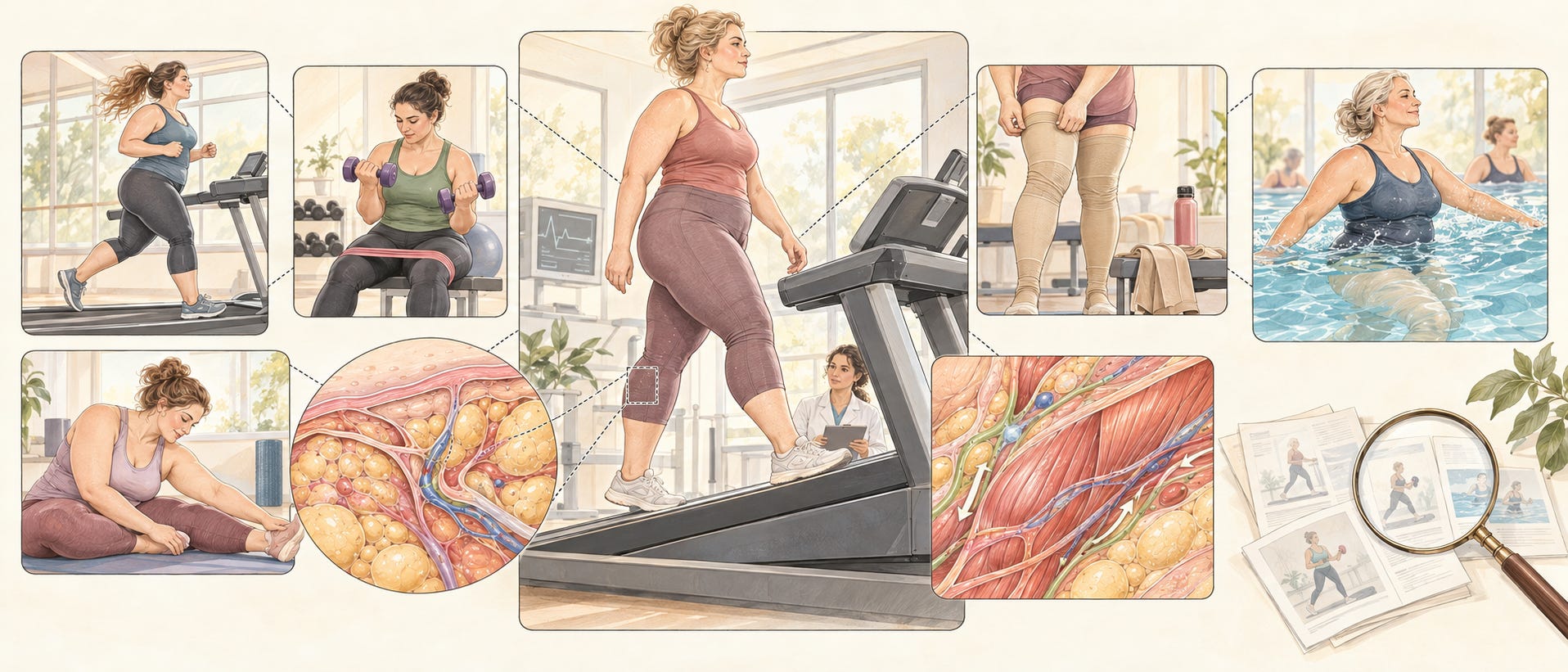
Importantly, there is currently no published trial specifically isolating incline walking, running or conventional progressive resistance training in women with lipedema. Strength exercises have mostly appeared inside multimodal programs, often alongside aerobic exercise, stretching, compression or other conservative treatments.
There has been an interesting NTNU feasibility study in which women with lipedema completed an eight-week treadmill HIIT program using 4 × 4-minute intervals at around 85 to 95 percent of maximal heart rate. Twenty-two women completed the program and no adverse events were reported, although formal peer-reviewed results have not yet been published. This does not prove that high-intensity exercise is optimal for lipedema, but it does make universal claims that women with lipedema must avoid vigorous exercise difficult to justify.
Atan and Bahar-Özdemir’s randomized study is another interesting example because all groups performed an exercise program containing aerobic training, strengthening and stretching. The aerobic component was not merely gentle movement. Again, the study was not designed to compare high and low intensities, so it cannot tell us which intensity is best. It does remind us how limited the evidence is behind rigid rules about how women with lipedema are “supposed” to exercise.
So, do you need to run?
No. And I think this is probably the most practical message from everything I have read.
Running is excellent cardiovascular exercise. It is time-efficient, it can provide a strong stimulus for VO₂max, and its impact contributes something useful for bone. If you enjoy running and tolerate it well, there is currently no evidence showing that having lipedema means you should automatically stop.
But running is not a requirement for becoming aerobically fit.
A steep incline can transform walking into moderate or vigorous cardiovascular exercise while maintaining a substantially lower impact profile. For someone who does not enjoy running, experiences discomfort from repeated impact or simply prefers walking, this opens up a very useful option.
And if all you currently do is walk, increasing the incline gradually can be a way to increase the physiological stimulus without having to cross some imaginary line where “proper exercise” suddenly begins.
Walking uphill can contribute to cardiovascular fitness, mitochondrial adaptation, metabolic health, energy expenditure and lower-body muscular endurance. It can be performed gently, or it can become surprisingly hard. It can be used for longer aerobic sessions, or the gradient and speed can be manipulated to create intervals.
What it cannot do particularly well is replace progressive resistance training for muscle and bone, and there is no evidence that it selectively removes lipedema fat.
That is why I would rather think about incline walking as one very useful piece of a larger exercise picture.
For someone interested in long-term health, a combination might include regular incline walking for aerobic volume, resistance training for muscle and bone, and some harder cardiovascular work if desired. Yoga, mobility work or other forms of movement can serve completely different purposes again.
The goal does not have to be becoming a runner.
The goal can simply be becoming stronger, fitter, more metabolically healthy and more capable of moving your body in ways you actually enjoy enough to continue doing.
And if that involves spending an hour walking uphill on a treadmill instead of running, the physiology suggests that your heart is unlikely to complain that you chose the wrong verb.
This is so interesting. The first doctor to treat my lipedema categorically told me to stop running as it would worsen my condition