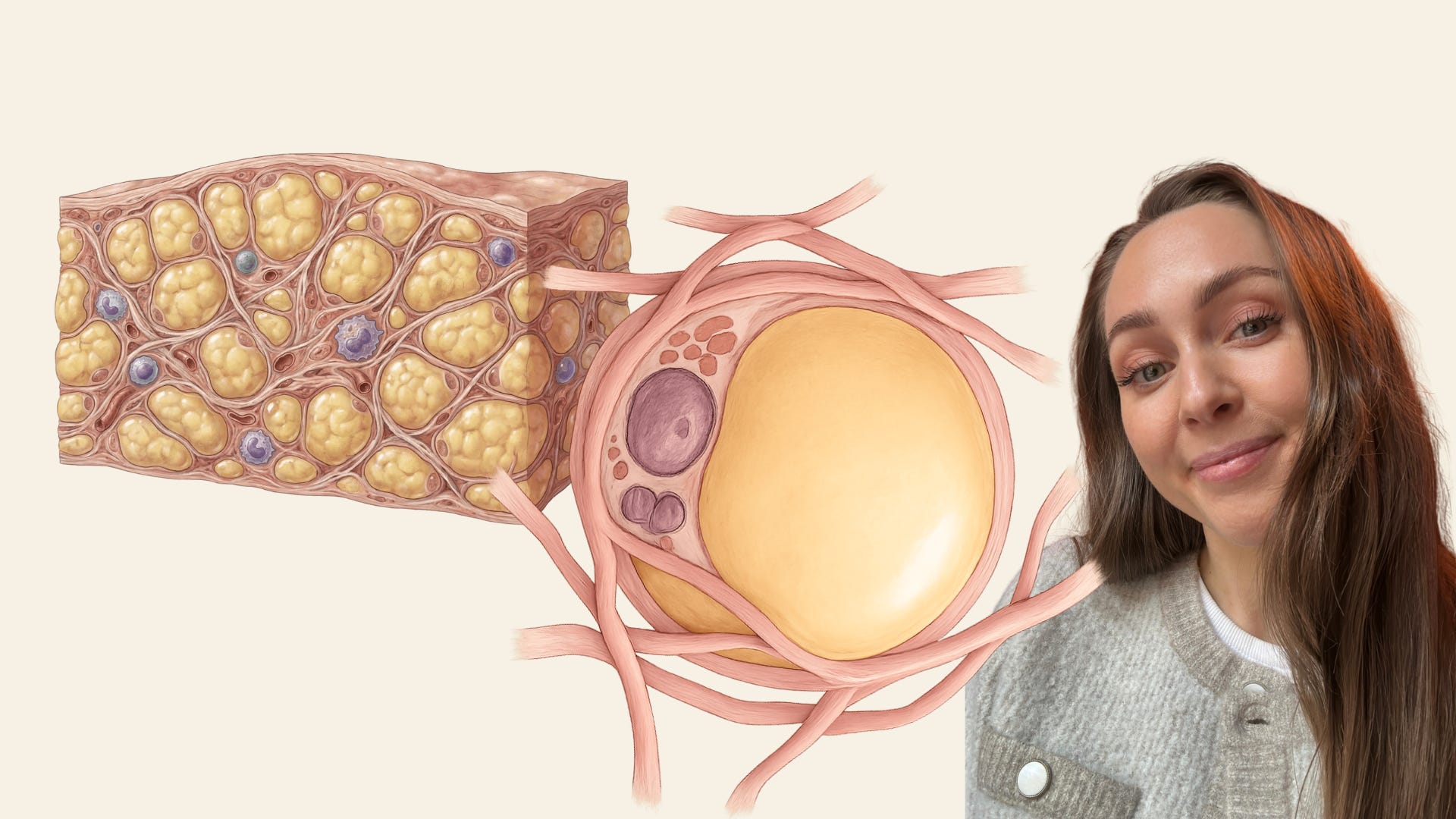
Many women with lipedema describe a moment when something shifts — the legs begin to feel heavier, the skin less elastic, the tissue somehow “denser.” What used to be soft becomes firm and tender to touch. This gradual change is more than just a sensation; it reflects a biological process known as fibrosis — the slow hardening of the connective tissue that surrounds fat cells.
Fibrosis is not unique to lipedema, but in this condition it behaves differently. It develops quietly within the fat tissue, long before the swelling or nodules become visible. Over time, it affects how the tissue feels, how it looks, and how it responds to treatment.
What is fibrosis?
Fibrosis happens when the body produces too much collagen — the protein that gives connective tissue its structure. Normally, collagen acts like scaffolding, keeping the skin firm yet flexible. But when inflammation or pressure persist, fibroblast cells become overactive and start laying down more collagen than the body can break down. The result is a stiffer, thicker, and less elastic tissue — one that feels tight and sometimes painful.