

What can these findings teach us about nutrition, insulin regulation and the questions researchers still need to investigate in lipedema?
When we talk about nutrition, we often focus on what food contains. We compare calories, carbohydrates, protein, fat and fibre, and use this information to make decisions about what we eat. For people living with lipedema, these discussions can become particularly complicated. Many women are advised to reduce carbohydrates, avoid certain foods, follow specific diets or carefully manage their calorie intake, often without a clear explanation of which recommendations are supported by research and which are based largely on theory or individual experiences. Yet food is considerably more complex than the numbers printed on a nutrition label. How ingredients are processed, how their physical structure changes during manufacturing and how nutrients become available during digestion may all influence what happens in the body after a meal.
A new study published in Nature Metabolism in October 2026 offers an opportunity to explore this complexity. Researchers in the United States wanted to understand whether the degree of food processing could influence metabolism and brain activity independently of the nutritional composition of a meal. They designed an experiment in which participants consumed two meals containing approximately 300 calories each, carefully matched for several nutritional characteristics, including carbohydrates, protein, fat, fibre and sodium. One meal consisted primarily of minimally processed foods, while the other contained a selection of ultra-processed products. The researchers then followed what happened inside the participants’ bodies over the following three hours, measuring changes in blood glucose, insulin, energy expenditure and the way different nutrients were used for energy. They also investigated how the brain responded to images of food.
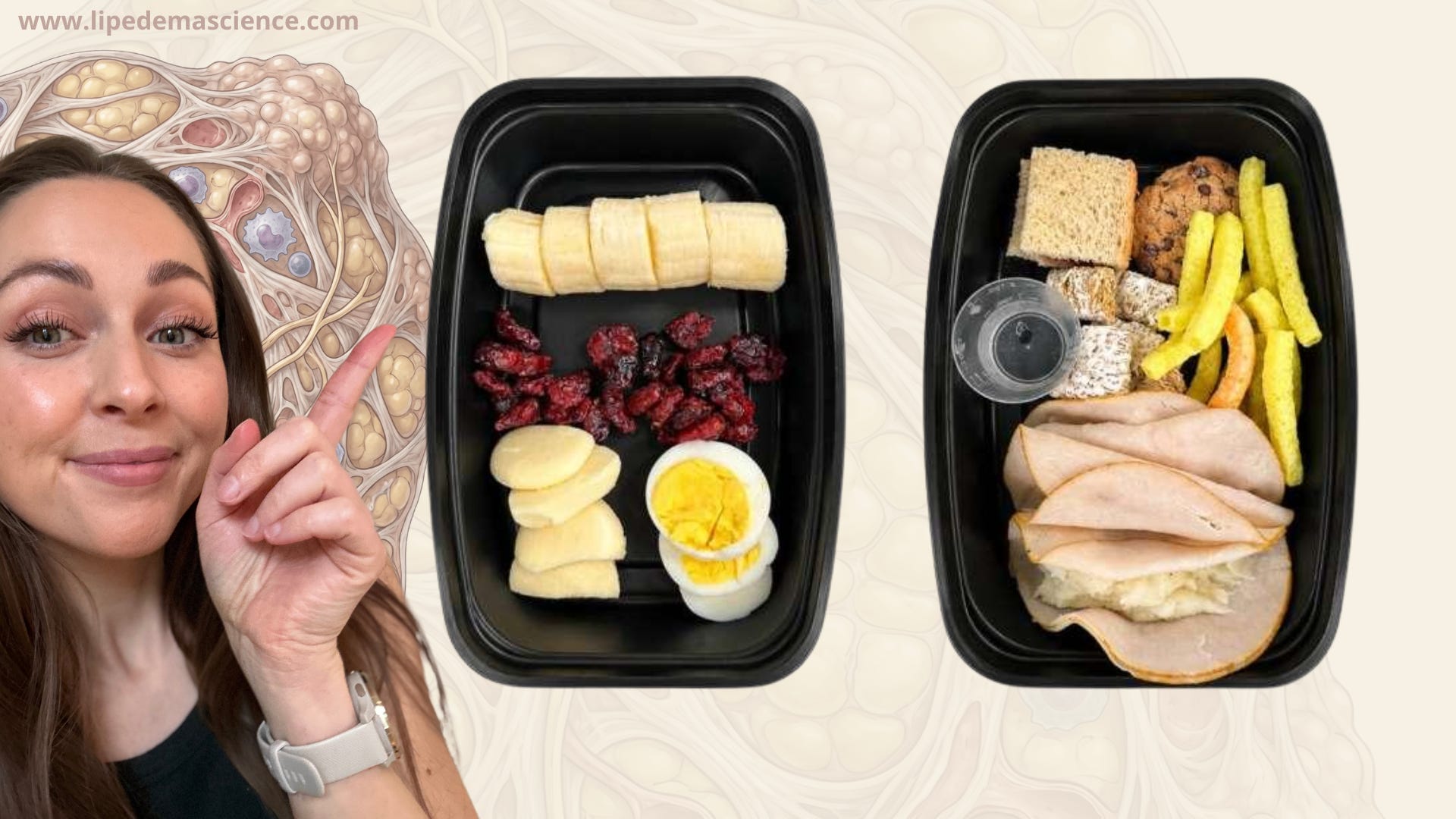
The results raise questions that extend beyond the familiar debate about whether ultra-processed foods are healthy or unhealthy. Despite the meals being nutritionally comparable, the researchers observed differences in insulin responses, glucose regulation and energy metabolism, alongside differences in brain activity associated with food processing. For those of us interested in lipedema, a condition involving changes in adipose tissue, these findings are worth examining, although the study itself did not include people with lipedema. At LipedemaScience, our purpose is to bring relevant research from different scientific fields into the lipedema conversation, explain the underlying biology and distinguish established evidence from hypotheses that still require investigation. Supported by readers around the world, this independent platform makes it possible to explore research in greater depth rather than reducing complex findings to another list of foods to eat or avoid. In this article, we will examine what the researchers actually discovered, why two nutritionally similar meals may produce different physiological responses, and what these findings might mean for our understanding of nutrition and lipedema.
Not a LipedemaScience member yet? Get 50% off your first year!
Stay informed with the latest lipedema research and explore nutrition, food science, and health through evidence-based articles. Prefer listening? Enjoy the articles as podcasts directly in the Substack app!
Join LipedemaScience today and become part of our growing global community!
