

I developed lipedema when I was around 15 years old.
For me, the timing was very clear. It happened after I started hormonal birth control. My body changed quickly, in a way that felt different from normal teenage weight gain. The fat on my legs did not behave like ordinary fat. It felt heavy, painful and out of proportion. At the time, I did not have the language for what was happening. I did not know that lipedema often appears around major hormonal transitions such as puberty, pregnancy, menopause or sometimes after hormonal contraception. I only knew that something had changed in my body, and that I could not control it in the way I thought I should be able to.
Today, after many years of reading, studying, living with lipedema and writing about it, I no longer see lipedema as simply a problem of fat storage. I see it as a disorder of tissue biology. Lipedema involves subcutaneous fat, but also blood vessels, connective tissue, pain pathways, immune cells, fluid handling, hormones and possibly lymphatic function. It is not only about size. It is about how the tissue behaves. That distinction matters, because it changes how I understand the rest of my life.
LipedemaScience is where I share deeper reflections on lipedema, biology, hormones, inflammation, pain, nutrition, surgery, and the lived experience of having this condition. My goal is to make complex science understandable without oversimplifying it. If you want thoughtful, research-informed writing that connects evidence with real life, I would love to have you here.
After my lipedema started, my body went through several major forms of trauma. Some were physical. Some were emotional. Some were both. But the more I learn about the body, the less meaningful that distinction becomes.
When I was 18, I developed severe sepsis caused by Fusobacterium necrophorum. In my case, it became Lemierre’s syndrome, a rare but life threatening condition where an infection can spread into the bloodstream and cause thrombosis, septic emboli and abscesses. My lungs were severely affected. I was frighteningly close to death.
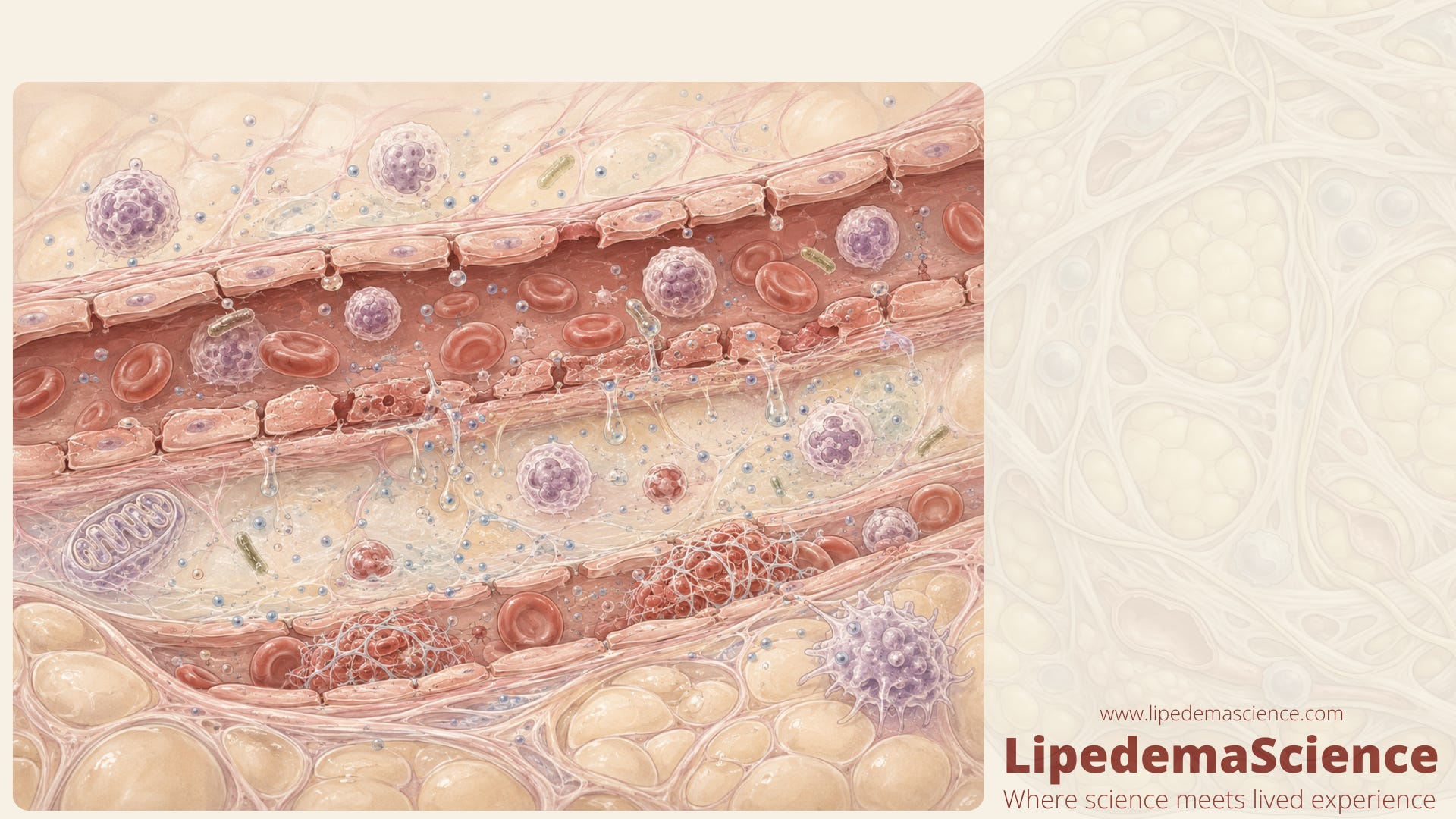
Because the infection was so rare, the doctors did not immediately know what they were dealing with. The situation was critical, and I was given several extremely strong courses of antibiotics. At that point, the priority was survival. No one was thinking about long term immune effects, endothelial damage, microbiome disruption or how a near fatal infection might affect a young body.
And of course, why would they? I was 18. I just needed to survive.
But when I look back now, I cannot separate that event from the rest of my body story. Sepsis is not just an infection. It is a systemic immune crisis. It affects inflammation, blood vessels, coagulation, metabolism, mitochondria and immune regulation. For some people, the body does not simply return to its previous state after sepsis. Research on post sepsis syndrome suggests that some survivors may experience long term immune dysregulation, low grade inflammation, metabolic changes and increased vulnerability after the acute infection is over.
My lipedema had already started. And I do wonder whether such a severe inflammatory and vascular event changed the internal environment in which my lipedema existed.
That is the question I keep returning to. Not what caused everything. But what turned up the volume.
When I was 20, my father died suddenly of cancer. I went into deep grief and depression. Losing a parent that young is not only an emotional experience. It changes the whole body. It changes sleep, appetite, breathing, energy, hormones, stress responses and immune function. Grief is often spoken about as something that happens in the mind, but that has never made sense to me. I felt grief in my body. I felt it in my nervous system. I felt it in my fatigue, my heaviness and my ability to function.
Bereavement research supports this more embodied view of grief. Severe grief can be associated with changes in inflammatory signaling, cortisol patterns, immune function and sympathetic nervous system activity. Again, this does not mean grief causes lipedema. That would be too simple, and in my own timeline it would be wrong. But grief can change the biological terrain. A body in grief may become more inflamed, more exhausted, more pain sensitive and less resilient. For someone with lipedema, that may matter.
Lipedema tissue is already sensitive. Many of us live with tenderness, pressure pain, swelling, easy bruising and a feeling that the tissue becomes angry under certain conditions. If grief increases inflammatory tone, disrupts sleep and changes stress biology, then it is biologically plausible that symptoms may feel more intense during or after periods of deep loss. The disease may already be there. But the body carrying the disease is not static.
Between the ages of 25 and 27, I went through another kind of stress. I was doing my master’s degree in food science after studying nutrition. At the time, it was possible in Norway to move from nutrition into food science, but it was not an easy transition. The two fields are very different. Nutrition had taught me about the human body, metabolism and health. Food science demanded microbiology, chemistry, processing, laboratory methods, technology and a completely different scientific language.
By subscribing, you support the time and work it takes to read research, translate complex mechanisms, and turn them into articles that people with lipedema can actually understand and use. This space is built for curiosity, nuance, and honest conversations about what we know, what we do not know yet, and what patients experience in their own bodies. Your support helps me keep creating this kind of content.
The year between those two studies was intense. My study friends and I had to learn laboratory techniques in one year that food science students had spent years building. Then we continued into two more years of demanding food science. I spent so much time in the lab, writing lab reports, studying and trying to catch up. That was the period when my lipedema became its worst.
I do not think this was a coincidence, but I also do not want to turn my story into a simplistic claim. Chronic stress is not a magic explanation for lipedema. It does not explain why lipedema has such a strong female pattern, why onset clusters around hormonal transitions, why the tissue is distributed in specific areas, or why the fat behaves differently from ordinary weight gain.
But chronic stress does affect systems that are relevant to lipedema. It activates the HPA axis, cortisol signaling, the sympathetic nervous system, inflammatory cytokines, sleep disruption, insulin sensitivity, mast cells, pain pathways and sometimes movement patterns. Acute stress can be adaptive. Chronic stress is different. It keeps the body in a prolonged state of biological vigilance. During those years, my body was not only studying. It was surviving.
I was mentally stretched, but I was also physically inflamed, tired and under pressure. I had less capacity for recovery. I had more heaviness. My pain and swelling felt worse. My body felt harder to regulate.
This is one of the reasons I find the phrase “mental health” too narrow. It makes it sound as if stress lives only in thoughts and emotions. But chronic stress also lives in cortisol rhythms, immune cells, blood sugar regulation, gut function, vascular tone, muscle tension, sleep architecture and pain sensitivity. The body does not divide our experiences into neat categories.
Then, when I was 30 and 31, I went through lipedema surgery. I had four surgeries between 2021 and 2022. Surgery helped me enormously. It gave me back mobility, freedom and a body that felt much easier to live in. I can walk for hours now. I can travel. I can exercise. I have far less pain than before. But surgery was also trauma.
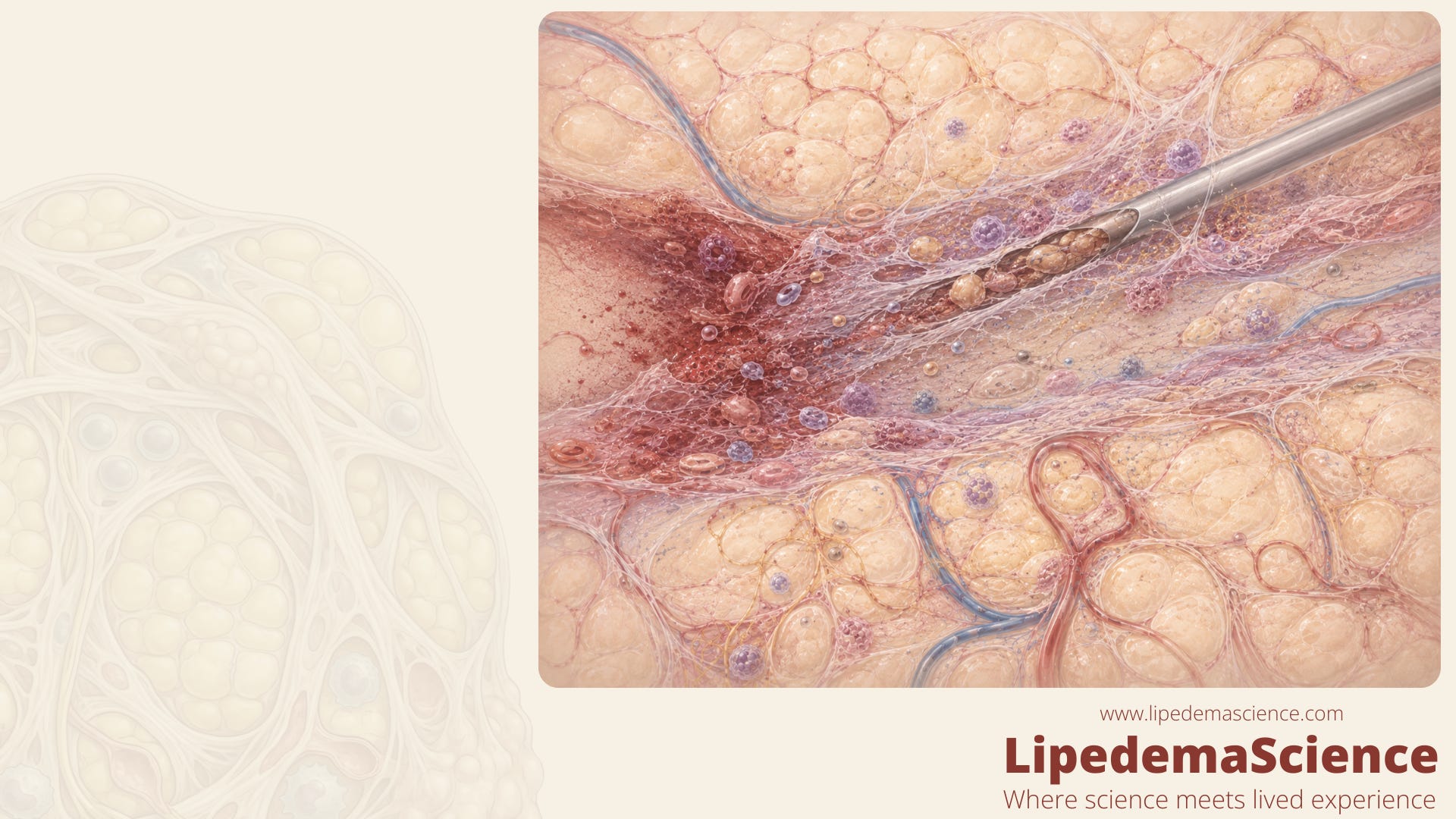
Not emotional trauma in the usual sense, although it can be that too. I mean biological trauma. Lipedema surgery is not a small intervention. It is a major physical event. The body has to respond to tissue injury, inflammation, swelling, bruising, fluid shifts, wound healing and pain. The nervous system is involved. The immune system is involved. The endocrine system is involved. And this is where the story becomes more interesting.
Surgery is an acute inflammatory insult, yet for many people with lipedema, including me, it can reduce long term pain and heaviness by removing diseased tissue. That is not a contradiction. It shows how dynamic the body is. Sometimes a short term physical burden can lower the long term burden if it removes a source of pressure, inflammation, fibrosis or pain signaling.
This is also why lipedema surgery should not be framed as cosmetic. It is not simply about appearance. For many of us, it is about function, pain, pressure, mobility and the ability to live in the body with less daily struggle.
Still, even successful surgery does not erase the larger biology. It does not remove the nervous system. It does not remove hormonal sensitivity. It does not remove the immune system. It does not remove the life a body has lived. And my body had lived a lot before lipedema ever appeared.
When I was 7 years old, my brother died in a car accident. Soon after, my mother developed ME/CFS. For many years of my childhood, she was severely ill. She often lay on the sofa, in a dark room, with very little energy. As a child, I carried grief, fear and confusion inside me. I also had a lot of stomach pain.
At the time, that pain may have looked like a purely physical symptom. But now I understand it differently. Children often express distress through the body. The gut and the nervous system are deeply connected. Early life stress can shape stress responses, pain sensitivity, immune tone and the gut brain axis. My stomach pain was not imaginary. It was my body speaking a language I did not yet understand. This is one of the most important lessons my life has taught me. Pain can be physical and emotional at the same time because those are not separate systems.
My mother’s journey also shaped me. After many years of illness, she started exploring food, health and lifestyle. Her recovery process inspired me deeply. It is one of the reasons I became interested in nutrition, food science, biology and the possibility that food can support the body in meaningful ways.
I know the phrase “food as medicine” can become too simplistic. Food is not a cure for everything. Diet culture can be harmful. People with chronic illness are often blamed for not finding the right lifestyle solution. I do not want to contribute to that.
But I also cannot deny what I have seen in my own life. Food can affect inflammation, blood sugar, gut function, energy, symptoms and well being. It can become one way of communicating with the body. Not as punishment. Not as control. Not as ideology. But as support.
Lipedema is still misunderstood, and many people are left trying to connect the dots on their own. Through LipedemaScience, I want to build a place where science, personal experience, and careful reflection can meet. Subscribe if you want to follow that journey and be part of a more informed conversation about lipedema.
This is especially relevant when thinking about lipedema. Lipedema is not caused by eating the wrong food. But many people with lipedema experience that their symptoms change depending on sleep, stress, infections, hormones, inflammation, movement and diet. That does not mean the disease is our fault. It means the tissue is responsive to the internal environment.
For me, this is the bridge between personal experience and science. Lipedema may begin with a combination of genetic, hormonal, vascular, immune and adipose tissue mechanisms. In my case, the hormonal timing around puberty and birth control feels central. But once lipedema exists, the disease does not live in isolation. It lives inside a whole person.
That person may go through sepsis.
That person may go through grief.
That person may live with chronic stress.
That person may undergo surgery.
That person may carry early childhood trauma.
That person may sleep poorly, lose movement, experience depression, have gut symptoms, live in fear, recover, relapse, adapt and rebuild.
All of this matters because all of it happens inside the same biological system.
This is why I believe the separation between physical health and mental health is outdated. It may be useful administratively. It may help organize medical specialties. But biologically, it is too limited. The immune system talks to the brain. The nervous system talks to the gut. Hormones affect inflammation. Stress affects pain. Grief affects sleep and immune function. Infection affects metabolism and blood vessels. Surgery affects the nervous system and inflammatory response. Adipose tissue is not passive storage. It is an active endocrine and immune organ.
Nothing about this means lipedema is “in the mind.” That is the exact opposite of what I am saying. Lipedema is real tissue disease. It involves real biological changes. It is not caused by weakness, imagination or unresolved emotion. But the body that carries lipedema is influenced by every major biological stressor it has lived through.
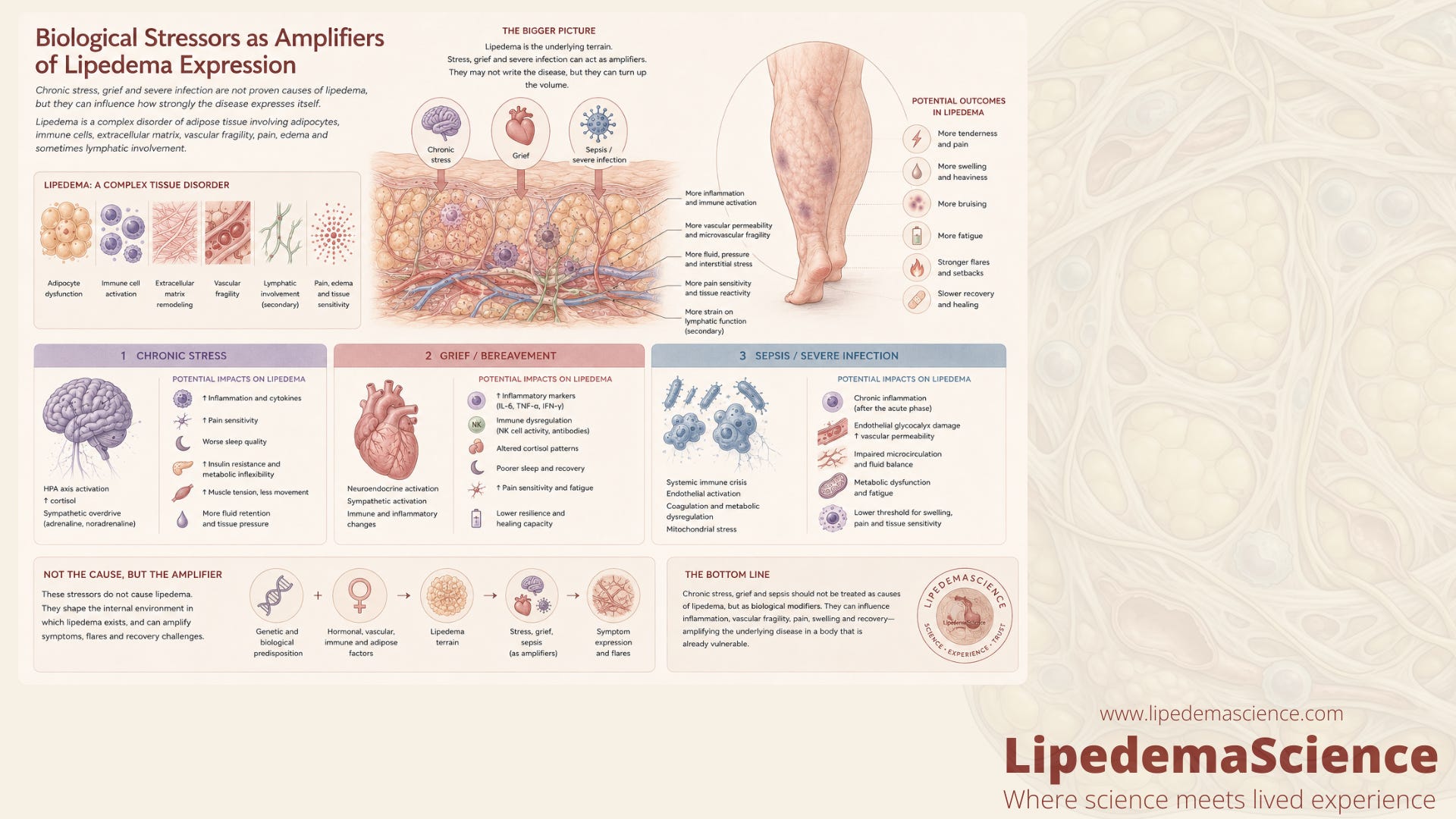
To me, the most honest framing is this. Chronic stress, grief, sepsis, surgery and early life adversity should not be presented as proven causes of lipedema. We do not have the research to say that. But they are plausible modifiers of lipedema expression. They may influence symptom intensity, pain sensitivity, swelling, inflammation, recovery capacity, hormonal balance, immune tone and the body’s ability to regulate itself. They may not write the disease. But they may turn up the volume.
And sometimes, when I look at my own timeline, that is exactly how it feels. Lipedema began at puberty, after hormonal contraception. Then my body moved through near fatal infection, deep grief, chronic academic stress, major surgery and the earlier wounds of childhood loss. Each event left something behind. Not always something visible. Not always something measurable in a standard blood test. But something biological nevertheless.
I think many people with chronic illness understand this intuitively. We know that our symptoms are not separate from our lives. We know that a stressful year can change the body. We know that grief can make pain louder. We know that infection can leave us altered. We know that surgery can both help and hurt. We know that childhood experiences can live in the gut, in the nervous system, in the breath, in the muscles and in the way the body protects itself.
Science is beginning to give language to what many patients have felt for years. The body remembers. Not in a mystical way. In an immune way. In an endocrine way. In a nervous system way. In a vascular way. In an inflammatory way. In a cellular way.
For me, understanding lipedema means understanding that whole system. Not just the fat. Not just the hormones. Not just inflammation. Not just mental health. Not just trauma. The whole body.
Because there was never one part of me that was physical and another part that was emotional.
It was always the same body.
Trying to survive.
Trying to adapt.
Trying to protect me.
Trying to heal.
Thank you for being here, reading my reflections, and supporting my work. It means a lot to be able to explore these questions together, with both honesty and curiosity.