
The Path to Change: ADKAR and Lifestyle Change
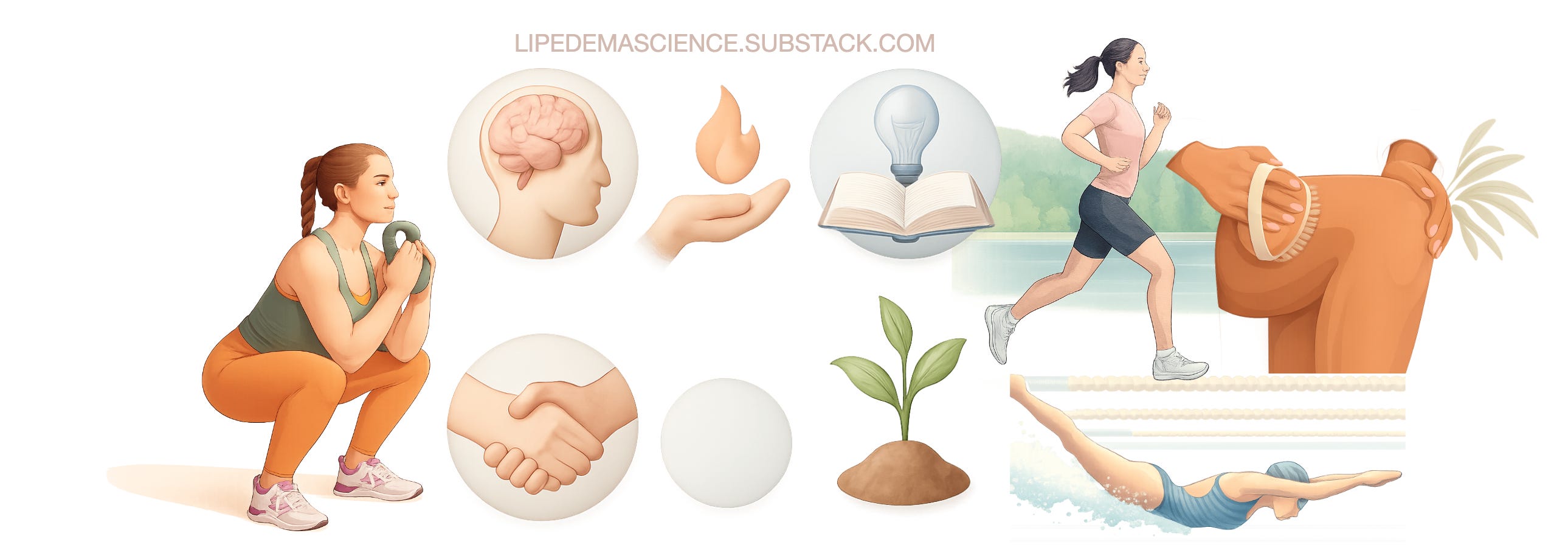
Lipedema: Awareness to understand, Desire to begin, Knowledge to act, Ability to grow, and Reinforcement to make it last.

When the Body Asks for Change
Living with lipedema often means living in a body that constantly sends signals — pain, heaviness, swelling, fatigue — and sometimes a quiet sense that something isn’t working. You might know what helps: dry brushing, lymphatic massage, regular movement, or eating in a way that reduces inflammation. But knowing what to do and actually doing it are two very different things.
Change isn’t just about willpower. It’s about psychology, emotions, and creating new safety in your daily routines. That’s where the ADKAR model comes in. Originally developed by Prosci for managing organizational change, it’s a framework that also fits perfectly with personal transformation. It helps you understand why change is difficult — and how to make it last.
Awareness – Understanding Why Change Matters
Before you can change anything, you need to understand why it’s necessary. For many women with lipedema, that realization comes slowly — after years of discomfort, frustration, or loss of mobility. Awareness means connecting knowledge with personal meaning.
When you learn that certain foods can worsen inflammation, that regular movement helps lymphatic flow, or that dry brushing supports microcirculation, the “why” behind self-care becomes clear.
Yet awareness can be emotional. It might mean admitting that some habits you’ve relied on are no longer serving you. That realization can bring sadness or resistance — but it’s also a sign that you’ve begun the real work of change.
Desire – Finding the Willingness Within
Even when you understand why you should change, it doesn’t automatically mean you want to. That’s the second stage of ADKAR: Desire — the genuine motivation to participate in your own transformation.
Here, logic often clashes with emotion: “I know I should move more, but I’m too tired.” “I want to change my diet, but it feels impossible.” This isn’t laziness; it’s fear — of failure, of pain, of disappointment.
To build desire, you must find your personal why. Maybe you want more energy to enjoy your family, or to walk without pain, or simply to feel lighter in your own body. When your goal comes from within, change stops being something you “should” do — it becomes something you choose.
Desire grows through small victories: a day with less swelling, a calmer mind after a walk, a meal that leaves you feeling nourished instead of heavy. Each positive experience reinforces your willingness to continue.
Knowledge – Learning What and How
Once you have motivation, you need knowledge — both about what to do and how to do it effectively. Many women with lipedema have tried countless methods, often without guidance tailored to their condition. Knowledge means replacing confusion with understanding.
This is where professional support can help — from lymphatic therapists, physiotherapists, or nutrition experts. Learn how to use your compression correctly, how to operate a lymphatic pulsator, or how to adapt your meals to reduce inflammation.
But knowledge is also inner learning: noticing how your body responds. What makes you feel lighter? What increases pain or swelling? Over time, your own awareness becomes your greatest source of wisdom.
Ability – Turning Knowledge into Action
This is the stage where change becomes real. You know what to do — but can you actually integrate it into your life? Maybe you’ve promised yourself to dry brush daily, but mornings are hectic. Or you joined a gym but feel intimidated to go.
In ADKAR, Ability means removing barriers and creating systems that support you. Make it easy to succeed: keep your brush visible, prepare your compression in advance, find movement you enjoy — swimming, yoga, walking, or stretching.
And practice. Change is a skill that grows through repetition, not perfection. Some days will work better than others. The key is to stay kind to yourself and keep trying. Each attempt builds capability — and confidence.
Reinforcement – Making Change Stick
Many people lose motivation when progress slows or results seem invisible. The final ADKAR stage — Reinforcement — is about protecting your progress and preventing relapse into old patterns.
Reinforcement means celebrating what’s working: “I moved my body four days this week.” “My legs feel lighter.” “My skin looks healthier.” Recognize yourself — every small success matters.
External reinforcement helps too: support from a partner, encouragement from friends, or connection with other women living with lipedema. Over time, positive results become self-reinforcing. You feel the difference, and that feeling becomes your own reward. When you reach this stage, self-care stops being a task — it becomes part of who you are.
Leading Yourself Through Change
The ADKAR model shows that real transformation doesn’t come from pressure — it comes from leadership. Self-leadership. It means guiding yourself through each step with awareness, compassion, and persistence.
For women with lipedema, this process can be life-changing. It’s about reclaiming ownership of your body, not fighting against it. Using ADKAR as your roadmap helps you understand that every change — from a new diet to a simple daily habit — follows a rhythm. Awareness, Desire, Knowledge, Ability, Reinforcement.
You don’t need to do everything at once. You can start small, one decision at a time. Because when you understand the psychology of change, you stop chasing motivation — and start building momentum.
Change doesn’t require perfection. It just asks for willingness — and the courage to begin again, every day.
Use the ADKAR Model for Change Success (https://www.prosci.com/blog/adkar-model)