

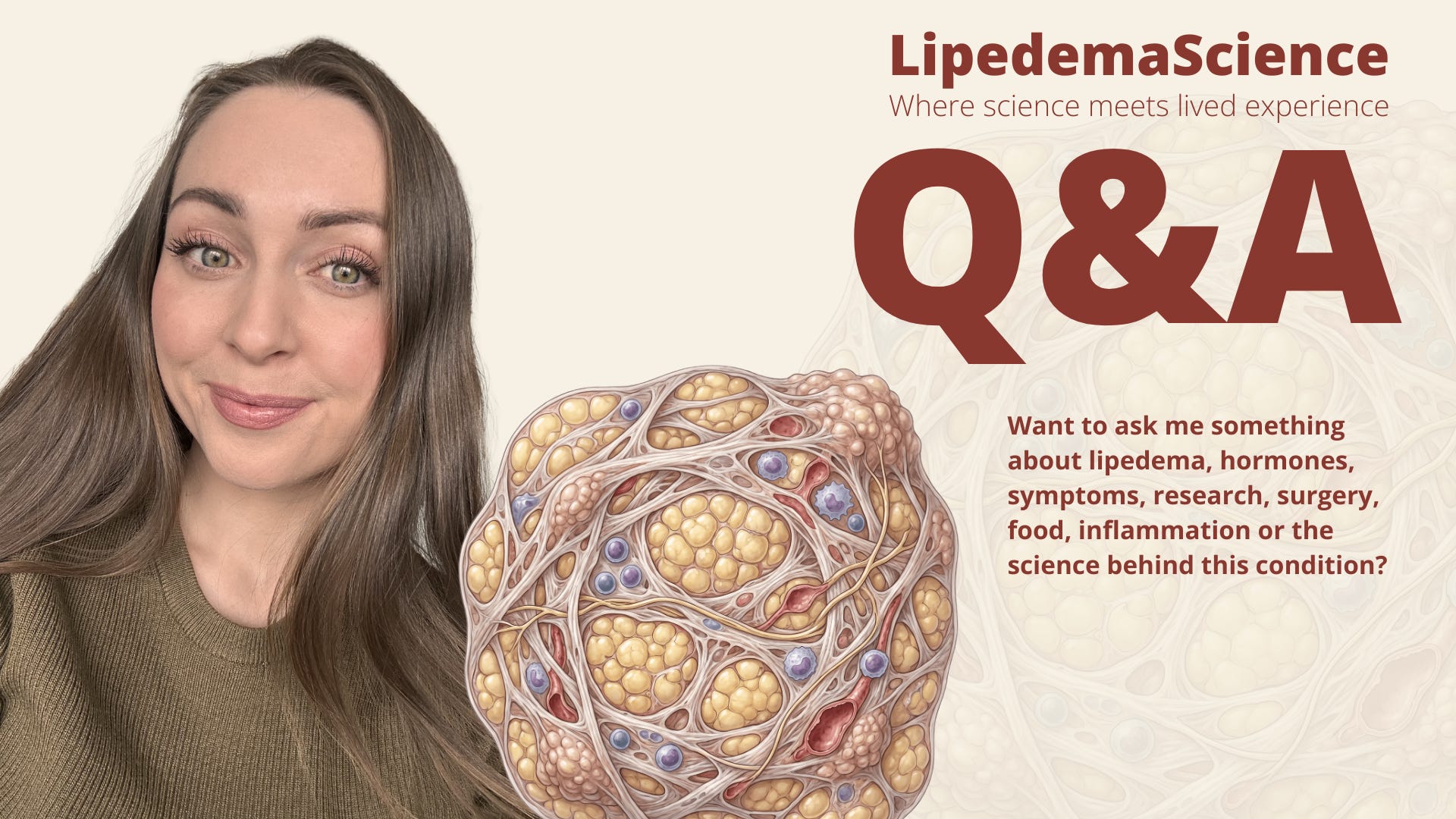
I’m opening a new Q&A about lipedema and science
I’ve built LipedemaScience by combining my own lived experience with my scientific background, and that’s exactly the lens I bring into everything I create.
I was diagnosed with lipedema in January 2012 at a Norwegian hospital at 20 years old, after years of severe leg pain that was eventually linked to a birth control pill containing synthetic estrogen. Before that, at 18, I survived sepsis caused by Fusobacterium necrophorum — an experience that completely changed how I viewed the body, health, and resilience. Between 2021 and 2022, I went through four lipedema reduction surgeries.
My academic background is in science and nutrition. I hold an MSc in Food Science and a BSc in Human Nutrition. I’ve worked with human intestinal cell cultures, pea peptides and inflammation, whole genome sequencing of pathogenic bacteria, laboratory management, and scientific research, including co-authoring a published study. Today, I also work within IT and AI project management while building LipedemaScience as my passion project — where my science brain meets my lived experience with lipedema.
I’m the founder of LipedemaScience on Substack, which now reaches readers in 44 countries around the world. My own lipedema is strongly influenced by hormones and sugar, and I’m deeply fascinated by the biology behind the condition. I’m also a huge foodie who loves traveling and experiencing culture through food, and I personally believe in a balanced 80/20 approach to eating.
Should someone with lipedema choose a dietary that contains less sodium/salt? If less sodium can cause less fluid, and less fluid can cause less pain?
Is keto or any other diet proven to be a «best practice»?