

Funda is 48 years old, born in Türkiye and now living in Germany. She is an academic, an engineer, a global project performance leader at Stellantis (Opel), a wife, and a mother of two boys aged eleven and six.
Her formal background is long and demanding:
B.Sc. in Chemical Engineering
M.Sc. in Polymer Engineering
PhD completed at BMW in Germany
Today: global project performance leader in the automotive industry
And in the middle of this, she is also a woman living with lipedema.
She often describes lipedema as something that has changed how she mothers: it has forced structure, planning and discipline, but also created a different kind of presence. Less running around, more conscious time with her sons. She talks about her body now as a kind of “laboratory” — a place where she observes reactions to food, hormones, stress and movement with the mindset of a scientist.
When lipedema entered her life
For most of her life, Funda was fit and active. Lipedema did not appear as a clear diagnosis until after her first pregnancy in 2015.
After giving birth, her legs no longer felt “normal”. They were heavy, painful and visibly different. A friend suggested that it might be lipedema. Funda looked it up and recognised every symptom.
In Germany, the doctors she met gave a single message:
The only solution is liposuction.
At that time, she accepted this as truth. She did not yet know how much she would later question it.
Two surgeries, deformities – and a deep regret
Between 2016 and 2017, Funda underwent two liposuction surgeries. She dreamed of smoother, lighter legs. She imagined that once the fat was gone, everything else would fall into place.
It did not.
With lipedema surgery, the true results often appear a year later. In Funda’s case, the long-term result was severe deformity. Her legs did not look “fixed”. They looked damaged.
Her surgeon was not inexperienced — he was her former schoolmate and highly regarded in Türkiye — but he did not understand lipedema legs. He underestimated the role of connective tissue in both function and appearance.
Techniques like laser and vaser, she later realised, can leave major damage and tightness in the connective tissue and the skin. A revision surgery made things even worse.
Those years changed her trust in surgery — and in medical authority — permanently.
“I burned myself so you don’t have to burn”
Funda often summarises that period with one sentence: “I burned myself so you don’t have to burn.”
She wishes more women understood that:
surgery removes fat, not necessarily “lipedema fat”
it can injure veins, lymphatics and skin
it can leave women with venous insufficiency, lymphatic problems and deformities
healing is long, painful and unpredictable
Her most painful realisation was this:
Years later, her legs looked smoother and healthier after internal healing and weight loss than they ever did after surgery.
Today she is very clear: she does not recommend surgery as a first step. Real healing begins inside the body, not on an operating table.
Breaking down, burning out – and then deciding to rebuild
Becoming a mother with a body that suddenly lost mobility was a shock. She had built her life on discipline and achievement. Then came pain, weight gain, exhaustion, the demands of motherhood, career pressure — and a deep burnout.
People now seemed to focus only on her body. That period was emotionally brutal.
Her turning point came when she understood that the real work was not to please others, but to stop letting other people’s opinions shape her emotions.
From “patient” to scientist of her own body
After her second pregnancy, Funda was almost 120 kg. She chose to rebuild herself with science, not desperation.
Her guiding question became:
“If this happens in healthy people, how will it play out in a lipedema body?”
Through years of experimenting — diet changes, sleep patterns, hormonal understanding, inflammation control, digestion — she lost around 65 kg. No procedures. No shortcuts.
Today she can often predict how a certain food will affect another woman, because she has seen the same patterns again and again.
80% nutrition, 20% movement and other methods
When Funda says this, she does not mean “eat less, move more”. She means that lipedema is biochemical, hormonal, inflammatory, metabolic — and individual.
Her approach emphasises that there is no universal forbidden-food list. The body is the teacher.
Three phases: knowing, healing, building
Funda’s model has three stages: understanding the disease, healing the cells, and then rebuilding strength and form. She insists that no woman should start intensive exercise while inflammation and hormonal chaos are still high.
Protecting skin and connective tissue during major weight loss
For Funda, lasting change meant repairing connective tissue, not just losing fat. She focuses on protein, healthy fats, greens, collagen support, dry brushing, weight training and lymphatic-friendly movement.
“Lipödemle Hayat”: from one woman’s experiment to a chain of kindness
In 2016, Funda created a Facebook group. In 2019, during her second pregnancy, she launched her Instagram account, @lipodemle_hayat. By 2021, she had reached her goal: managing lipedema without surgery.
Women began learning from her. They formed WhatsApp groups. They supported one another voluntarily.
In June 2025, during Lipedema Awareness Month, they launched an “angels group”: women offering free four-week guidance to others who donated to a childhood leukemia foundation.
Healing and solidarity were intertwined.
Guarding the community against exploitation
Funda worries deeply about the commercialisation of lipedema. She spent large sums on ineffective treatments and wants to protect others from the same mistakes. Her message is clear:
Learn what you live with. The more women understand lipedema, the harder they are to mislead.
“We don’t want to hear: ‘If I had lipedema, I would…’”
Advice from outsiders often hurts more than it helps. Many women have hypermobile joints, venous issues, pain that feels like barbed wire.
Funda’s stance is simple:
“My body, my pride.”
Identity, femininity and refusing victimhood
Lipedema affected how she saw herself as a woman — clothes, aesthetics, confidence. For a long time, her identity shrank to two legs. Part of her healing has been reclaiming her other qualities and helping others do the same.
She refuses to see herself as a victim. Boundaries are central:
“My way, my life, my decision.”
Science, lived experience, and where research still lags behind
As an engineer, Funda respects science — but she sees how limited current research is. Small samples, narrow questions, and poor reflection of real life.
Her daily conversations with thousands of women have convinced her that lived experience should shape future research far more seriously.
What she wants newly diagnosed women to know
Before surgery, she hopes they will pause, learn, question, and explore internal healing first.
Looking forward: hope in knowledge and collaboration
Funda wants better research, stronger collaboration between clinicians and women with lipedema, and policies informed by real-world experience. She is open to international projects, but for now her priority is her family.
What we can learn from Funda’s experience
Surgery is not the only path — and often not the right first step.
Lipedema care must be individual and body-led.
Women with lipedema are experts in their own condition — and their knowledge can guide science.
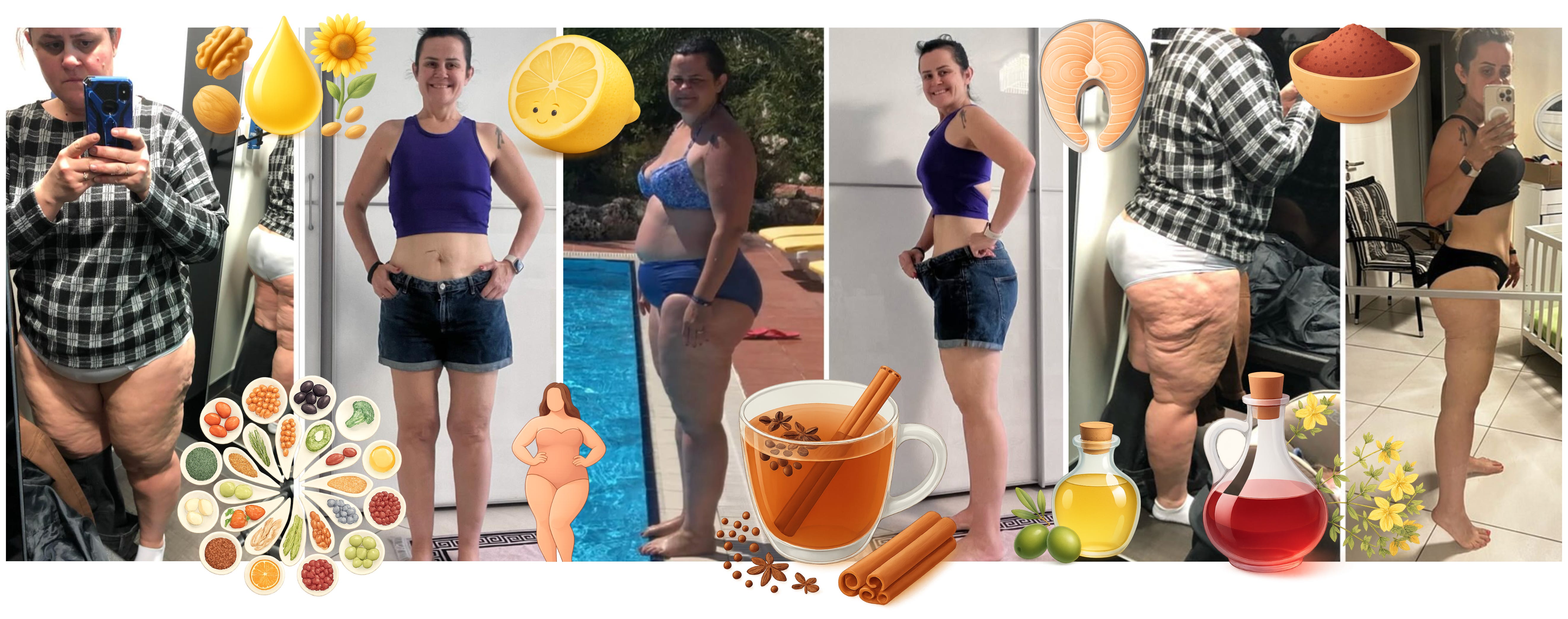
Ms. Funda, your success has been a guiding light for us, and your determination has inspired hope.
As your comrades who share the same disease with you, we are proud of you, Funda, a good-hearted and beautiful person.