

Siw (@siwvikene) has lived her entire life in motion. She grew up with football, handball, dance, cross-country skiing, mountain hikes and farm work. She was strong, active and resilient – yet her body behaved differently from everyone else’s. Her legs were heavy, her proportions uneven, bruises appeared easily, and running was a nightmare already in her teens.
Today she knows why.
But it took more than 40 years, multiple rejections, her own determination – and a physiotherapist who finally saw her – before the pieces came together.
This is Siw’s story.
An active childhood in a body that didn’t follow the “rules”
Siw was an active child. She trained, ran, threw herself after footballs and skied with natural athletic joy. Yet her body stood out.
While others developed defined calf muscles, hers remained soft and undefined, no matter how much she trained. Her lower body always felt heavier than the rest, and running became painful and nearly impossible early in adolescence.
As a goalkeeper, she bruised far more easily than her teammates. Her mother even sewed extra padding into her goalkeeper pants because Siw’s body simply didn’t tolerate impact the way others’ did.
The first sign was there from the beginning: a body that reacted differently from everyone around her.
After the pregnancies: a body that suddenly changed
After her last pregnancy, everything escalated. Her legs and thighs suddenly “swelled,” as if her body filled up in ways she couldn’t control. It happened so rapidly that her ski boots no longer closed.
Pressure pain increased. The elastic edge of socks hurt. When her children crawled across her legs, the touch sent sharp pain through her body. She was still active and outdoors, but now it was her body that dictated the pace. And increasingly, her body said no.
The experience of having a body that decides whether you can participate or not – it is a grief only those who’ve lived it truly understand.
The first questions: “Could this be lipedema?”
In 2019, Siw joined Lipødem Norge, a norwegian support group on Facebook. She recognized parts of herself in the posts – but not everything. She had many symptoms, but not the “classic leg pain” she thought she was supposed to have. She doubted herself, yet curiosity was growing.
In 2021 she heard that someone at the local hospital knew about lipedema. Her GP referred her – but the regional hospital rejected the referral. Their explanation?
“Lipedema is not a diagnosis.”
It felt like a slap in the face. But Siw didn’t give up. She called the local hospital directly, and they invited her in.
A meeting that changed everything – and one sentence she will never forget
At the local hospital she met a physiotherapist with expertise in lipedema. She examined Siw thoroughly. She listened. She saw her.
And then she said the sentence Siw had never heard before:
“You are a lean, strong and active person – trapped in a larger body.”
For the first time in many years, Siw felt seen for who she was, not the body she had been given.
The diagnosis was later confirmed by Dr. Emmes in Bergen on December 13, 2021. Siw was 43.
A healthcare system that failed her – and a professional community that carried her forward
Siw has experienced both sides of healthcare.
An earlier GP laughed at her questions about the large fat pads under her knees and suggested cosmetic surgery if it bothered her. A later GP saw her only as “big” and told her to lose weight – with no interest in function, pain or patterns.
What helped were the professionals who looked beyond size:
the physiotherapist
the network of women with lipedema
the community that shared experiences with diet, training and treatment
There she found support.
There she found knowledge.
There she found safety.
Major changes: weight loss, three surgeries and a new body to learn
Siw has undergone three lipedema surgeries and lost a significant amount of weight – from a BMI of 38.2 down to 28, just enough to qualify for the Norwegian surgical research study at St. Olav’s Hospital.
Her body now functions in a completely different way.
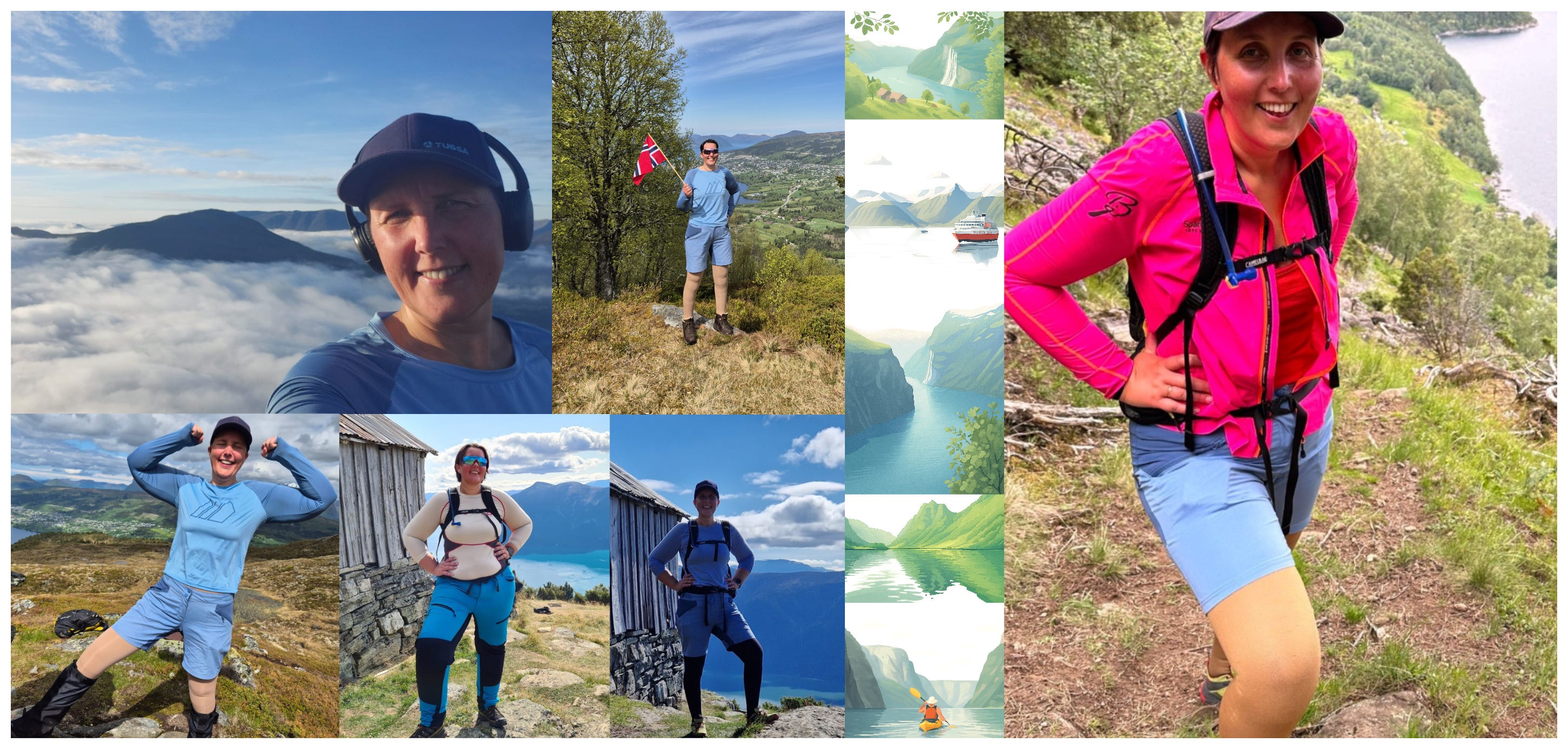
She can jog.
Ski.
Hike long distances in a normal heart rate zone – not five hours straight in red zone.
But something else remains: a mental image that hasn’t yet caught up with reality. She often sees her body the way it used to be. She fears it might all return.
She is now testing periods without compression garments and without using the lymphatic pump – and even though it feels good, the fear is strong. It is like learning her body all over again.
Dr. Emmes’ assessment – and the moment that hit hardest
During her assessment in Bergen (Norway), she was told she has lipedema type 4, stage 3, possibly combined with lymphedema.
But what hit hardest were the photographs they took.
For the first time, she saw how advanced her condition had become.
It was a shock, a grief – but also a driving force to continue her treatment journey.
The strength of community: people who understand without explanation
Siw describes the fellowship of other women as life-saving.
There, she didn’t have to explain.
There, she was understood before she spoke.
She highlights women who shared their experiences with low-carb and keto. Not because it fits everyone – but because it gave her the chance to lose enough weight to join the study. She calls it luck, but also the result of giving herself one last lifeline to try.
What she wants health authorities to understand
Siw is clear: Lipedema is not obesity – and must not be treated as such.
It requires different knowledge.
Different treatment.
Different decisions.
And she hopes the study she is part of will lead to publicly funded surgery. For women with high BMI and severe disease, there are often no other options – and many end up on disability unnecessarily.
Hope for the future
Siw looks ahead with cautious optimism:
Research gives hope for public treatment.
Community gives strength.
The restored function in her body gives motivation.
She knows life with lipedema can get better. She feels it every day she accomplishes something she once couldn’t.
A message to other women: there is hope
Siw wants to say one thing clearly to other women: It can get better. Be kind to yourself. And don’t give up – even when your body feels heavy.
She encourages trying keto/low-carb if you are motivated, and to use custom compression garments during training. For her, the difference was huge: less heaviness, less pain, better recovery.
And she ends with a sentence that resonates deeply in the lipedema community:
“I thought I was just fat, lazy and sore. How wrong you can be.”
What can we learn from Siw’s story?
Lipedema is not obesity – it is a condition of pain and impaired function.
When healthcare workers overlook this, women lose years of access to proper help.The right professional can change the entire course of the illness.
For Siw, it was one physiotherapist who saw beyond appearance. It changed everything.Community and research provide real hope.
Siw is living proof that life can become lighter – physically and mentally – with diagnosis, treatment and support.
So glad for you that you got the answers you needed in the end ❤️