

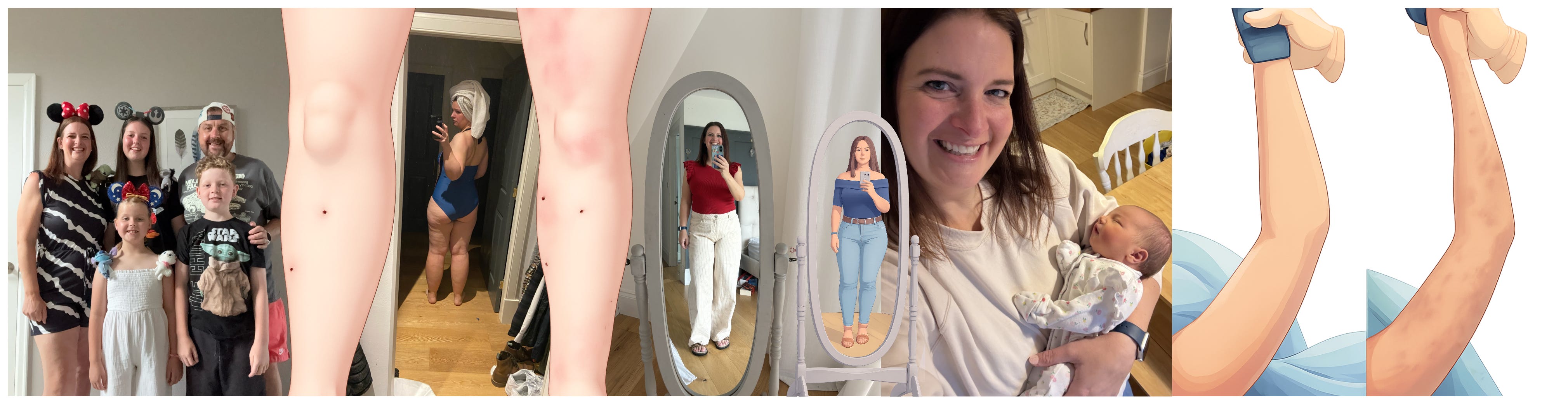
Jac (@lesslipoedema) lives in the northeast of Scotland, surrounded by rolling fields, her husband of ten years, four children aged seven to twenty-one, and a brand-new granddaughter. Her happiest days are the simple ones: family picnics, dancing with friends, time with her sister, mum and dad, and life in the old house she and her husband renovated together.
Behind that warmth and movement, however, sat a body she never fully understood.
When puberty brought heaviness, swelling and legs that didn’t match her frame
Jac’s earliest signs began when she was still a teenager. While her friends developed defined calves, hers stayed soft and swollen. Her thighs rubbed together even when the rest of her body was slim. She tired easily—on bikes, in the pool, on walks—and her legs always felt like they were dragging her down.
During her first pregnancy at nineteen, her legs swelled dramatically. After that, she never again wore skirts without shorts underneath. Her frame stayed slim, but her legs didn’t follow the same rules.
A sudden “explosion” in symptoms after her fourth baby
After her last baby was born in 2018, everything escalated. Once she stopped breastfeeding in 2020, her weight rose rapidly and without explanation. She joined the gym, walked 25,000 steps a day, lifted weights and did cardio—sometimes twice a day.
But nothing worked.
Her measurements kept increasing. Her legs ached. Plantar fasciitis made even standing painful. On “leg day” she struggled to recover for days afterward. She knew something was wrong, but every doctor repeated the same sentence:
Eat less and move more.
It was devastating. And it was wrong.
Diagnosis: a mix of grief, relief, and the shock of recognition
After a year of getting nowhere, Jac typed the sentence many women eventually type:
“Why are my legs so fat?”
Images of lipedema appeared, and for the first time she saw legs that looked like hers.
When she sent photos to her GP, he initially dismissed it—but once she walked into the clinic, he said he was almost certain. She was diagnosed that day. The relief was instant, but so was the grief. Knowing she had a lifelong condition was frightening, yet finally having an explanation allowed her to forgive herself.
The shame began to lift.
Choosing surgery: three leg procedures, then arms
Once she understood that she had stage III lipedema, Jac moved quickly. Conservative care helped, but surgery felt like her only path to restoring function. She researched for hours and ultimately chose Lipemedical in Madrid.
Her surgeries came in stages:
May 2024: Lower legs (4.3 litres removed)
August 2024: Upper front thighs
October 2024: Upper back thighs
Later: Arms, after pain began to progress there
Recovery was no small thing. Ten days in Madrid, fibrosis, swelling, difficulty walking, wheelchair use, painful toileting, and long nights in compression. There were moments of laughter—especially with her sister, who travelled with her—but also strain, homesickness and fear of the two surgeries still ahead.
Trips home varied: once by car, once by plane, and once paired with a week recovering quietly by a hotel pool in Benidorm, wearing black compression tights while her family enjoyed the sun.
It was not glamorous. But it was life-changing.
The hidden reality of recovery: disappointment, patience and learning to speak kindly to herself
Aesthetic results weren’t perfect, and Jac was honest about that. Stage III disease rarely produces flawless outcomes, and seeing her bare legs still felt hard.
What surprised her most was the pressure she put on herself—the worry that those who knew she’d had surgery would look at her and think, What was the point?
She worked hard to shift that mindset, to stop speaking harshly to herself, to accept compliments instead of rejecting them, and to focus on what she gained—not on what didn’t change.
The wins that mattered most: function, not appearance
The biggest improvements had nothing to do with how she looked.
Jac can now:
Stand still in queues without agony
Watch fireworks without needing a seat
Sit through movies without shifting her legs constantly
Walk freely without feeling dragged down
Wear heels when she goes out dancing
Spend full days at theme parks—including on a trip to Florida—without leg pain stopping her
These weren’t small improvements. They gave her life back.
Living with less—but still present—lipedema
Surgery wasn’t the end. Conservative care is lifelong, and Jac is realistic about that. On a typical week she aims for:
Compression several days a week
Comfiwave every night
Lots of walking
Occasional swimming
Hydration and good sleep
Vibration plate work (once she replaces the broken one)
She tries not to judge herself when life gets busy. “Good enough most days” is her philosophy now.
Compression remains her strongest tool—especially after learning the hard way what happens when she takes a long break.
Mirror dancing, social media and the courage to show her body
Jac’s followers know her for her mirror dance reels: a little wiggle she does the moment the camera turns on, partly from nerves, partly for fun. She never set out to be on camera, but her honesty created a space where thousands of women feel seen.
With that visibility came trolls, fetish accounts, and misunderstandings about sponsored products. She blocks freely, protects her boundaries, and focuses on what matters: women who reach out saying they were diagnosed because of her.
That, she says, is the reason she keeps sharing.
What she wishes the UK healthcare system understood
Jac is clear:
Lipedema is not laziness.
It is not a willpower problem.
It is not solved by eating less and moving more.
She wishes the NHS would:
Recognise lipedema early—especially in young women
Provide surgery for those who want it
Offer dignity-based care instead of dismissive comments
Train healthcare professionals on the basics of lipedema
Early diagnosis, she says, could spare women years of pain and self-blame.
What she wants newly diagnosed women to know
Forgive yourself first.
Then get compression.
Then build the rest slowly, step by step.
“You don’t have to start everything today,” she says. “Just begin.”
Loving life again
Today Jac dances, queues, walks, travels, plays on the floor with her children and granddaughter, and enjoys moments she once avoided. She knows she will never have “perfect” legs. That’s not the goal. The goal is living without constant pain—and she has that now.
What we can learn from Jac’s story
Diagnosis lifts the weight of self-blame.
Years of being told to “eat less, move more” harmed more than helped. Understanding lipedema changed everything.Function matters more than aesthetics.
The biggest wins after surgery weren’t visible—they were the ability to stand, walk, dance and live freely again.Support and information are transformative.
From family to online communities, having people who understand can shape the entire healing journey.
I'm so sorry to read about your early years Jac! But also so easy to recognize 💔 I am so happy with you in your little dance in the mirror! ❤️ You (and me as well) have come so far! Keep smiling, I am cheering for you! 👏👏😍