

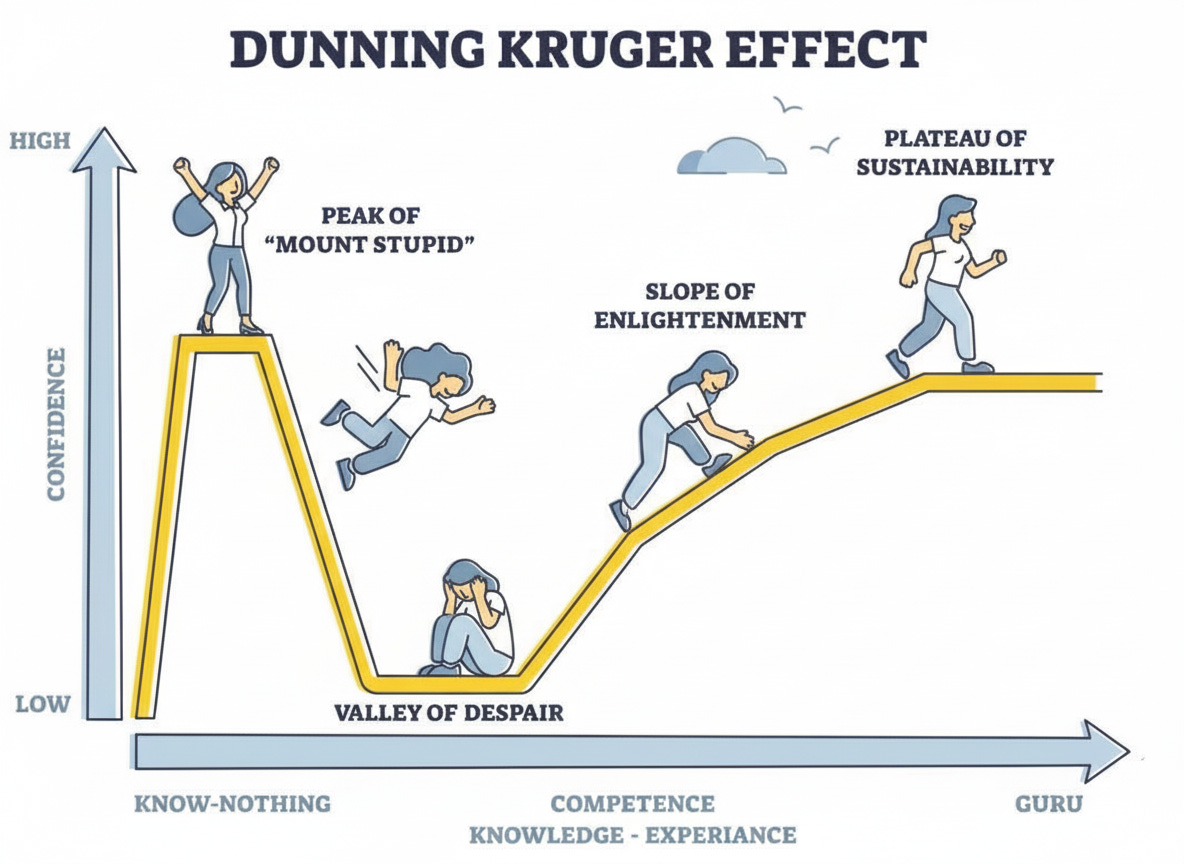
We’ve all been there, haven’t we? Certain. Absolute. Passionate.
Online, I see it constantly in lipedema circles. People declaring things with conviction: “You have to do THIS,” “You are failing if you ARE doing that.” Black-and-white thinking served with clinical precision, even though life, bodies, and health are anything but binary.
I recognize it because I’ve been there myself.
Before I studied human nutrition, before I immersed myself in food science, before I began to understand the nuances of lipedema—14 years ago—I was the health zealot. The bewerwizzer. The loud one at parties explaining why raw food was the answer to all modern ailments. I believed superfoods would save us. I believed coconut oil was a form of divine protection (I wore it as sunscreen and learned the hard way that it’s not). I evangelized protein powders, drank acai smoothies with hemp and goji berries daily, and went through a long apple cider vinegar phase.
That phase was the most painful. When my dad was diagnosed with lung cancer, I told him to eat “only broccoli”. I scolded him for eating sugar during treatment. I thought I had the answer, and I weaponized it against someone I loved. When he died, I blamed the system. I blamed sugar. I didn’t yet have the emotional maturity to admit that my fear had dressed itself in false certainty. That my grief was clawing at something to control.
Now, after years of education, practice, and listening—truly listening—to both science and people, I am humbled. I still believe food is powerful. That nutrition matters deeply. But I no longer believe there is one truth. No longer believe that health fits a single mold. I’ve let go of the arrogance of certainty and embraced the long, winding road of continuous learning.
Dunning-Kruger explains a lot of what I see online today. For those unfamiliar: it’s a cognitive bias where people with low knowledge tend to overestimate their understanding, while those with higher competence are more aware of their limitations. When someone experiences a breakthrough—perhaps with intermittent fasting, compression therapy, lymphatic drainage, or cutting gluten—they often assume it’s universally effective. That what healed them will heal you.
And that’s human. The desire to help. The thrill of results. The hope that others can be freed in the same way. But it becomes problematic when advice turns into moral policing, when nuance is replaced with slogans.
We must also extend this lens to health professionals. Doctors, therapists, nutritionists—they’re not immune to the Dunning-Kruger effect. Medicine is a human field. No one person can keep up with all evolving knowledge, and when lipedema is poorly covered in formal education, even the most well-meaning practitioner can get stuck at the peak of overconfidence. I’ve met doctors who confidently dismissed lipedema as obesity. Others who gave blanket advice rooted in outdated science. Not because they’re bad people—but because they’re human. Biased, emotional, and trained to trust protocols over stories.
And honestly? I don’t blame them. We all do it. We all form quick judgments, especially when pressed for time or overwhelmed by complexity. But that’s exactly why we need humility in health spaces—because humility creates room for better questions, deeper conversations, and individualized solutions.
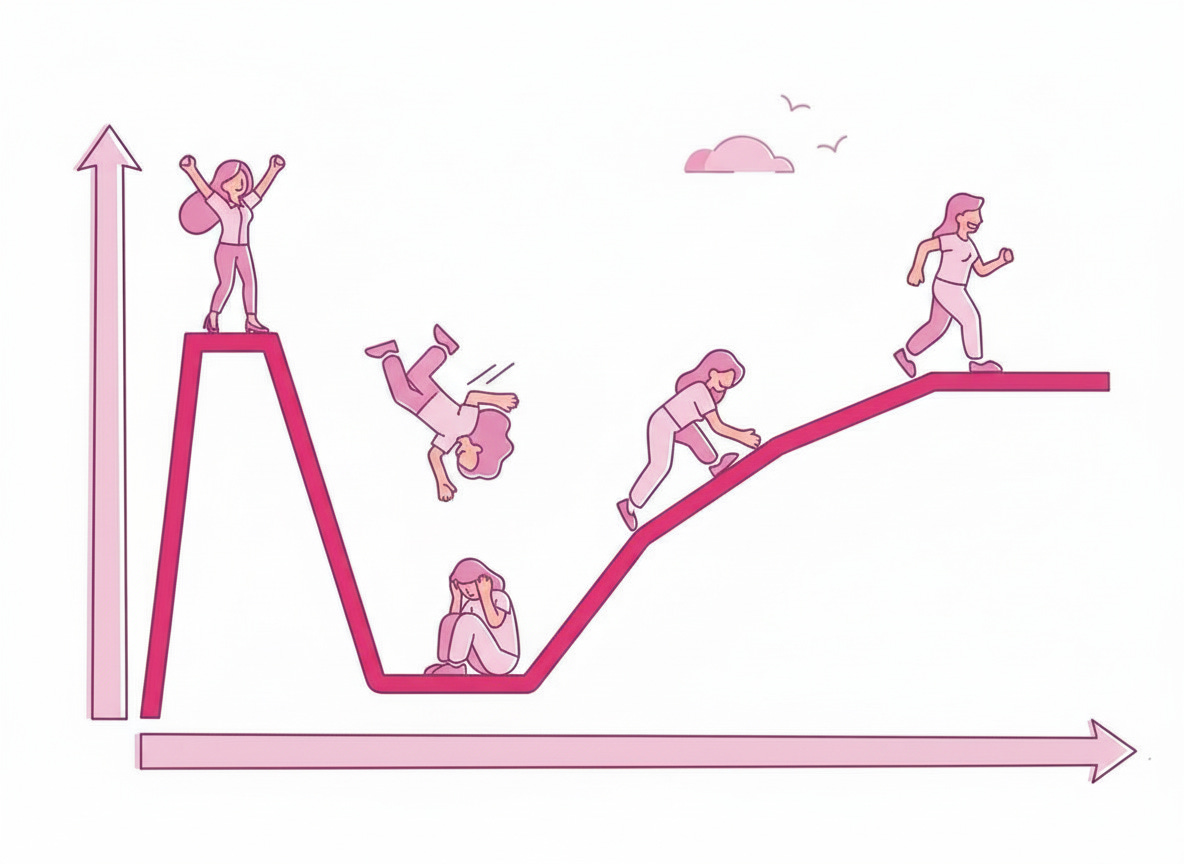
The best conversations I’ve ever had about health have come from people who’ve moved upstream—past the peak of certainty—into the valley of reflection. People who say, “This helped me, but it might not help you.” People who leave space for the unknown. For complexity. For growth.
That’s where I try to live now. Not in black or white, but in the space where color lives. I still believe food can be medicine. I still believe lifestyle matters. But I also believe in listening. In saying “I don’t know”. In learning alongside, not above.
Because the truth? We’re all just walking each other home.
And that walk gets easier when we leave the mountaintop of certainty behind.
If you appreciate the content on LipedemaScience, consider becoming a member and supporting the work of author CarinaW. Her mission is to build a comprehensive platform where all lipedema knowledge can live in one place—so that you, as someone living with lipedema, can better understand your body and take informed steps toward your health.