

When I was in my early twenties, before I started studying nutrition, I tried different diets, including low carb and keto. At the time, I did not really understand food quality in the way I do now. I did not know much about ultra-processed foods, ingredient lists, additives, pesticides, macronutrients, micronutrients, or how much the overall composition of a diet matters. I had also grown up eating very few vegetables, so for me, learning to eat in a more varied and nourishing way was a process in itself. I spent a lot of time moving beyond the familiar cooked carrots on the plate and slowly teaching myself how to include more vegetables, flavors and nutrient-dense foods in my everyday life.
When I first tried keto or low-carbohydrate diets, my version of it looked very different from how I would approach it today. I ate a lot of sausages, bacon and cheese. I still love cheese, so that part has not completely disappeared, but my understanding of food quality has changed a lot. Today, I almost never eat sausages or bacon, not because I think food has to be perfect, but because I now pay much more attention to what a diet is built from over time. For me, the difference is not only about reducing carbohydrates. It is about choosing foods that actually support the body.
My own eating lifestyle is mostly built around high-quality, nutrient-dense foods that may also have anti-inflammatory effects. In practice, it is closest to a Mediterranean-style diet, combined with an 80/20 approach, because that is what feels sustainable for me over time. I do not personally follow a ketogenic diet, and it is not the dietary pattern that fits best with my own lifestyle. But I know many of you are interested in keto, and there is now a growing body of research looking specifically at ketogenic diets and lipedema. For that reason, I think it is useful to share some knowledge on this topic, while still being clear that keto is one possible approach, not the only one.

A Mediterranean-style ketogenic diet is not just “keto with olive oil.” It is a low-carbohydrate, high-fat dietary pattern built around food quality. The goal is to keep carbohydrates low enough to support nutritional ketosis, while choosing foods that also provide unsaturated fats, omega-3 fatty acids, fiber from low-carb vegetables, polyphenols, antioxidants, minerals and anti-inflammatory plant compounds. This means that some foods can be eaten more freely, while others need more careful portion control.
I want you to keep something in mind while reading this article.
You and I may both have lipedema, but our bodies are not the same. We may react differently. We may have different food preferences, different access to ingredients, different cultures, different routines, and very different lives.
You may also have things going on in your life that need to come before trying to manage lipedema through diet. And that matters too.
I have readers from 44 countries, and I am writing this while travelling. Right now I am in Spain. In two days I leave for Portugal. Then Norway. Then Italy. So many different cultures, foods, habits, and ways of living. And my lipedema simply comes with me.
I try my best, every day. Sometimes that feels easy. Sometimes it feels hard.
When you read my articles, my hope is that you find knowledge, reflection, support, and inspiration. Not pressure. Not judgement. Not another voice telling you that you are doing something wrong.
I will never judge you, your body, your choices, your lifestyle, or your journey.
I am cheering for you, and I am truly happy you are here.
Enjoy the article.
The foods that usually fit best are fatty fish such as salmon, sardines, mackerel and trout, because they provide protein and omega-3 fatty acids without adding carbohydrates. Olive oil, avocado, nuts, seeds and flaxseed oil also fit well because they provide mostly unsaturated fats and help the diet feel Mediterranean rather than heavy and animal-fat dominated. Eggs, lean poultry and moderate amounts of lean meat can also fit, especially when they are combined with vegetables, herbs and healthy fats.
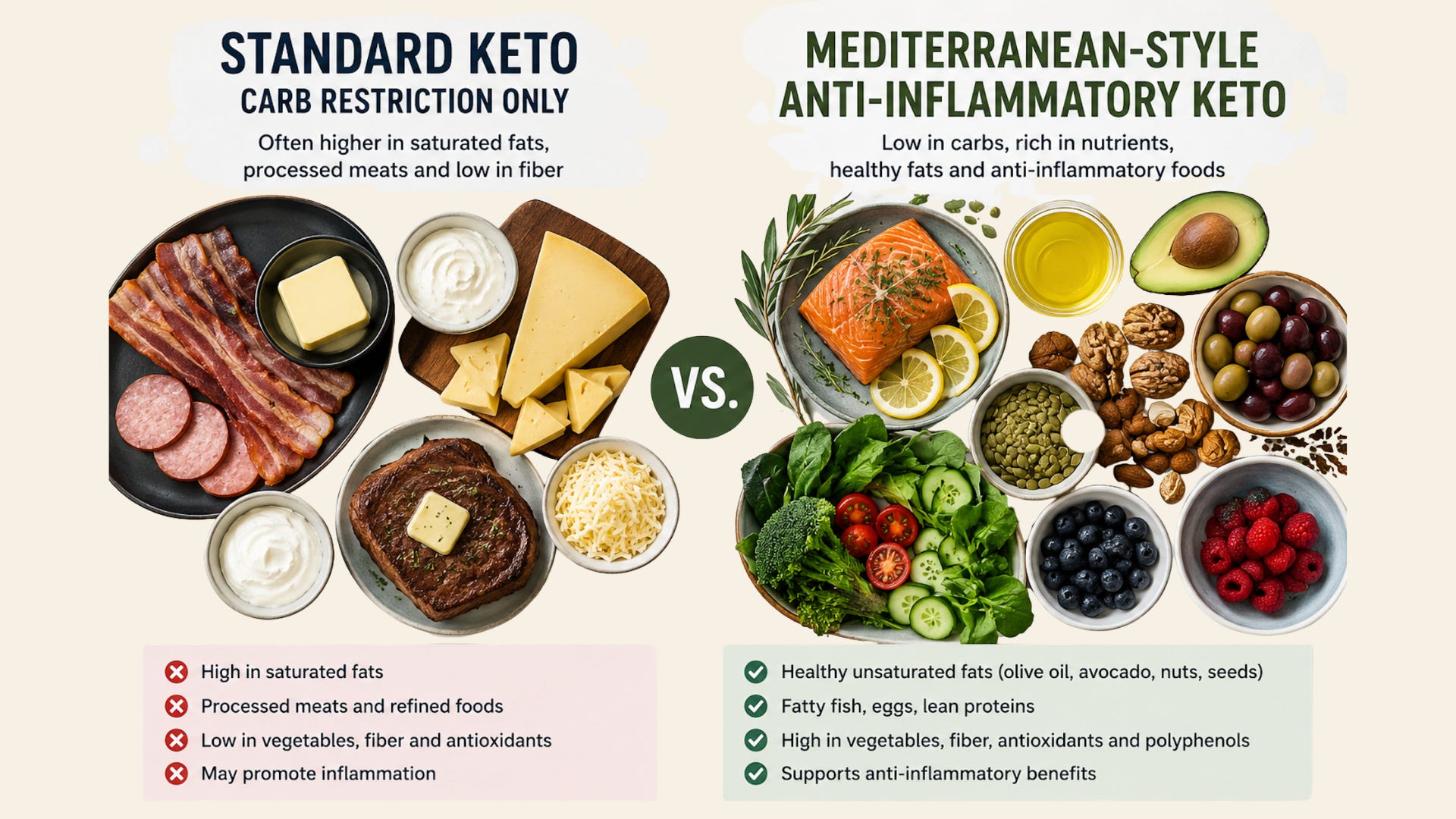
Non-starchy vegetables are central. Leafy greens, broccoli, cauliflower, zucchini, cucumber, asparagus, mushrooms, cabbage, peppers, tomatoes, herbs and spices add volume, flavor, micronutrients and plant compounds while keeping carbohydrate intake relatively low. These are the foods that make the diet feel nourishing rather than restrictive.
Berries can often be included in small amounts, especially raspberries, strawberries and blackberries. They contain more carbohydrates than leafy greens, but they also provide polyphenols and antioxidants. Blueberries can also fit for some people, but usually in smaller portions because they are slightly higher in carbohydrates.
The foods to be more careful with are the ones that can quickly push carbohydrate intake too high. This includes bread, pasta, rice, oats, grains, potatoes, sweet potatoes, most legumes, large amounts of carrots, bananas, apples, grapes, oranges, dried fruit, fruit juice, honey, sugar and desserts. These foods are not “bad,” but they usually do not fit easily into a ketogenic diet because ketosis depends on carbohydrate restriction.
There is also another category to be careful with: foods that are technically low-carb but not necessarily anti-inflammatory or Mediterranean in spirit. A ketogenic diet can easily become built around butter, cream, cheese, bacon, sausages, processed meats and very large amounts of saturated animal fat. These foods may keep carbohydrates low, but they do not automatically support the anti-inflammatory quality of the diet. This is why “keto” is not one diet. A plate built from salmon, olive oil, avocado, herbs and vegetables is very different from a plate built from bacon, cheese and cream, even if both are low in carbohydrates.
Why might keto improve lipedema symptoms for some people?
Some people with lipedema report improvement on ketogenic or very low-carbohydrate diets. This does not mean keto cures lipedema, and it does not mean it works for everyone. But there are several possible reasons why symptoms may improve in some individuals.
One reason is that carbohydrate restriction can reduce insulin levels and improve metabolic flexibility. Insulin is involved in fat storage, fluid balance and inflammation-related pathways, so lowering insulin exposure may help some people experience less swelling, heaviness or fluctuation in symptoms.
Another possible reason is reduced water retention. When carbohydrate intake drops, glycogen stores decrease, and glycogen binds water. This can lead to a noticeable reduction in fluid-related heaviness for some people. In lipedema, where many patients describe pressure, swelling sensations and painful tissue tension, even modest changes in fluid balance may feel meaningful.
A third reason may be inflammation. A well-designed ketogenic diet that emphasizes fish, olive oil, nuts, seeds, vegetables, herbs, spices and small amounts of berries may reduce the inflammatory potential of the diet. This is different from simply eating high fat. The quality of the fat, the presence of plant compounds and the overall nutrient pattern matter.
Weight loss may also play a role, especially reduction in visceral fat and overall inflammatory load. But in lipedema, the story cannot be reduced to weight loss alone. Many people with lipedema know that their affected fat tissue does not behave like ordinary fat. That is why it is more useful to ask whether a dietary pattern improves pain, swelling, energy, inflammation, metabolic health and quality of life, not only whether it changes the number on the scale.
The most important part: it has to fit your life
A ketogenic diet is not a casual short-term experiment for everyone. To stay in nutritional ketosis, carbohydrate intake usually has to remain consistently low. That requires planning, repetition, food awareness and long-term commitment. For some people, this structure feels calming and helpful. For others, it becomes stressful, socially difficult, emotionally restrictive or simply unrealistic. That matters.
A diet that improves biomarkers but damages your relationship with food, your social life or your mental health is not necessarily the right diet for you. And if a ketogenic diet does not fit your body, your medical history, your digestion, your family life, your culture, your budget or your personality, that does not mean you have failed. It may simply mean that another dietary pattern is a better match.
For some people, a broader Mediterranean lifestyle may be more sustainable. For others, a generally anti-inflammatory diet may be enough: more fish, olive oil, vegetables, berries, nuts, seeds, herbs, legumes if tolerated, fewer ultra-processed foods, less added sugar and a steadier blood sugar pattern. Some people do better with moderate carbohydrates. Some need to consider IBS, histamine intolerance, food allergies, thyroid disease, diabetes medication, eating disorder history, pregnancy plans, kidney or liver conditions, or other personal factors.
This is why diet in lipedema should never be reduced to one universal rule.
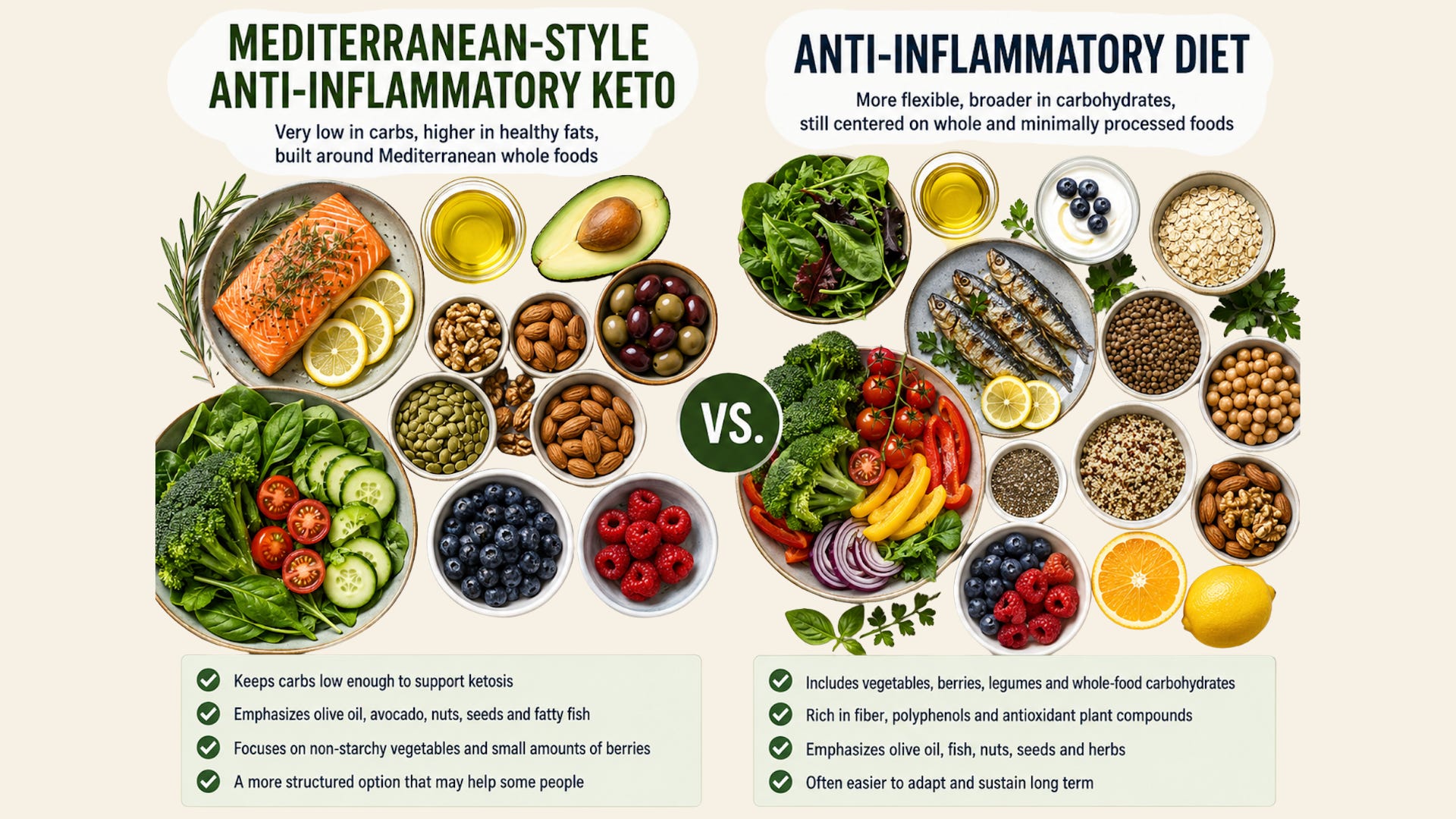
The best dietary pattern is not the one that sounds most impressive on paper. It is the one that supports your symptoms, your health, your biology and your real life over time. For some people with lipedema, that may be a Mediterranean-style ketogenic diet. For others, it may be a Mediterranean anti-inflammatory diet without ketosis. And for many, the answer may be found somewhere in between.