

As a food scientist living with lipedema, I think a lot about the composition of food – not only what I eat, but how I put foods together on the plate. The same ingredients can behave very differently in the body depending on what they are combined with.
For me, this is where the bridge between food science and everyday cooking becomes both interesting and deeply personal, especially because I constantly have to think about how food affects my lipedema.
Oatmeal, Beta-Glucans and Gut Health
Take something as simple as oatmeal. I love oatmeal for so many reasons, and one of them is that it contains beta-glucans, which are beneficial for intestinal and metabolic health. Oat beta-glucans are a type of soluble fibre that can help support gut bacteria and contribute to improved cholesterol and blood sugar control in many people.
Oats are a whole grain, provide fibre, and contain vitamins and minerals such as manganese, phosphorus, magnesium and B-vitamins. They are naturally gluten-free, but they can be contaminated with gluten from wheat, barley or rye during processing. For people with coeliac disease or clear gluten sensitivity, certified gluten-free oats are the safest choice.
A Food Scientist Friend, Blood Sugar and Cinnamon
A good friend of mine, who is also a food scientist, told me about the blood sugar spikes she gets from eating oatmeal alone. But just one simple addition – cinnamon – helps keep her blood sugar more stable.
She has type 1 diabetes and therefore needs insulin. Her blood sugar is closely monitored, and stress and hormonal changes also affect how much insulin she needs and how her body reacts to food. Cinnamon will not replace insulin, and research on its blood sugar–lowering effect is mixed, but in her case, she clearly sees a difference when she looks at her glucose data. For her, that little addition is one of many practical tools.
Reflecting on and discussing blood sugar with her was a pivot point for me.
The Breakfast Experiment That Changed How I Think About Food
It took me back to when I was studying my bachelor’s degree in human nutrition. We were divided into groups, given different types of breakfasts, and asked to monitor how we felt and how our blood sugar responded.
The different breakfasts were:
Whole grain bread, vegetables, cheese and ham
Eggs and bacon
Fruit smoothie
White bread with strawberry jam
I was in the group who only ate white bread and jam, and I really hated it. My blood sugar went very high, very fast, and then dropped. I got tired quickly, developed a headache, and didn’t feel good at all.
Looking back, that little classroom experiment mirrors what we know from research: refined carbohydrates without much fibre, protein or fat can lead to rapid blood sugar peaks and dips in many people. Over time, this pattern can contribute to insulin resistance and increased inflammation in susceptible individuals.
Sugar, Swelling and Lipedema
When I reflect on this now, I also think about my lipedema. Before surgery, my lipedema swelling could get very bad very quickly. It often came right after I ate white, refined sugar, and I believe it might have been an inflammatory reaction linked to the rapid blood sugar spike and insulin response. That is my personal experience, not a controlled study, but it fits with what many women with lipedema describe.
Now, if I eat sugar, I try to think about what else I am eating with it. I try not to eat something I know will trigger inflammation in my body on its own. Instead, I combine it with protein, fats, herbs or spices, or I choose a different option altogether. It’s not about never having something sweet again; it’s about avoiding “naked” sugar hits with no nutritional support around them.
For me, living with lipedema has made this way of thinking non-negotiable. I am not chasing perfection or strict rules. Instead, I am using my training as a food scientist to design meals that work with my physiology: meals that respect the realities of blood sugar, hormones, inflammation and everyday life.
A simple bowl of oatmeal can either be a fast-burning, short-term breakfast, or it can be turned into a slow, steady, supportive meal. The difference lies in the composition.
Is Oatmeal “Good” or “Bad”? The Wrong Question
Oatmeal can absolutely be part of a nourishing diet. But eaten alone, especially cooked with water and maybe topped with something sweet, oatmeal can cause a fairly quick rise in blood sugar in some people. You might feel full for a short period, then suddenly hungry, tired, or craving something sweet again.
For individuals with insulin resistance, PCOS, or conditions like lipedema, where metabolic and inflammatory processes are already under strain, these rapid swings are not ideal.
This is where composition comes in. Instead of asking “Is oatmeal good or bad?”, I prefer to ask:
“What can I add to this bowl to change how my body responds to it?”
The goal is to slow down digestion, flatten the blood sugar curve, and give the body a steadier flow of energy and nutrients.
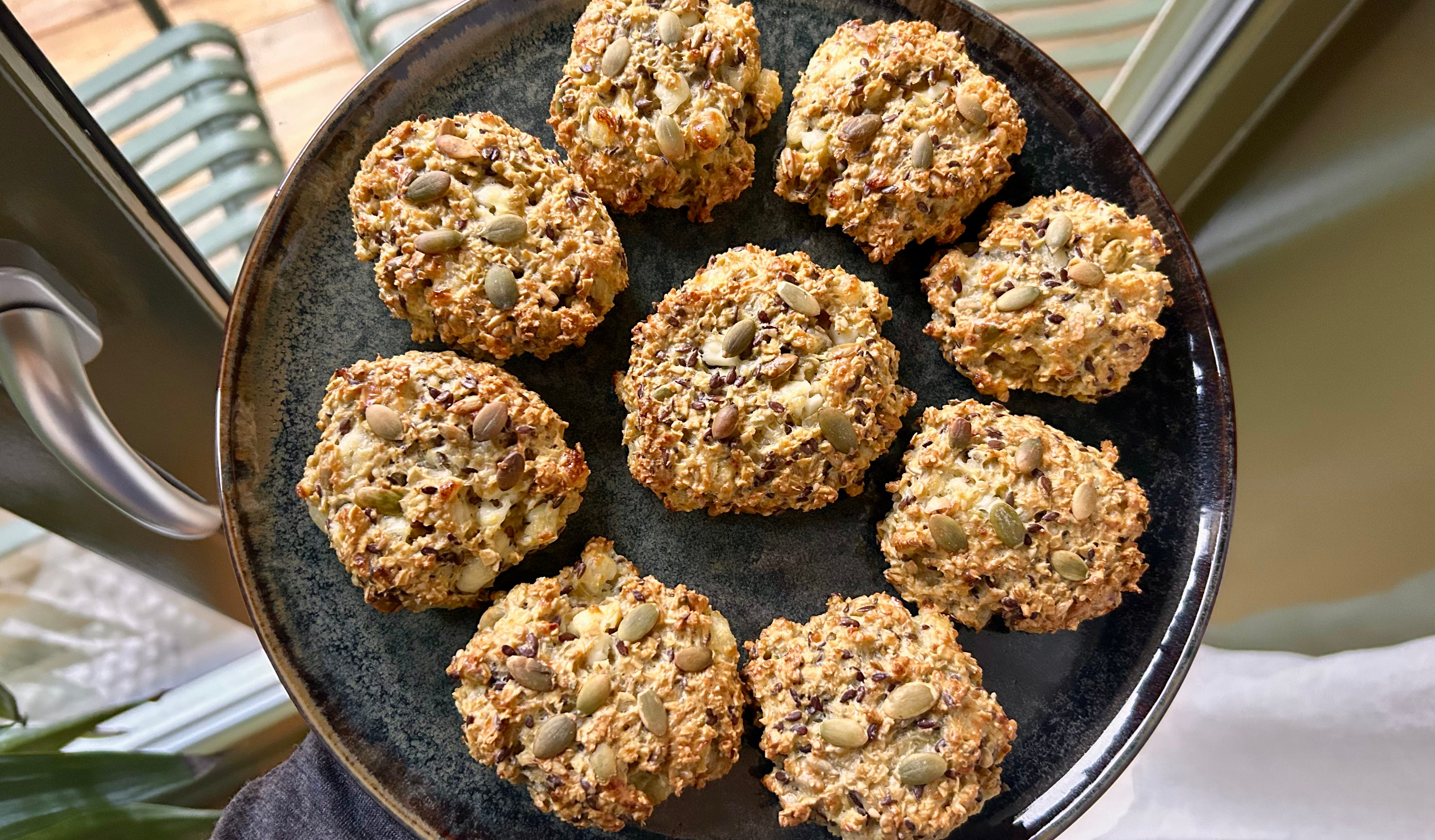
My Favourite Oatmeal Seed Rolls (Rundstykker)
Here is a recipe concept I love: soft, nourishing rolls made with oats, cottage cheese and seeds. They are simple, filling and easy to adapt.
Base ingredients:
Oatmeal
Pumpkin seeds
Cottage cheese
Eggs
Flaxseeds
Sesame seeds
Sunflower seeds
Oregano
Ginger powder
You can blend or mix these with a little baking powder and salt, form small rolls and bake them in the oven. The exact amounts can be adjusted depending on how many you want to make and the texture you prefer, but the idea is straightforward: oats + eggs + cottage cheese form the base, and the seeds, herbs and spices do the rest.
In this combination, the oatmeal becomes just one component in a more complete meal. The seeds bring fibre, healthy fats and minerals like magnesium and zinc. Cottage cheese and eggs add high-quality protein and additional fat. Oregano and ginger bring flavour, but also plant compounds that may have anti-inflammatory and antioxidant effects.
The result is no longer a product made mostly from carbohydrates; it is a balanced, structured food that can be part of a more stable blood sugar day.
What Happens in the Body?
From a physiological perspective, this matters.
Protein and fat slow gastric emptying, which means the contents of the stomach move more gradually into the small intestine. This leads to a slower and more controlled absorption of glucose into the bloodstream, rather than a rapid surge. The extra fibre from oats and seeds further moderates this process by forming a more viscous mixture in the gut, which slows nutrient absorption.
Subjectively, the experience is also different: more stable energy, better satiety, and fewer abrupt hunger signals shortly after eating. You are less likely to find yourself standing in front of the fridge an hour later, wondering why you are already hungry again.
Meal Composition as Part of an Anti-Inflammatory Lifestyle
For someone living with lipedema, the composition of meals can be an important part of an anti-inflammatory lifestyle. Lipedema is not “caused” by food, and it cannot be “cured” by diet, but the way we eat can influence inflammation, pain, swelling and energy levels.
Many women with lipedema notice that highly processed carbohydrates, large blood sugar swings and frequent insulin spikes tend to make symptoms worse over time, or at least harder to manage. Focusing on meal composition is a way to support the body, rather than fight against it.
An anti-inflammatory approach is often described in terms of which foods to include: colourful vegetables, high-quality fats, fatty fish, nuts, seeds, herbs and spices. That is a useful starting point. But what I want to emphasise is that the structure of the meal is just as important as the ingredient list.
A bowl of plain oatmeal and a bowl of oatmeal enriched with eggs, cottage cheese, seeds and herbs are completely different metabolic experiences, even if they share the same base.
Small Adjustments, Big Long-Term Impact
Thinking this way also makes everyday cooking more realistic. You do not need a complicated recipe or a long ingredient list to eat in a way that supports more stable blood sugar and a calmer inflammatory environment.
You can start from what you already know and like – such as oatmeal – and ask:
Where is the protein?
Where is the fat?
Where is the fibre beyond the grain itself?
Can I add something with anti-inflammatory potential?
Very small adjustments, repeated over time, change the overall pattern of eating. For me, that is the heart of it: not a perfect diet, but thousands of slightly better choices that align with my body, my lipedema and my life.
I hope this gave you some new reflections on the meals you eat every day – not only oatmeal, but also things like white bread with jam or other “simple” favourites you might rely on. Meal composition is a quiet kind of power: small shifts in what we combine on the plate can change how we feel in our bodies hours later.
I would love to hear your perspective. Feel free to share your thoughts in the comments – whether you learned something new, recognised yourself in these experiences, or have your own stories and strategies you want to pass on to others in a similar situation.
Hey readers! 🤗💛
Some have asked me for the recipe.
The base consists of 400 g cottage cheese, 3 eggs, 1 tsp baking soda, and 400 g quick oats.
Add whatever seeds, nuts, spices and herbs you like. I usually just use what I have on hand and vary it a bit. Flaxseeds, pumpkin seeds, oregano, ground ginger, walnuts, etc.
Mix all the ingredients for the base in a bowl and let it sit on the counter for at least 15 minutes before baking. You can put it in a food processor and blend it until smooth, but I usually skip that step. Just add whatever you want.
Form 8–10 balls and place them with some space between them on a baking sheet lined with parchment paper. Bake the rolls in the middle of a preheated oven at 210 °C for 12–15 minutes, until golden. Cool on a rack and serve immediately.
These rolls fit well into a Mediterranean diet because they combine whole grains, healthy fat sources and herbs in a way that supports a balanced and nutrient-dense meal. They can also be adapted to a low-carb diet by reducing the amount of oats and increasing the proportion of nuts, seeds and eggs to promote a more stable blood sugar response. For a ketogenic diet, the base can easily be adjusted by replacing the oats with low-carb alternatives such as almond flour or ground flaxseeds, which significantly lowers the carbohydrate content while maintaining the structure.
🤩💛
A person asked me: “Is oatmeal bad for those of us with lipedema?”
Even though we all live with lipedema, our bodies are not identical. Foods like oatmeal can be tolerated very differently from person to person, especially when you factor in things like insulin resistance, total carbohydrate intake, gut health and activity level.
From a food science perspective, oats are not “bad” in themselves. Oatmeal is a whole grain that contains soluble fiber, especially beta-glucans, which can slow down glucose absorption, support the gut microbiome and help improve cholesterol levels in many people. For some with insulin resistance, a moderate portion of oatmeal eaten together with protein and fat can fit into a blood sugar–friendly pattern. For others, particularly those who are very carb-sensitive and notice more swelling, pain or fatigue after higher-carb meals, even oatmeal may feel less suitable. Both experiences are valid, and this is why blanket statements like “oats are bad for everyone with lipedema” are too simplistic.
I write from a food science background, and my own way of eating is a Mediterranean-style diet. In practice that means lots of vegetables, olive oil, fish, legumes, nuts, some fruit and mostly minimally processed foods, with carbohydrates coming mainly from whole-food sources. This way of eating has worked well for my lipedema for years, and just as important, it is a pattern I can maintain long term without feeling deprived. For me, that has been crucial: a diet only helps if it is realistic to live with over time, socially, mentally and physically.
Ketogenic diets have shown promising benefits for lipedema in some studies, especially when it comes to pain, inflammation, body composition and metabolic markers. At the same time, keto is demanding to follow, can be socially and psychologically challenging, and is not appropriate or sustainable for everyone. In my case, a strict ketogenic diet is not something I can or want to maintain in the long run, while a Mediterranean-style pattern is.
So rather than labelling oatmeal as universally “good” or “bad” for everyone with lipedema, it makes more sense to look at the overall pattern of eating, your individual metabolic situation (for instance whether you have insulin resistance or not), and what you can realistically sustain over time. The most important thing is to find a way of eating that supports symptom management, metabolic health and quality of life for you – and that you can actually keep living with.