

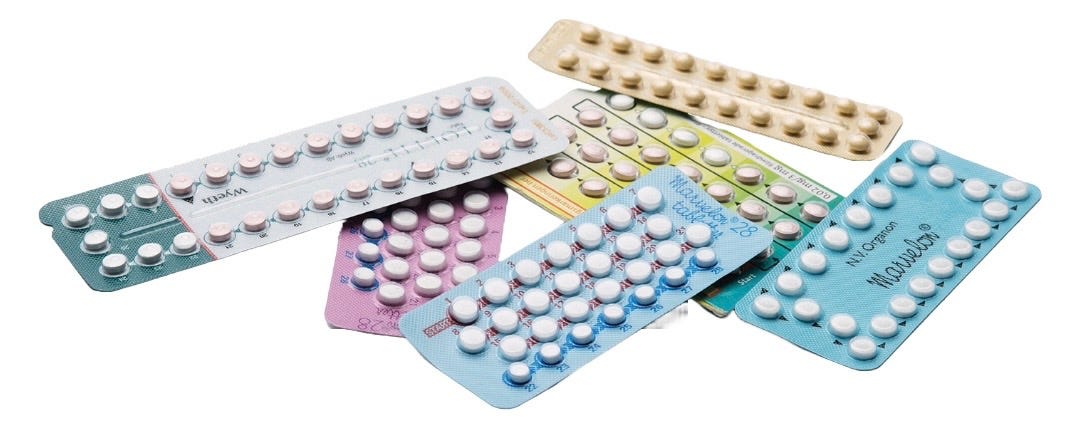
I was fifteen when I started taking Loette 28. Loette 28 is a combined oral contraceptive that contains two synthetic sex hormones: the oestrogen ethinylestradiol and the progestin levonorgestrel. I had never used hormonal contraception before, and as far as I knew, no one in my family had lipedema or anything similar. I had no idea it would change my body so quickly and so dramatically.
In the course of just two months, something happened that I did not understand. My weight increased by about twelve kilos, and most of it settled on my thighs and calves. This was not the “normal” hormonal and puberty weight gain. My lower body suddenly felt heavy, tight and unfamiliar. My calves became thicker and more compact, and I felt a strange, gnawing pain that made no sense to me.
My general practitioner even wanted me to change to a different birth control pill, because she agreed that something had happened to my body after I started taking Loette 28. She prescribed Yasmin instead, which is also a combined pill containing oestrogen. Yasmin, like Loette 28, contains the synthetic oestrogen ethinylestradiol, but with a different progestin: drospirenone, a newer progestin with a mild diuretic (anti-aldosterone) effect.
The pain in my legs gradually became overwhelming during the next four to five years. It felt like toothache in the fat tissue – a deep, aching pain in my thighs and calves that never really let go. Simply standing, walking or being touched could hurt. The pain was so strong that I needed to massage my legs to get some sleep at night, because the pain could keep me awake.
I was young, I did not understand why my body was reacting this way, and I felt both ashamed and powerless. From the outside it may have looked as if I had just gained weight and was in poor shape, but inside it felt as if something was seriously wrong. I still had a normal BMI. Weight itself has never been the main problem. The problem was that my lower body no longer matched my upper body.
Over time my legs became visibly swollen. I went to my general practitioner several times when I was twenty years old. By then, the pain had become so intense that my life was, at times, more about “getting through the day” than anything else. The doctors tried to find an explanation. I was given diuretics because of the swelling in my legs. They did not help with the fluid at all.
My GP eventually became concerned that this might be a blood clot or another serious vascular condition. I was therefore referred to Aker sykehus – Aker Hospital, a public hospital in Oslo, Norway, which at that time had a dedicated vascular department – for further investigation. There they performed ultrasound examinations and, based on the imaging and my clinical history, I received the lipedema diagnosis as early as 2012. It was the first time anyone really saw the whole picture.
It was a relief to have a name for what my body had been trying to tell me for years. Suddenly it made sense that the weight had come on so abruptly and so locally on my thighs and calves, that the pain was so intense, and that ordinary dieting did not help in the areas that hurt the most.
The doctors explained that lipedema is often linked to hormones, and that many women experience onset or worsening in connection with puberty, pregnancy, menopause – or with hormonal contraception. Loette 28 did not create the disease out of nothing, but it seemed to have activated something that had been latent.
My GP recommended that I switch to oestrogen-free contraception. Loette 28 contains ethinylestradiol, a synthetic oestrogen, in addition to the progestin levonorgestrel. Yasmin, another well-known preparation, also contains ethinylestradiol, but with a different progestin (drospirenone). For my body, the decisive issue was not primarily which progestin was used, but the presence of oestrogen itself. I was therefore switched to Cerazette, which is a progestin-only pill that contains desogestrel and is completely free of oestrogen.
The switch to Cerazette did not reverse the damage that had already occurred in the fat tissue, but for me it was an important turning point pain-wise. I no longer had to keep adding more of the hormone that had probably been part of the problem. At the same time, I began to understand that I had not “just been unlucky with weight and body shape” – I had a real, physical disease that affected my body, my pain and my everyday life.
Now I am 34 years old. I know I have lipedema. The diagnosis was made at Aker Hospital, and it has followed me ever since. The question that still remains is why Loette 28 triggered it so dramatically in me. Over time I have read extensively about hormones, oestrogen receptors, fat tissue and microcirculation. The more I learn, the more clearly I see the connection between my story and what research suggests: that lipedema is a hormone-sensitive, genetically influenced condition, and that synthetic oestrogen can be a powerful trigger for some women.
I know we do not have final answers. There is no large study that can tell me exactly why my body reacted the way it did. But I have my own timeline: no symptoms, then Loette 28, then twelve kilos and a new, painful body in just two months – and finally a lipedema diagnosis. For me, it is logical to see Loette 28 as a triggering factor in a system that was already vulnerable, even though my genes and puberty had laid the groundwork.
That is why I am so focused on hormones and lipedema today. My story is not just about a contraceptive pill that “did not suit me”, but about how what looks like a standard contraceptive choice can have completely different consequences in a body with a hidden vulnerability. And that is why I believe more doctors need to know about lipedema, ask about hormonal history, and be more cautious with oestrogen-containing preparations in women who describe painful, heavy legs and rapid, localised weight gain.
I’m really curious to hear other women’s experiences with hormones, birth control and lipedema or unexplained leg pain.
If any part of my story feels familiar, you’re very welcome to share your own story in the comments – it might help someone else reading this feel a little less alone 💛
I recently stopped Testosterone and DHEA in my HRT and my leg symptoms are getting a little better. I am not diagnosed but may be a stage 1-2. I thought this was crazy because i figured the estrogen would be giving me the problems. Mine started in puberty when my body became very disproportionate.