

August has been an unusually active month for lipedema.

New studies have looked at GLP-1 medications, pain processing, lymphatic function, quality of life, inflammation and the relationship between lipedema and obesity. New clinical studies are being registered. At the same time, lipedema has appeared in formal physician education in the United States, Ireland has held its first national lipedema conference, and a major plastic surgery congress in Brazil dedicated an entire course to the condition.
None of this means that we suddenly have all the answers. But taken together, these developments tell us something important. Lipedema is receiving more scientific and medical attention across different parts of the world.

Three things to know
1. There is more research, but there has not been a treatment breakthrough.
Several new studies are important, but most are observational, cross-sectional or reviews. They can identify patterns and generate hypotheses, but they cannot yet tell us that a particular treatment changes the underlying disease.
2. Lipedema is entering more established medical settings.
In the space of two days, lipedema was part of accredited physician education at Texas A&M, the focus of Ireland’s first national conference, and the subject of a dedicated 5.5-hour course at a Brazilian plastic surgery congress.
3. Researchers are looking far beyond fat accumulation.
Recent studies are examining pain processing, lymphatic transport, systemic inflammation, mental health, quality of life, obesity, exercise and potential pharmacological treatment.
Here are some of the most important developments.
A large study reports better symptoms among GLP-1 users with lipedema
One of the most talked-about new studies is likely to be the first large dataset examining GLP-1 and GLP-1/GIP medications in people with lipedema.
The study, published online on 14 August 2026 in Obesity Pillars, analysed data from 2,719 respondents with lipedema. Around 55% reported currently using a GLP-1 or GLP-1/GIP receptor agonist, most commonly tirzepatide.
Current users reported better physical and mental health and lower levels of pain, swelling and functional limitation than people who had never used these medications. Participants also recalled improvements after starting treatment.
That sounds promising, but there is a very important limitation.
This was a cross-sectional online survey based on self-reported medication use and symptoms. People were not randomly assigned to treatment, and researchers did not follow comparable groups prospectively.
The study therefore does not prove that GLP-1 medications treat lipedema itself.
Weight loss, metabolic changes, differences between people who use and do not use these medications, other treatments, and several forms of selection bias could influence the results.
What the study provides is a strong signal that deserves proper prospective clinical research.
Why this matters for people with lipedema: GLP-1 medications are already being widely discussed within the community. This study gives that discussion more data, but it does not yet give us proof of disease-specific treatment.
Evidence strength: observational and hypothesis-generating.
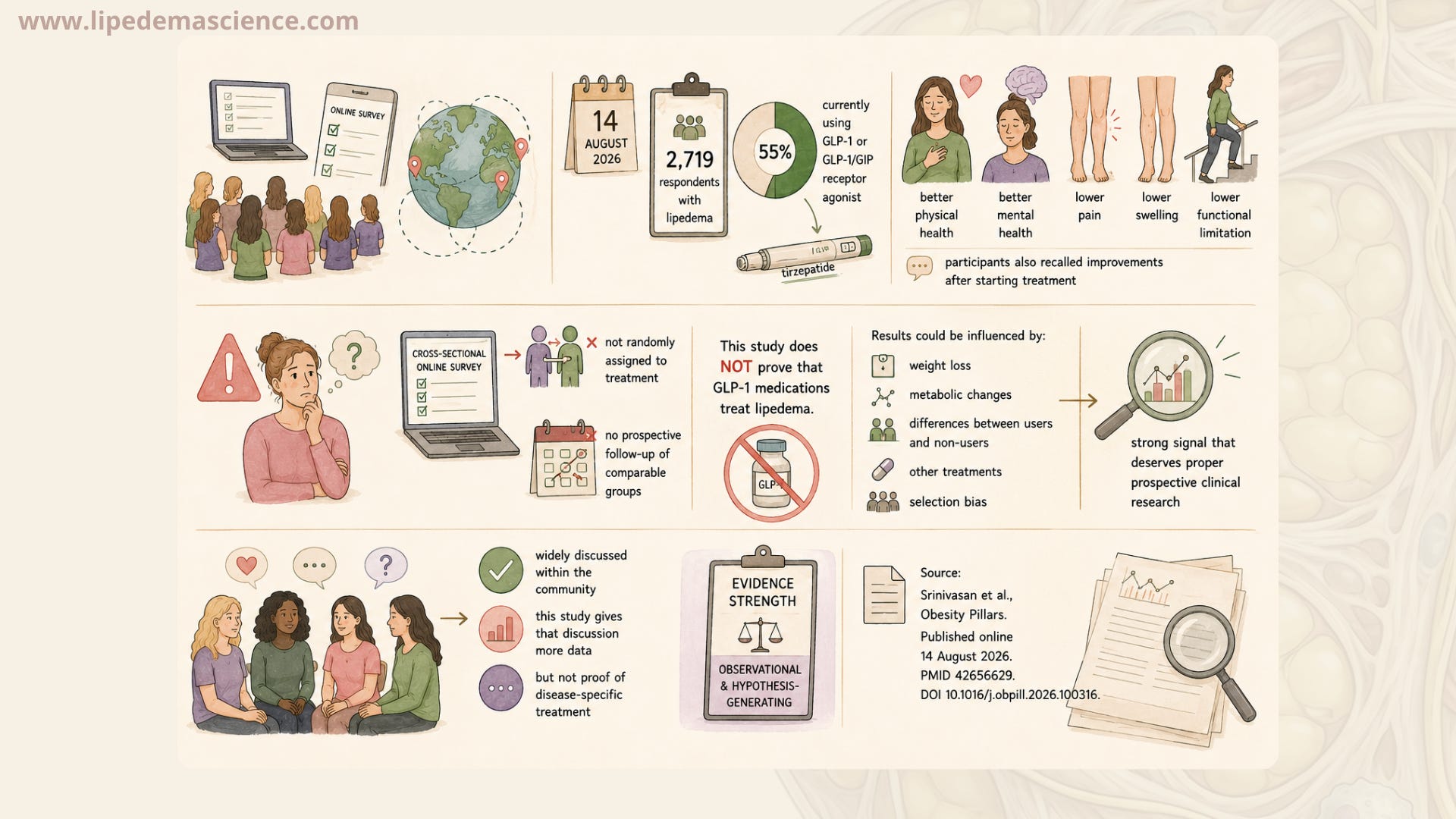
Source: Srinivasan et al., Obesity Pillars. Published online 14 August 2026. PMID 42656629. DOI 10.1016/j.obpill.2026.100316.
A Swedish study documents a very high burden on quality of life
On 14 August 2026, researchers from Sweden published results from the LISE study in PLOS One.
The study included 104 women with lipedema, 42 healthy controls and an exploratory comparison group of 44 women with advanced cancer.
Women with lipedema reported significantly poorer health-related quality of life than healthy controls across all eight dimensions that were measured. Their quality-of-life scores were comparable to those of women with advanced cancer in several dimensions, and the lipedema group also reported substantial pain, fatigue, anxiety, depression and body-image concerns.
That comparison needs to be handled carefully. The study does not mean that lipedema and advanced cancer are medically equivalent diseases.
What it demonstrates is that the patient-reported burden of living with lipedema can be extremely high, something that can easily be missed when the condition is viewed primarily in terms of body shape or fat distribution.
Why this matters: quality of life is not a secondary issue. These results strengthen the argument that pain, mobility, psychological health and participation in everyday life should be taken seriously when evaluating lipedema.
Evidence strength: controlled cross-sectional study. Important for documenting burden, but it cannot determine cause and effect.
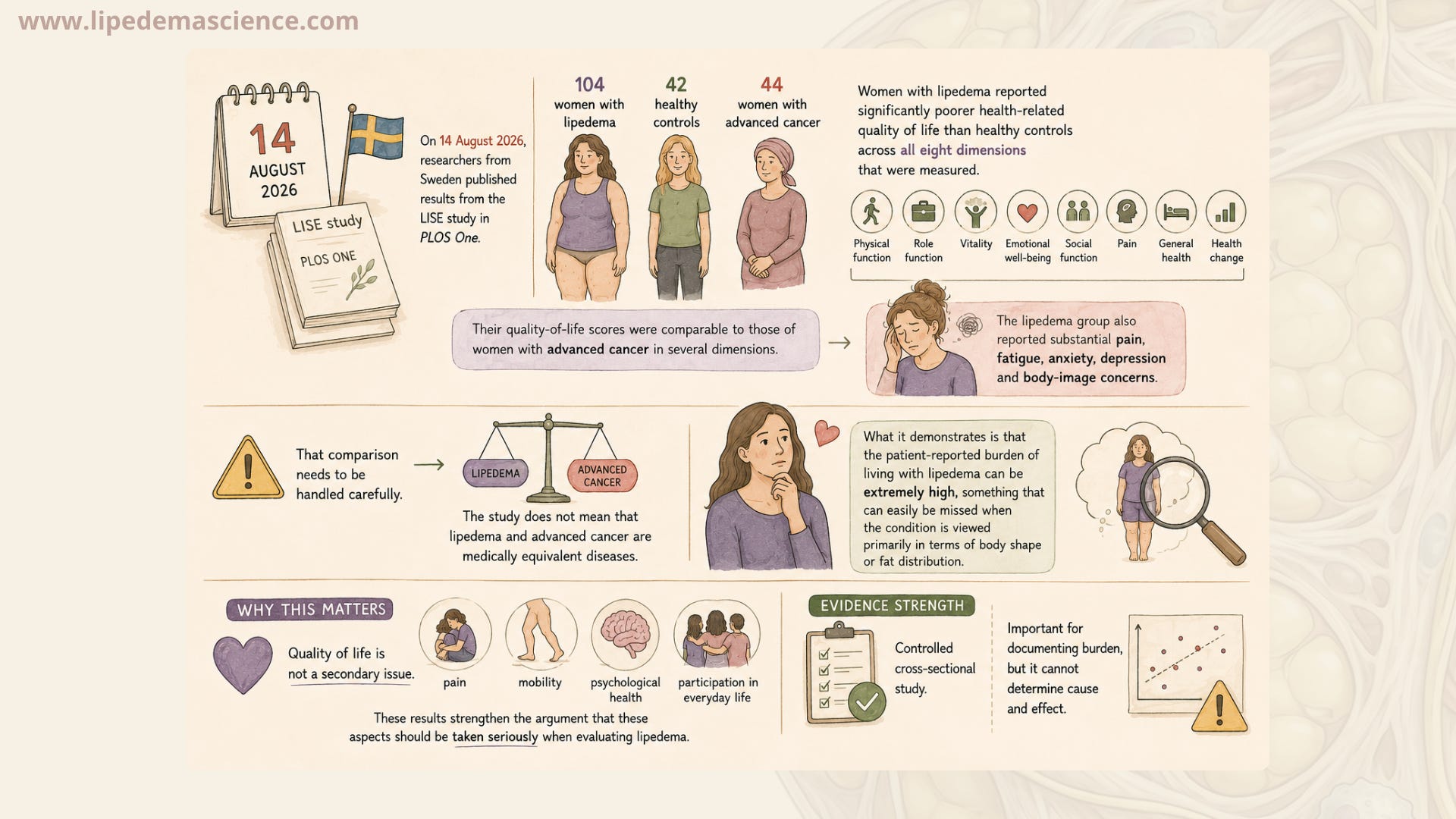
Source: Goodrose-Flores & Björkhem-Bergman, PLOS One. Published 14 August 2026. DOI 10.1371/journal.pone.0355488. PMID 42599946.
New research suggests pain may involve more than painful fat tissue
Another study, published online in Phlebology on 18 August 2026, investigated central sensitization and pain thresholds.
Researchers compared 61 women with lipedema with 20 healthy controls.
Women with lipedema had lower pressure-pain thresholds not only in affected areas of the legs, but also in the forearm, an area not typically considered affected by lower-limb lipedema. They also had higher scores on the Central Sensitization Inventory.
This is interesting because it raises the possibility that pain in lipedema may involve changes in how the nervous system processes painful stimuli, rather than being explained entirely by local pressure or abnormalities within lipedema tissue.
But this distinction is critical: the study found features consistent with central sensitization. It did not establish that central sensitization causes lipedema pain.
Why this matters: understanding why lipedema hurts could eventually influence how pain is assessed and managed. It may also help explain why pain severity does not always correspond neatly with the visible amount of affected tissue or disease stage.
Evidence strength: small cross-sectional study. Mechanistically interesting, but not proof of causation.
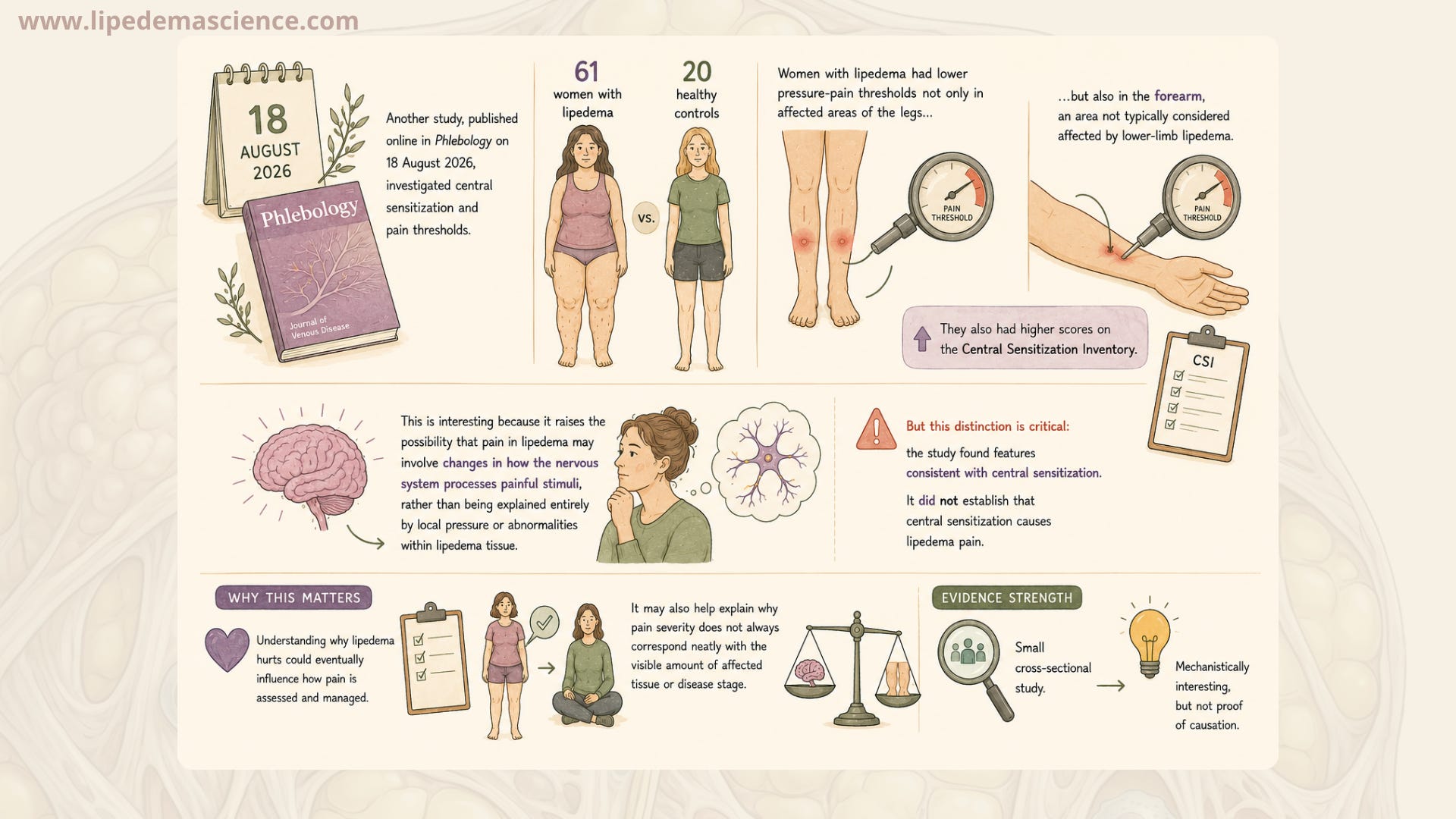
Source: Yücel, Candan & Ata, Phlebology. Published online 18 August 2026. DOI 10.1177/02683555261478723. PMID 42613760.
A systematic review looks at what happens in the lymphatic system
Lymphatic dysfunction is one of the major questions in lipedema research.
A systematic review published on 10 August 2026 examined lymphoscintigraphy findings in people with lipedema.
Seven studies were included, covering 470 participants, including 311 with lipedema. Lymphoscintigraphy was reported as normal in 61.4% of patients with lipedema. When abnormalities were present, findings included tortuous lymphatic vessels, collateral vessels and visualization of popliteal lymph nodes.
The authors interpreted the overall pattern as being more consistent with lymphatic overload than clear lymphatic failure.
That is potentially important, but the included studies used different methods and protocols, which made the evidence too heterogeneous for a formal meta-analysis. So this does not settle the debate about lymphatic involvement in lipedema.
Instead, it reinforces a more nuanced picture: the lymphatic system may be involved without lipedema simply being another form of lymphedema.
Evidence strength: systematic review, but based on a small and heterogeneous underlying literature.
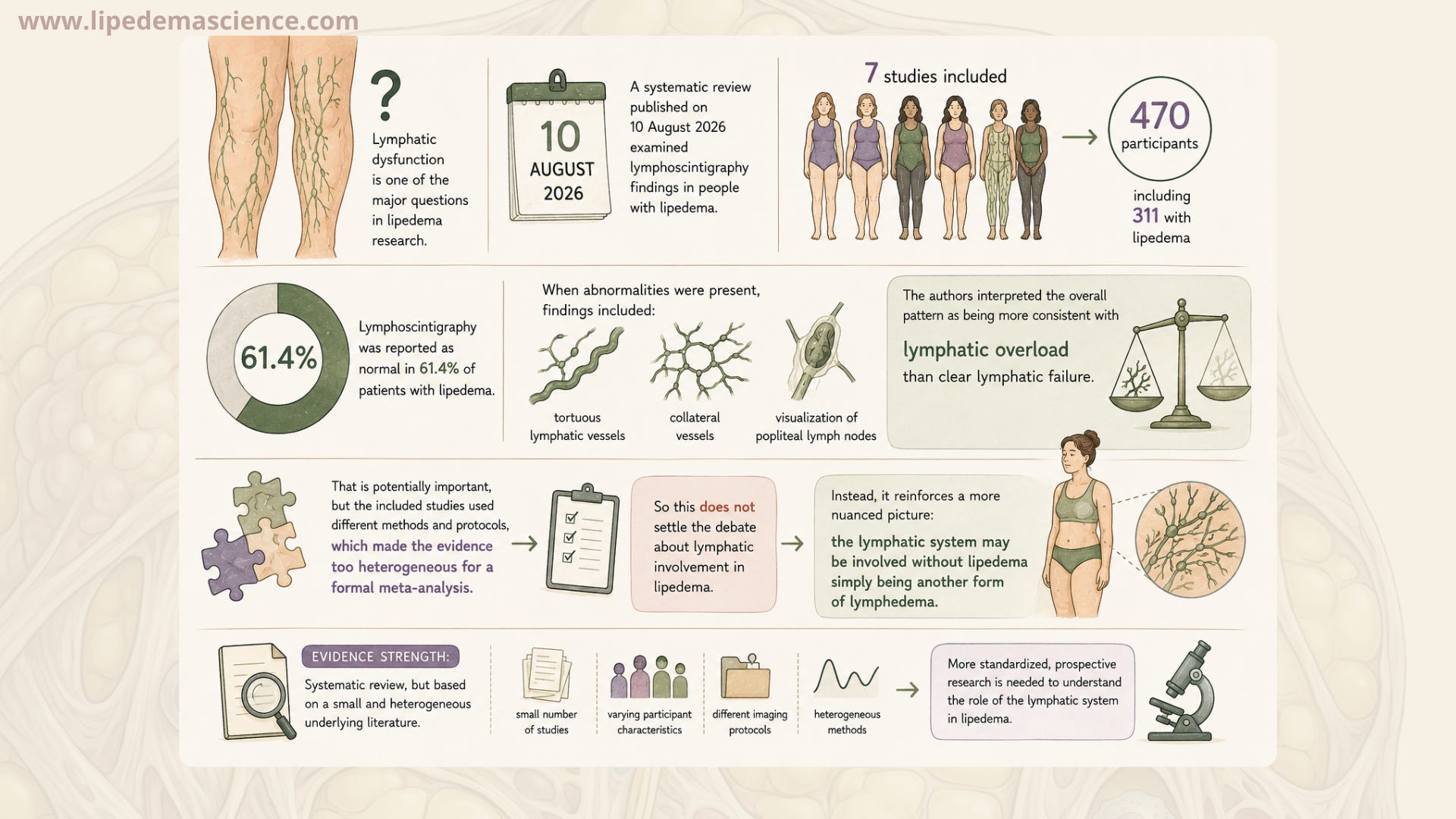
Source: Mortada et al., Plastic and Reconstructive Surgery Global Open. Published 10 August 2026. DOI 10.1097/GOX.0000000000008015. PMID 42578114.
Researchers are also challenging simple ideas about lipedema, inflammation and obesity
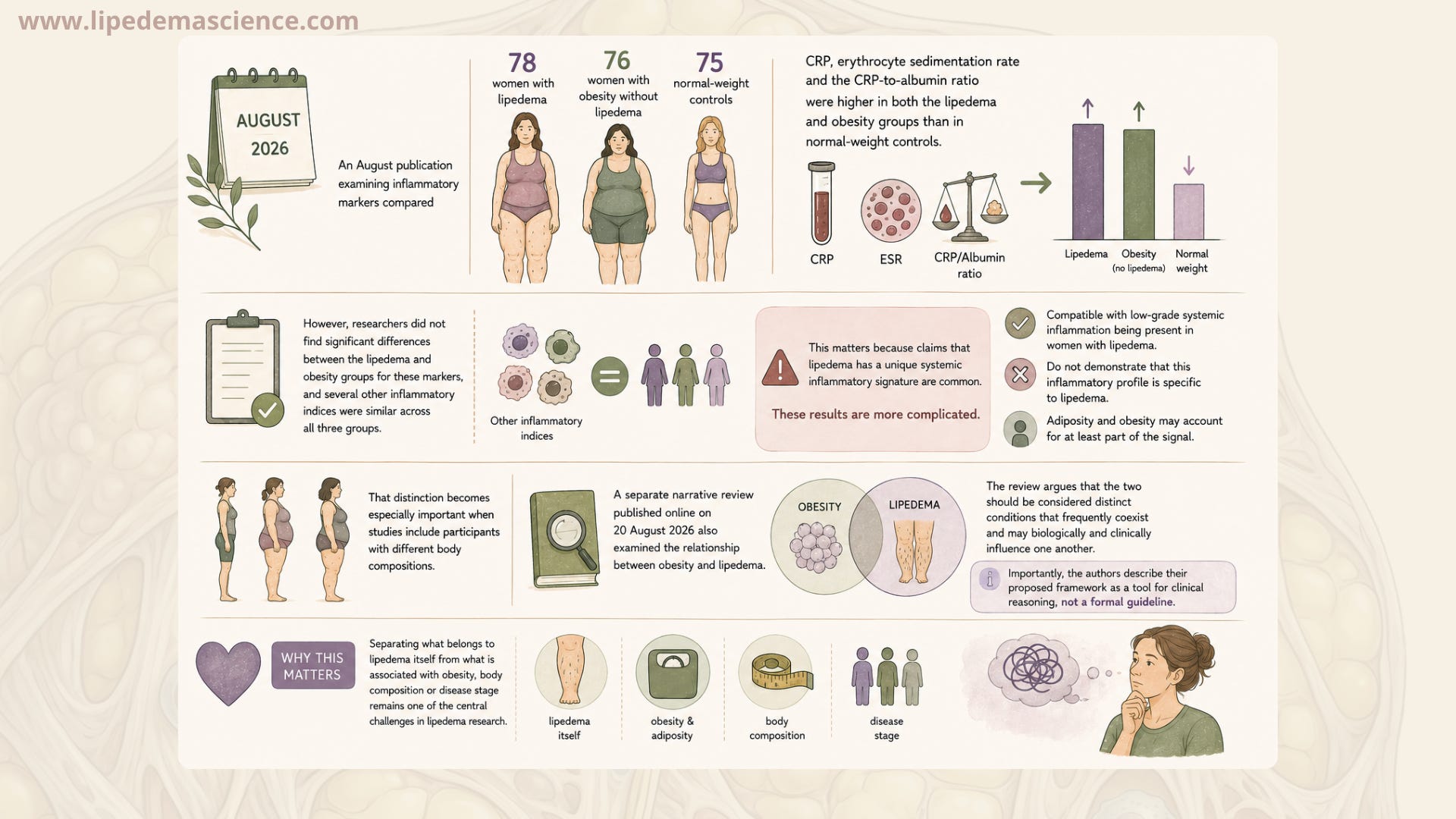
An August publication examining inflammatory markers compared 78 women with lipedema, 76 women with obesity without lipedema and 75 normal-weight controls.
CRP, erythrocyte sedimentation rate and the CRP-to-albumin ratio were higher in both the lipedema and obesity groups than in normal-weight controls. However, researchers did not find significant differences between the lipedema and obesity groups for these markers, and several other inflammatory indices were similar across all three groups.
This matters because claims that lipedema has a unique systemic inflammatory signature are common. These results are more complicated. They are compatible with low-grade systemic inflammation being present in women with lipedema, but they do not demonstrate that this inflammatory profile is specific to lipedema. Adiposity and obesity may account for at least part of the signal.
That distinction becomes especially important when studies include participants with different body compositions.
A separate narrative review published online on 20 August 2026 also examined the relationship between obesity and lipedema, arguing that the two should be considered distinct conditions that frequently coexist and may biologically and clinically influence one another. Importantly, the authors describe their proposed framework as a tool for clinical reasoning, not a formal guideline.
Why this matters: separating what belongs to lipedema itself from what is associated with obesity, body composition or disease stage remains one of the central challenges in lipedema research.
New clinical studies are being launched
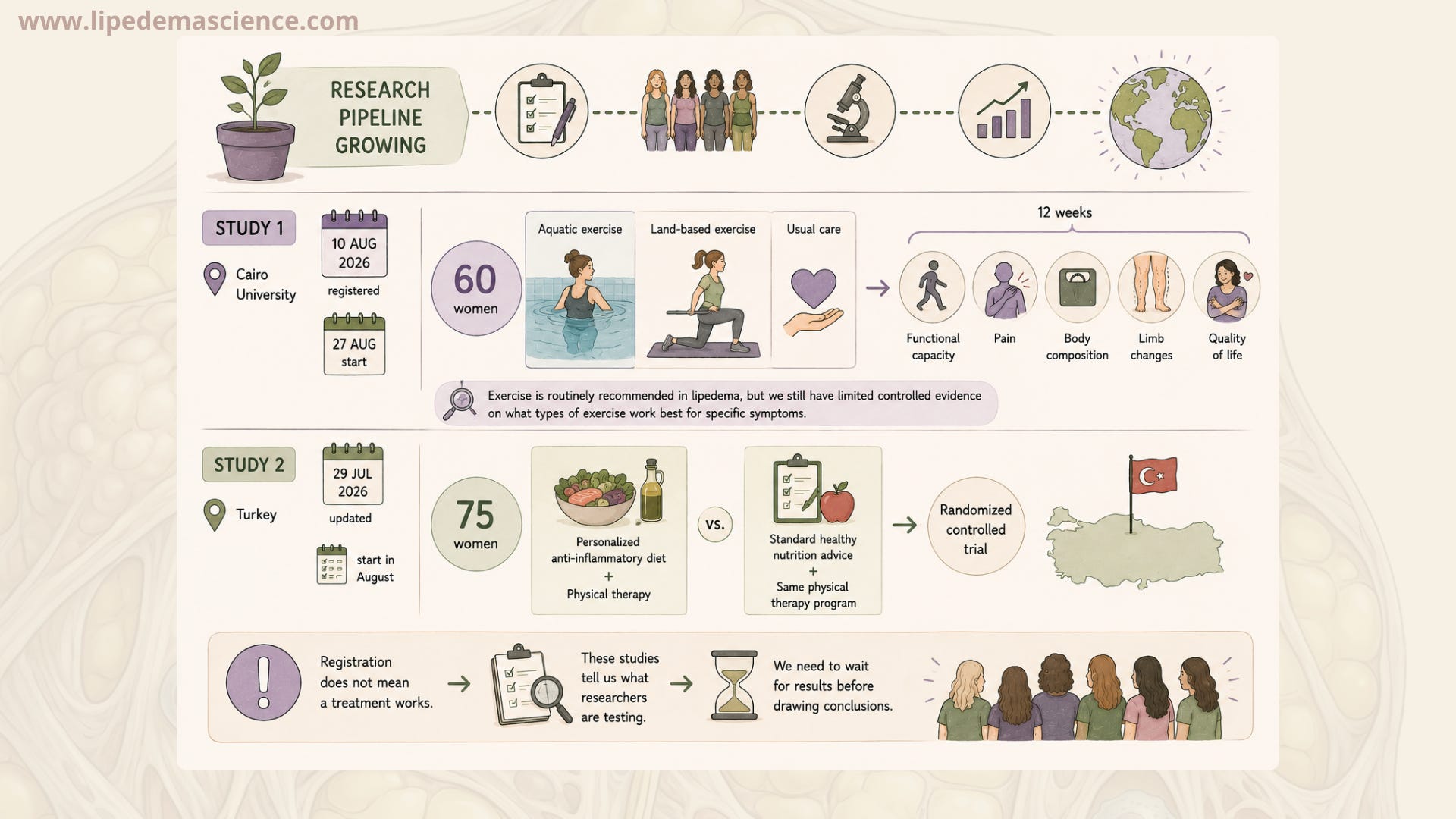
The research pipeline is also growing. A new study from Cairo University was registered in August to compare aquatic exercise, land-based exercise and usual care in women with lipedema.
The randomized trial plans to include 60 women and assess functional capacity, pain, body composition, limb changes and quality of life over a 12-week intervention. The study was first posted on 10 August 2026, with a listed study start of 27 August.
This is worth watching because exercise is routinely recommended to people with lipedema, but we still have limited controlled evidence telling us what types of exercise work best for specific symptoms.
Another study in Turkey is comparing a personalized anti-inflammatory diet plus physical therapy with standard healthy nutrition advice plus the same physical therapy programme. It is designed as a randomized controlled trial with 75 women. The ClinicalTrials.gov record was updated on 29 July 2026, with an expected study start in August.
Again, registration does not mean a treatment works. These studies tell us what researchers are testing. We need to wait for results before drawing conclusions.
A new study is looking for blood-based inflammation markers
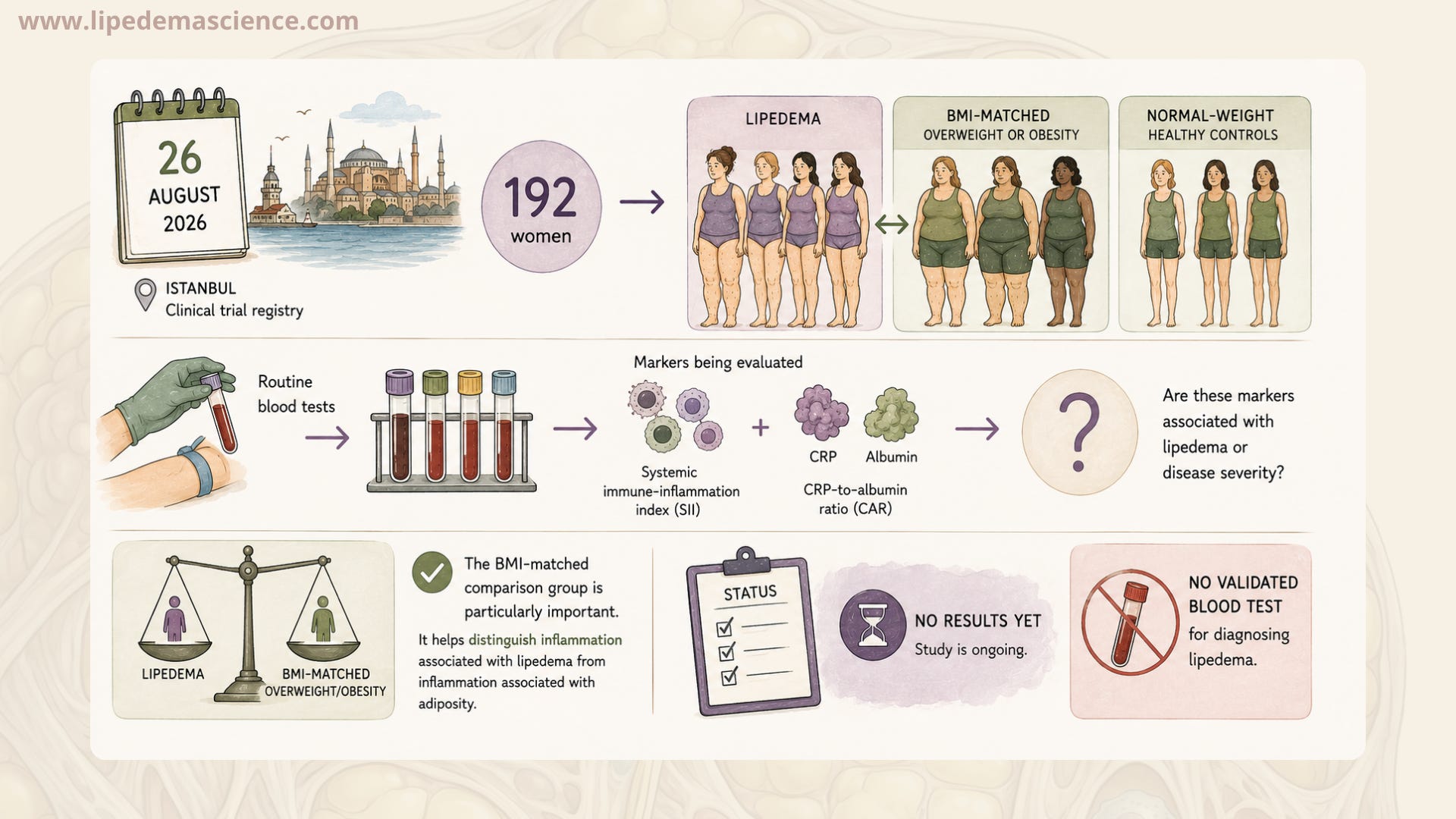
Another study became publicly available in the clinical trial registry on 26 August 2026. Researchers in Istanbul have collected data from 192 women, comparing women with lipedema with BMI-matched women with overweight or obesity and normal-weight healthy controls.
The researchers will evaluate several markers derived from routine blood tests, including the systemic immune-inflammation index and CRP-to-albumin ratio, to investigate whether they are associated with lipedema or disease severity.
The BMI-matched comparison group is particularly important because it gives researchers a better opportunity to distinguish inflammation associated with lipedema from inflammation associated with adiposity.
However, no published results are available yet. There is currently no validated blood test for diagnosing lipedema.
Source: ClinicalTrials.gov NCT07787234. First publicly posted 26 August 2026.
Lipedema enters accredited physician education in the United States
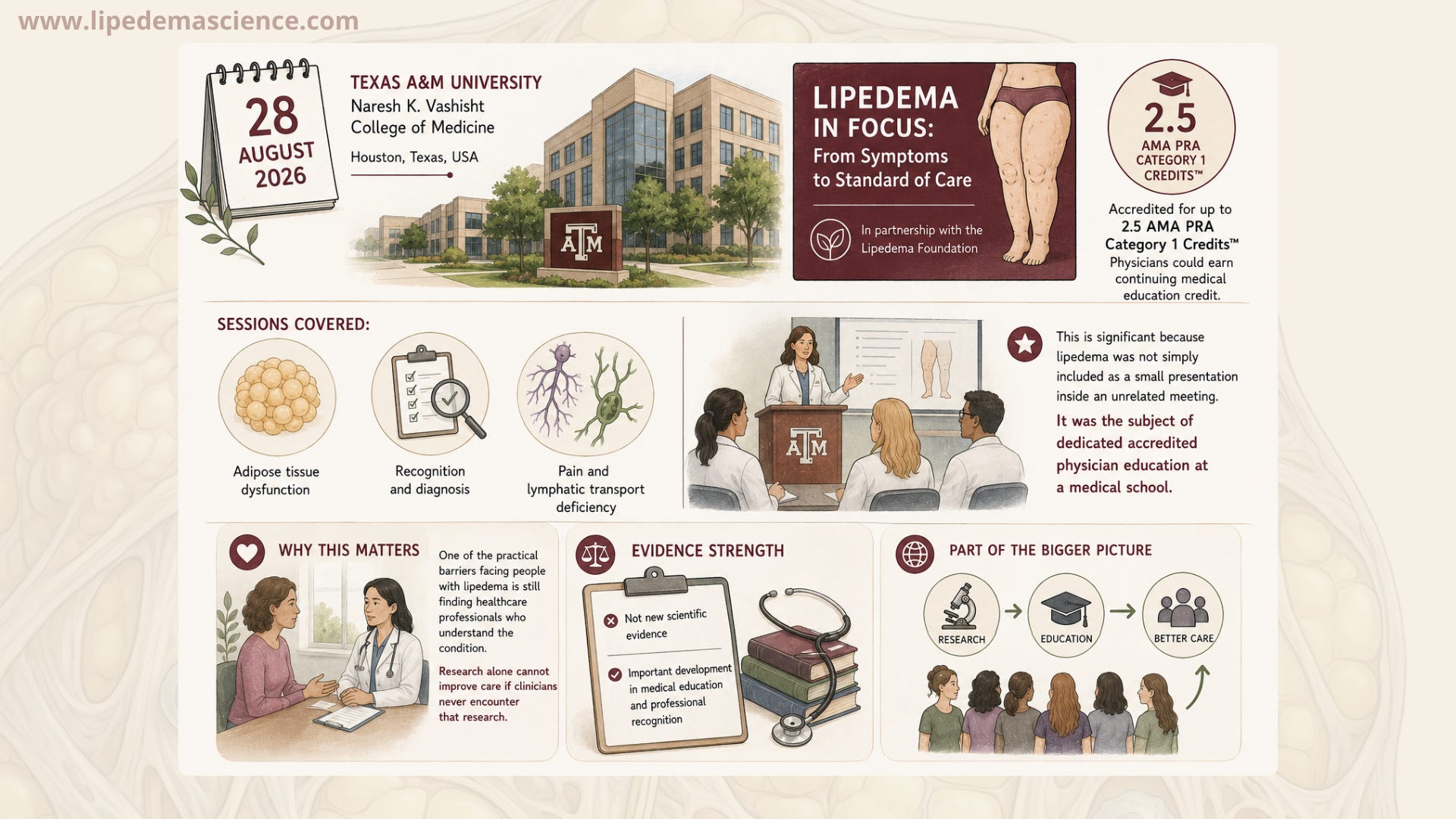
The scientific developments are only part of the story. On 28 August 2026, Texas A&M University Naresh K. Vashisht College of Medicine held “Lipedema in Focus: From Symptoms to Standard of Care” in Houston in partnership with the Lipedema Foundation.
The programme was accredited for up to 2.5 AMA PRA Category 1 Credits, meaning physicians could receive formal continuing medical education credit for participating.
The sessions covered adipose tissue dysfunction, recognition and diagnosis, pain and lymphatic transport deficiency.
This is significant because lipedema was not simply included as a small presentation inside an unrelated meeting. It was the subject of dedicated accredited physician education at a medical school.
Why this matters: one of the practical barriers facing people with lipedema is still finding healthcare professionals who understand the condition. Research alone cannot improve care if clinicians never encounter that research.
Evidence strength: this is not new scientific evidence. It is an important development in medical education and professional recognition.
Source: Texas A&M University College of Medicine / Lipedema Foundation. Event held 28 August 2026.
Ireland holds its first National Lipoedema Conference
The following day, 29 August 2026, Ireland held its first National Lipoedema Conference in Cork. The programme brought together healthcare professionals, surgeons, therapists, nutrition specialists, patient advocates and people living with lipedema.
Topics included the LipLeg Study, surgical case discussions, nutrition, metabolic health, GLP-1 treatments and the psychological impact of the condition.
Again, the conference itself is not scientific evidence. But it represents something important for patients: lipedema is becoming a subject around which national professional networks and care discussions are being built.
For a condition that many people still struggle to have recognised by healthcare professionals, that matters.

Source: Lipoedema Support Network Ireland. First National Lipoedema Conference, Cork, 29 August 2026.
Brazil dedicates 5.5 hours of a plastic surgery congress to lipedema
Also on 29 August 2026, the 39th Jornada Norte-Nordeste de Cirurgia Plástica in Natal, Brazil, hosted a dedicated course called “Lipedema 360°.”
The course ran from 08:00 to 13:30 and covered pathophysiology and diagnosis, surgical treatment, compression, manual therapy, postoperative complications, photobiomodulation and thermography.
This is noteworthy because lipedema was given an entire educational track within an established regional plastic surgery congress.
At the same time, the programme illustrates why evidence appraisal remains so important.
The fact that a therapy appears on the programme of a medical congress does not automatically mean that strong clinical evidence supports it. Treatments such as photobiomodulation or the use of thermography in postoperative lipedema care need to be evaluated separately against the published evidence.
Why this matters: medical recognition is growing, but recognition and evidence are not the same thing.
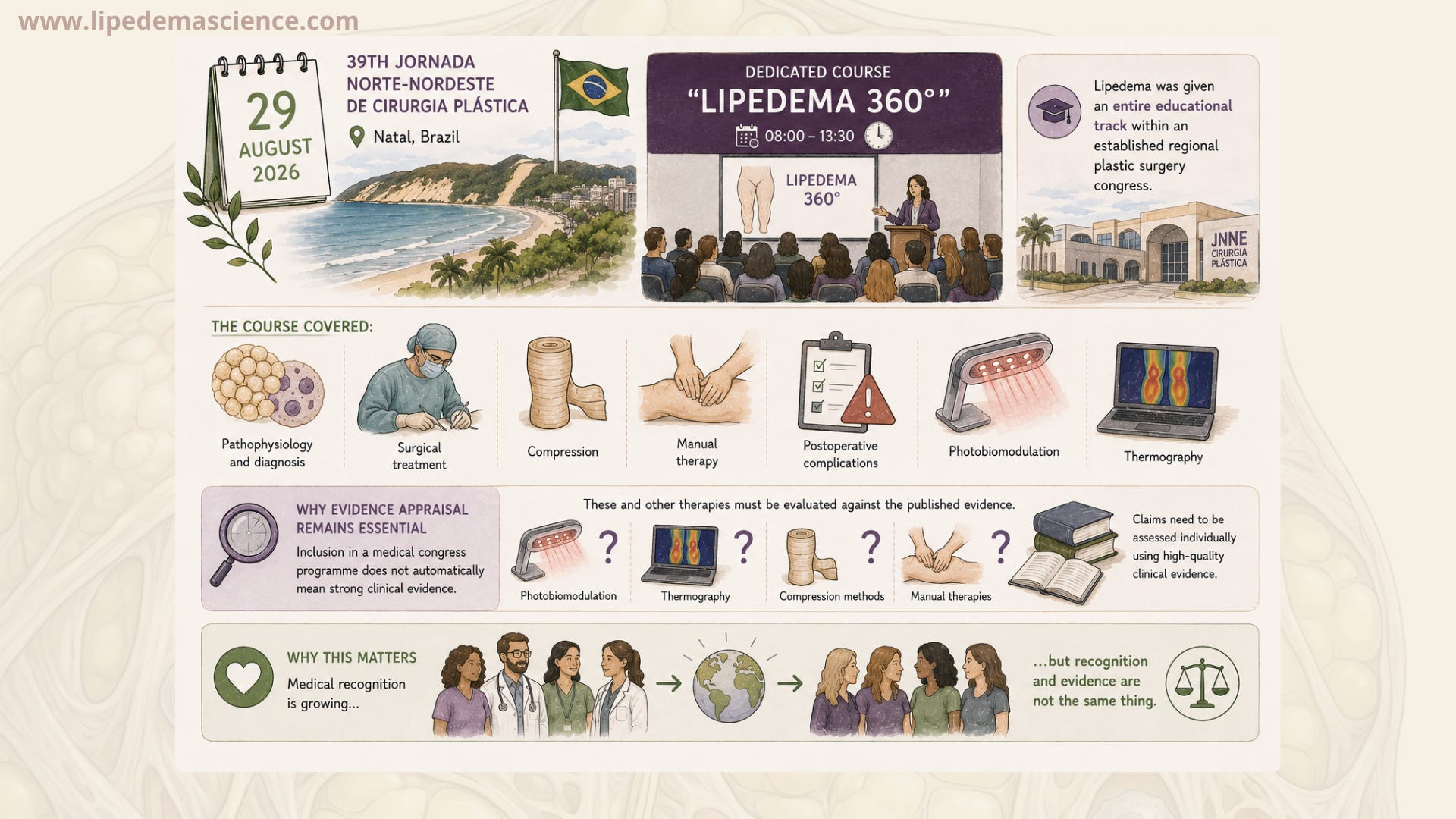
Source: Official programme, 39º Jornada Norte-Nordeste de Cirurgia Plástica, Natal, Brazil, 29 August 2026.
So, are things finally changing?
Possibly.
What stands out is not one single breakthrough. It is the number of different directions moving at the same time.
Researchers are studying the biology of pain. Others are examining lymphatic function, inflammation and obesity. Large patient datasets are beginning to provide clues about medications already being used in the real world. Randomized trials are being designed around exercise, nutrition and conservative treatment.
And outside the laboratory, lipedema is becoming more visible in physician education and professional conferences in different parts of the world.
That is progress. But it also creates a new challenge. As attention grows, so will treatment claims.
A conference presentation is not a clinical trial. A biological mechanism is not proof of benefit in patients. An association in a survey is not proof that a medication treats lipedema. And a promising registered study has not produced evidence until its results are available.
For people living with lipedema, the most encouraging development may therefore be something broader than any individual study:
the scientific conversation around lipedema is getting bigger, more international and more specific.
Now the next step is to make sure the quality of the evidence catches up with the level of attention.