

If you have lipedema, you have probably heard a lot of confusing and sometimes dismissive advice: lose weight, exercise more, it’s “just” obesity, or maybe it’s only swelling. The research tells a different story. Lipedema is a real medical condition with its own biological features, and while science is still catching up, the evidence already gives us a clearer picture than many people realize.
Lipedema Is More Than “Stubborn Fat”
The strongest research so far shows that lipedema is not simply about body size or lifestyle. Studies of lipedema tissue have found enlarged fat cells, more fibrosis, and signs of inflammation compared with non-lipedema tissue. That means the fat tissue itself behaves differently. Researchers also think blood vessels, lymphatic function, hormones, and connective tissue may all play a role.
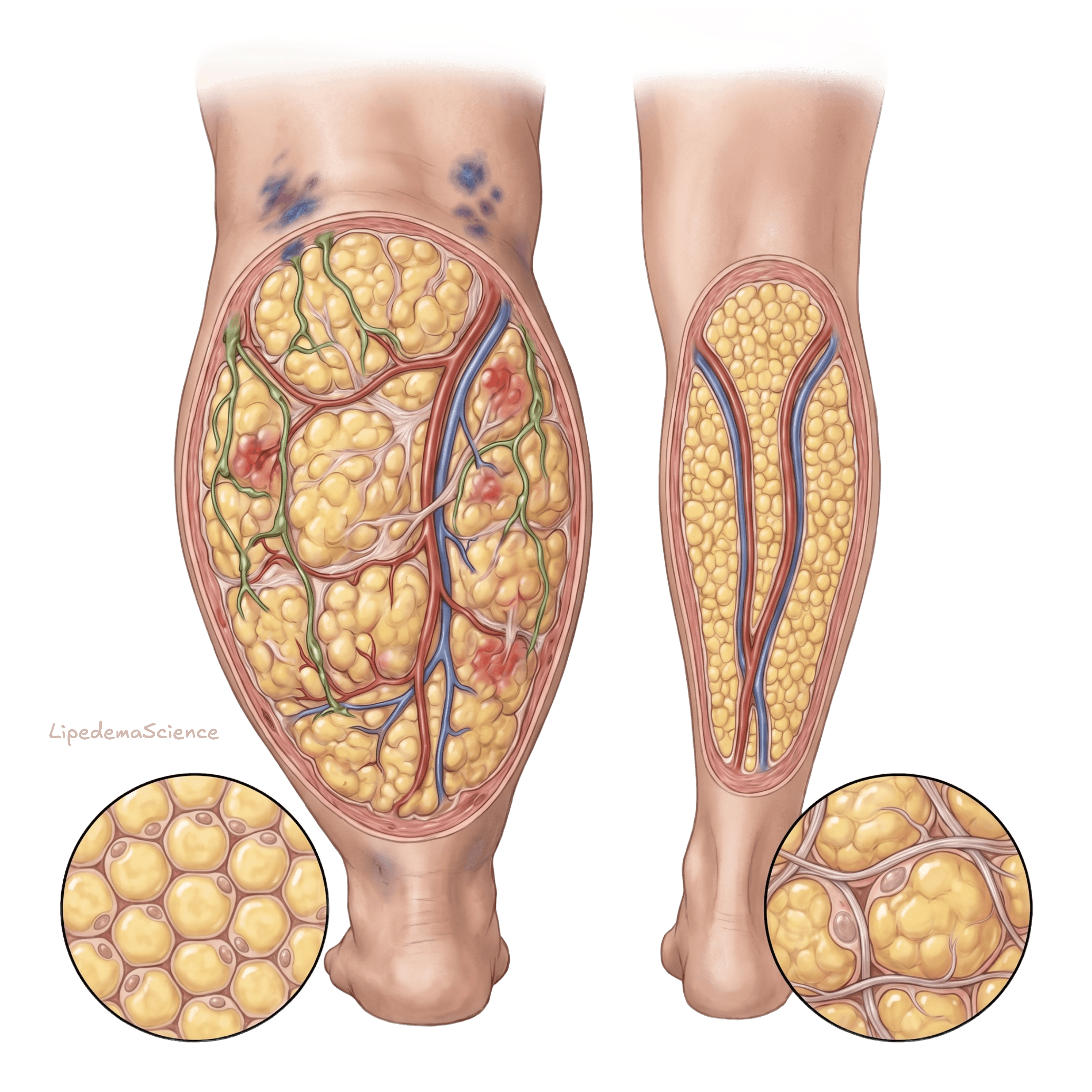
This matters because it helps explain why lipedema is often painful, why bruising is common, and why many women feel that their lower body changes do not respond the way they expect to dieting or exercise alone. In other words, your experience is not imagined, and it is not laziness.
If you find this kind of science-based content helpful, consider subscribing. Some articles are reserved for members, while many remain open to everyone. Thank you to all of you who support this work and make it possible to keep sharing evidence-based insights on lipedema.
What the Best Studies Suggest
At the moment, the most convincing evidence comes from three areas:
Tissue studies showing structural and inflammatory changes in lipedema fat.
Imaging studies showing that lipedema tissue has measurable differences.
Treatment studies suggesting that some interventions can reduce symptoms, even if they do not “cure” the condition.
