
Lipedema: Insights into Morphology, Pathophysiology, and Challenges (part 4)
Mechanisms implicated in the pathogenesis of Lipedema.

First, I want to say that this is a long post because the scientific paper contains a lot of information. I didn’t want to leave anything out, because it was important to me to include everything relevant to this topic. Perhaps it is more detail than you prefer. I want you to decide for yourself what is useful to you.
Right now, lipedema is mainly diagnosed by what doctors can see and feel, such as the pattern of fat buildup, swelling, and tenderness. This means the diagnosis focuses a lot on the outside appearance of the affected areas. At the same time, the root cause of lipedema is still not fully understood.
When I received my diagnosis at a Norwegian hospital in 2012, at the vascular unit, they used ultrasound. I am not sure why this is no longer common practice.
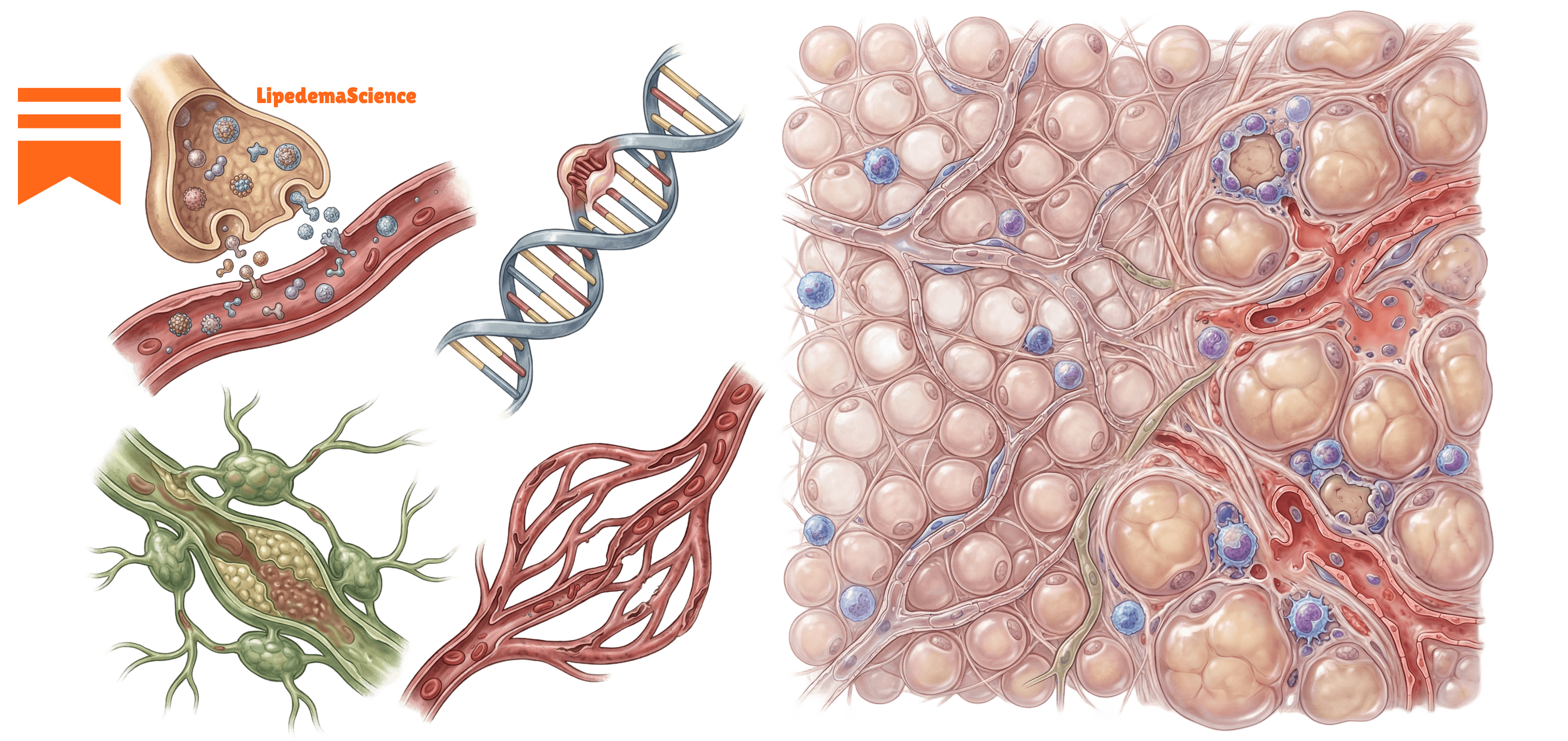
So far, researchers have suggested several possible drivers behind the abnormal fat growth in lipedema. These include hormone related changes, genetic factors, problems in the lymphatic system, and changes in small blood vessels and circulation. In other words, lipedema may be influenced by a mix of hormones, inherited risk, and impaired fluid and blood flow in the tissue.
Altered Gene Expression of Adipogenic and Hormonal Markers in Lipedema
Early studies confirm what many clinicians also observe in practice, that lipedema fat tissue often contains enlarged fat cells. Because of this, researchers have looked closely at “adipogenic genes,” meaning genes that help control how fat cells form, store fat, and function. The paper explains that several research groups have measured these genes in lipedema tissue, and the review summarizes which genes have been studied so far.
