

Fascia is often described as the body’s connective tissue network, but that definition barely captures its relevance in the context of adipose tissue. Within fat, fascia is not just a passive “wrapping” layer. It forms a three-dimensional scaffold that organizes adipose lobules, separates tissue compartments, connects to the skin through fibrous septa, and interacts with blood vessels, lymphatic structures, nerves, and immune cells.
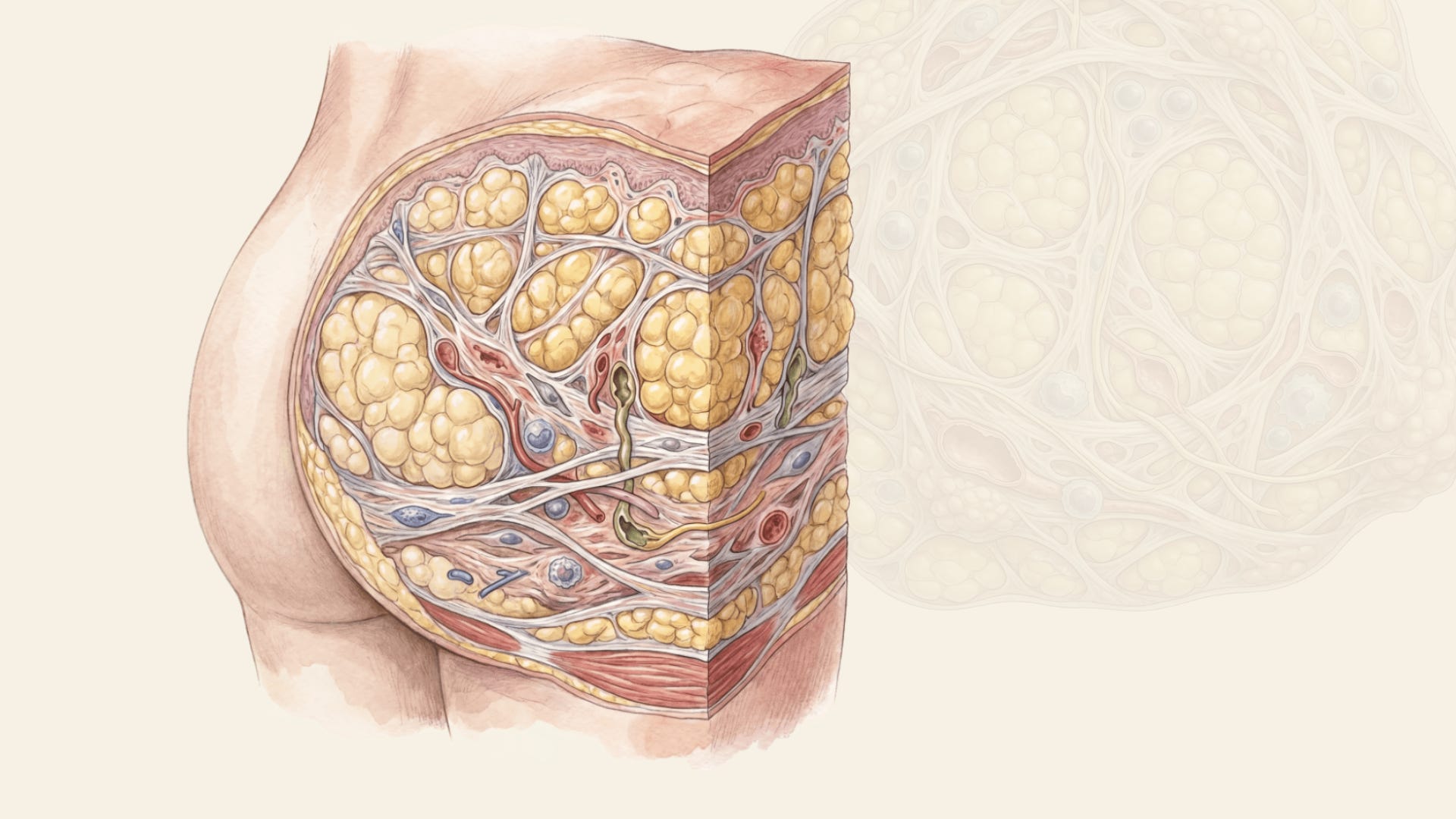
This connective framework allows tissues to glide, distribute mechanical forces, and maintain structural integrity. It is also biologically active, containing fibroblasts, immune signaling components, and extracellular matrix molecules that continuously remodel in response to mechanical load, inflammation, and metabolic changes. This is precisely why fascia has become increasingly interesting in lipedema.
Lipedema is not simply an excess of fat. It is a condition characterized by pain, altered tissue texture, easy bruising, and a very distinct distribution pattern. When patients describe their tissue as “heavy,” “tight,” or “different,” those sensations may not arise from fat alone, but from the entire microenvironment in which fat exists. Fascia sits at the center of that environment.
