

One of the biggest frustrations in lipedema research is that we still do not fully understand what is happening inside the tissue, especially in later stages of the disease. Many people living with lipedema already know the clinical picture very well through their own bodies. Pain, heaviness, swelling, bruising, and fat accumulation that does not respond like ordinary weight gain are all deeply familiar. What has been missing is a clearer biological explanation of what may be driving these changes beneath the surface.
This new study, titled Epigenetic alterations of AKT1 orchestrate a metabolic reprogramming in advanced lipedema: translational insights from an integrated multi-omics study, tries to move that question forward. The researchers wanted to understand what is going on in advanced stage lipedema tissue at several levels at once. Instead of looking only at genes, or only at metabolites, or only at one signaling pathway, they used a layered approach to study how epigenetic changes, gene activity, protein signaling, and tissue metabolism may all be interacting in stage 3 lipedema.
That makes this paper ambitious. It is trying to do more than simply describe one abnormal finding. It is trying to build a molecular story of advanced lipedema.
What the researchers studied
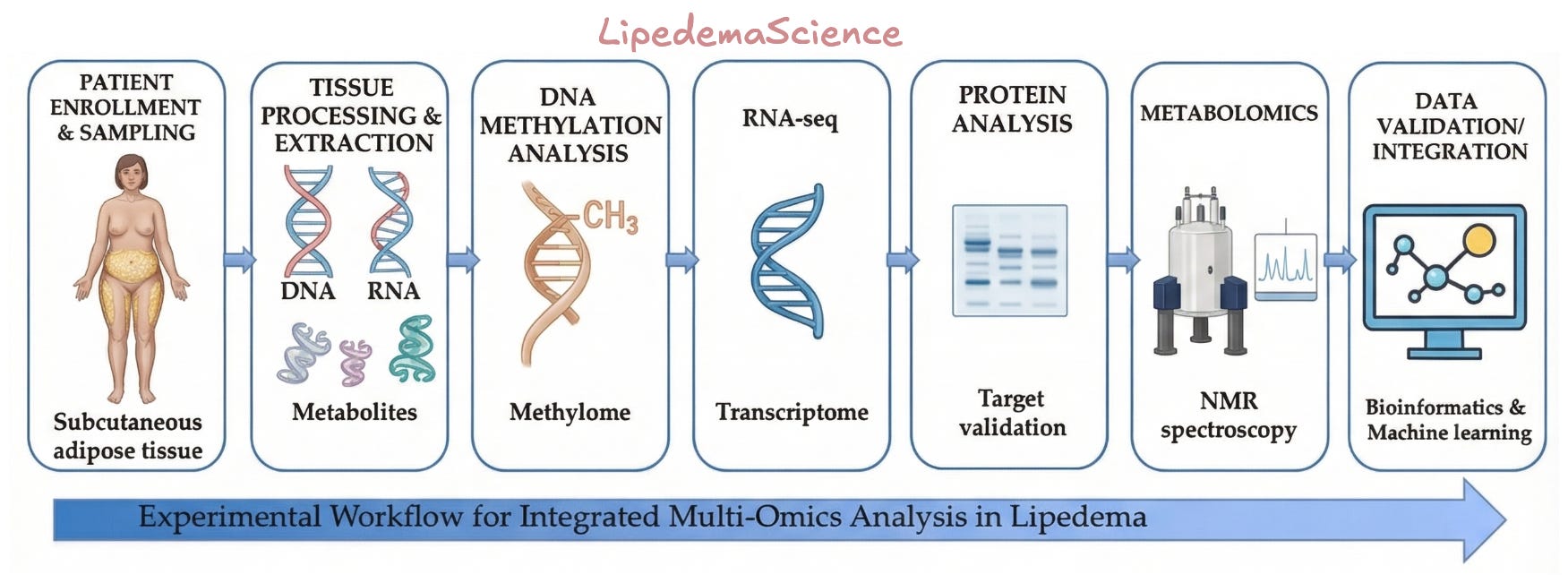
The study focused on women with stage 3 lipedema and compared their adipose tissue with adipose tissue from women without lipedema. The lipedema samples came from the arms and upper legs, while the control tissue came from breast or abdominal surgeries in women without lipedema. The researchers collected fat tissue during surgery, froze the samples, and then examined them using several different methods.
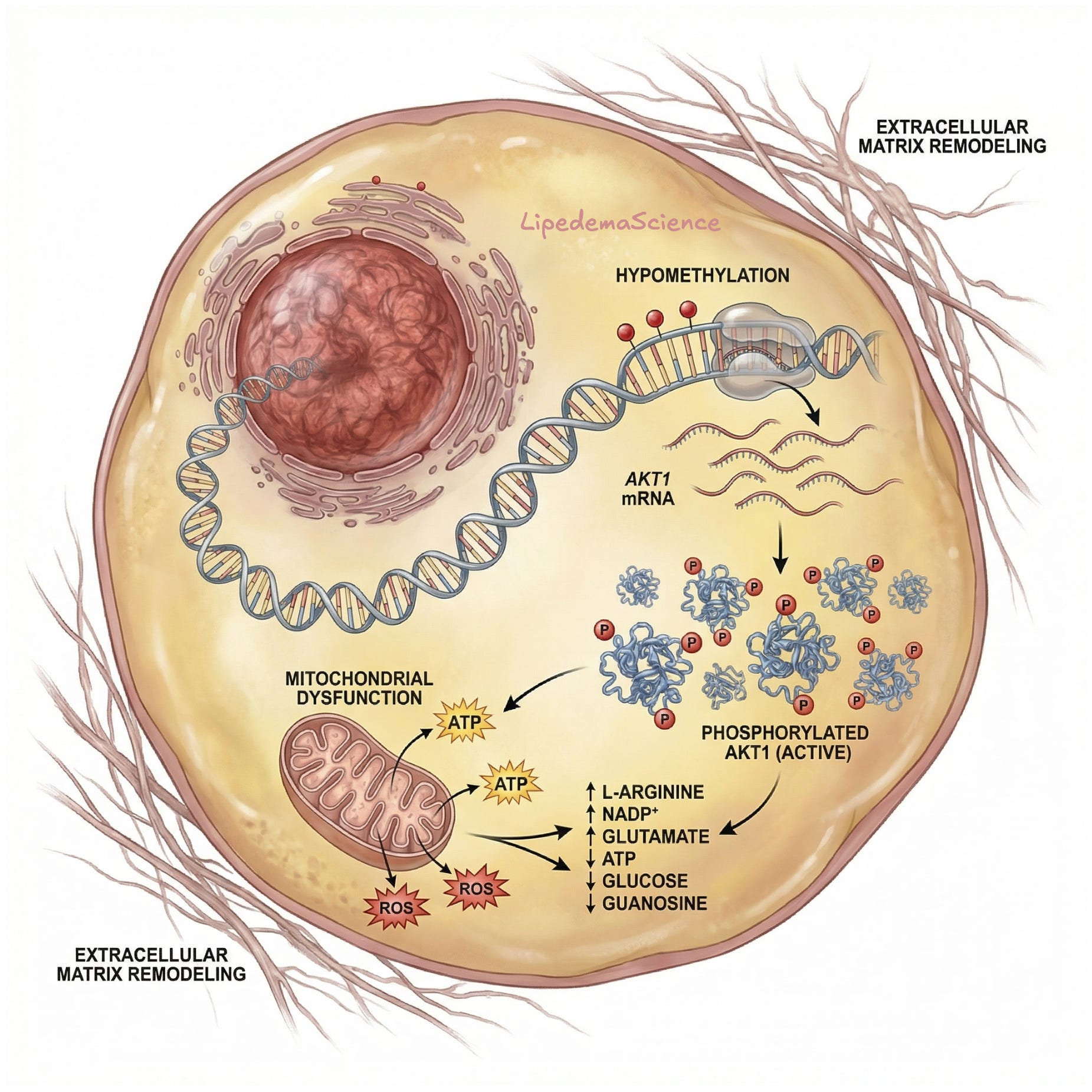
First, they looked at DNA methylation. This is one of the ways the body can regulate genes without changing the DNA sequence itself. You can think of methylation as part of the control system that influences whether a gene is more likely to be switched on or off.
Want to go deeper into lipedema research and understand what new studies may actually mean for real life? Become a member of LipedemaScience and get access to in-depth articles, thoughtful reflections, and a growing library of science made easier to understand.
Second, they looked at RNA expression, which shows which genes are more active or less active in the tissue.
Third, they performed metabolomics, which means they examined small molecules involved in energy production, redox balance, amino acid metabolism, and other cellular processes.
They also used protein analysis to check whether AKT1, the molecule that emerged as especially interesting, was also increased at the protein level and not just in the gene data.
This kind of multi-layered design is often called a multi-omics study. In simple terms, the researchers were asking whether the genetic control system, the active gene programs, and the metabolic output were all pointing in the same direction.
What they wanted to find out
The main goal was to identify molecular drivers of advanced lipedema. In other words, they were not only asking what looks different in lipedema tissue, but which changes might sit near the center of the problem.
They were particularly interested in whether advanced lipedema has a distinct molecular pattern that could help explain disease progression and possibly lead to future biomarkers or even drug targets. This is important because lipedema still has no validated molecular biomarker in routine care, and treatment options remain limited.
The study was also designed to go beyond earlier work in early-stage lipedema. The authors specifically wanted to examine late-stage disease, where the tissue has already undergone major remodeling and where mobility, pain, and quality of life may be much more severely affected.
What they found
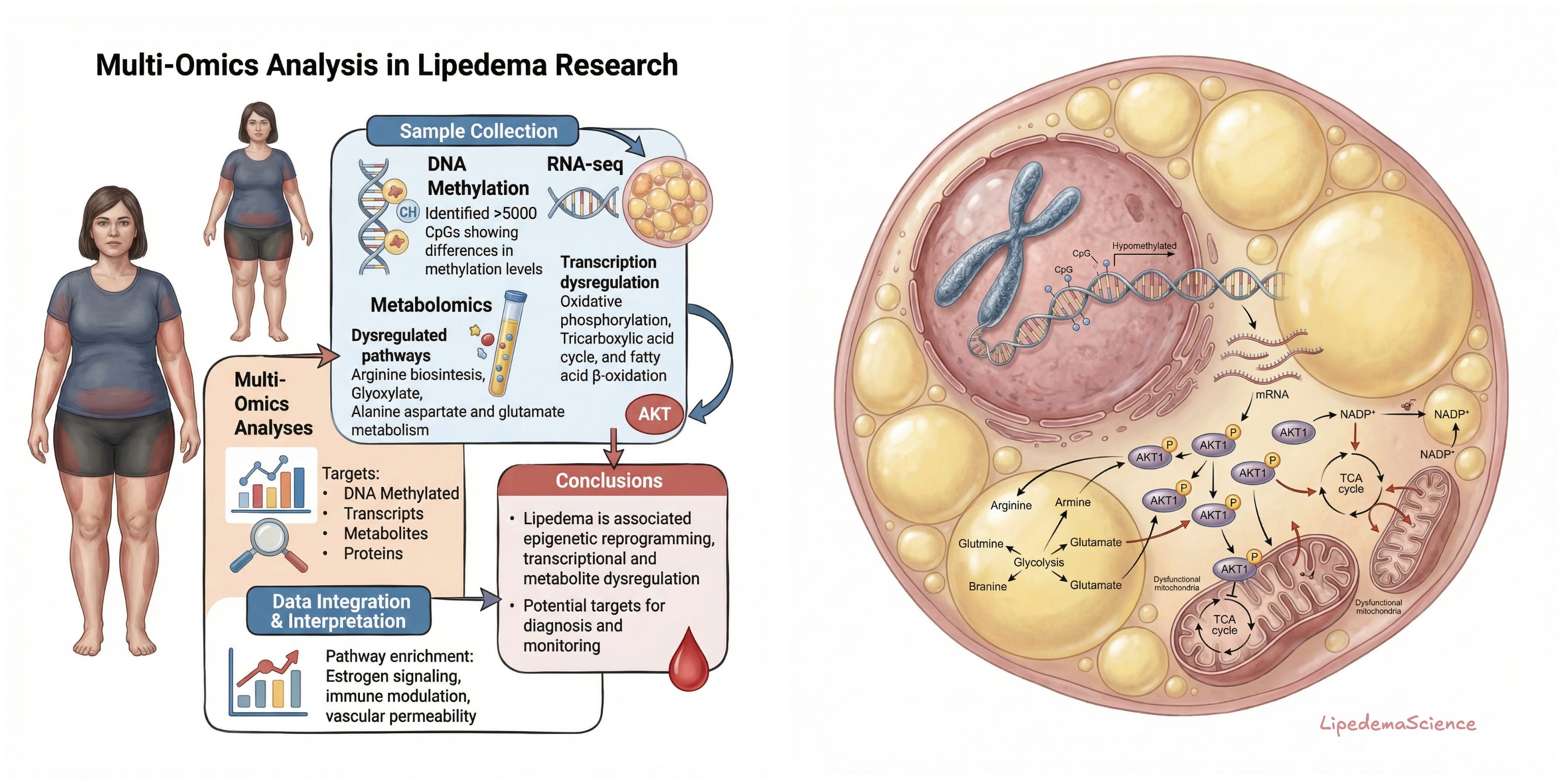
The broad message of the paper is that advanced lipedema tissue appears metabolically stressed and biologically reprogrammed. The researchers found evidence of large-scale changes in DNA methylation, altered gene expression, and abnormal metabolite patterns. Across those different layers, one molecule kept showing up as especially important: AKT1.
AKT1 is part of a major signaling pathway involved in cell growth, nutrient sensing, insulin signaling, metabolism, and survival. It is not a lipedema-specific molecule. It is a powerful regulator used by many tissues in the body. What makes this finding interesting is not that AKT1 exists, but that it seems to be unusually activated in advanced lipedema tissue and may be tied to a whole network of metabolic disruption.
The study found that the promoter region of AKT1 was hypomethylated. In plain language, that means the control region of the gene had an epigenetic pattern that fits with greater activity. They then found increased AKT1 gene expression and increased AKT1 protein phosphorylation in the lipedema tissue. So the signal did not appear at only one level. It showed up in the epigenetic data, the RNA data, and the protein data.
That kind of consistency matters. It does not prove AKT1 is the cause of advanced lipedema, but it does make AKT1 a more credible candidate than if it had only appeared in one dataset.
The mitochondrial story
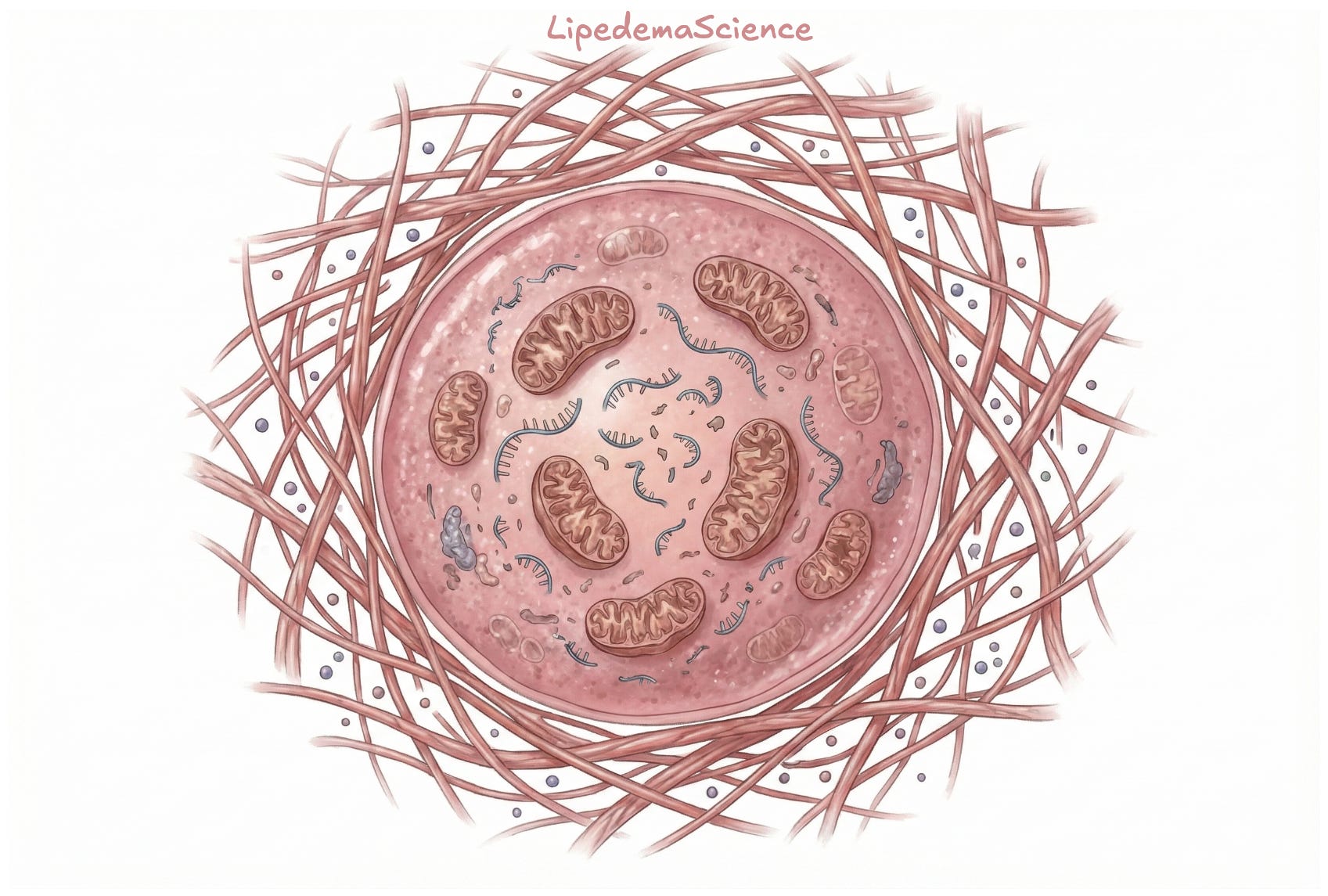
One of the most important parts of this study is the mitochondrial angle. The transcriptomic data showed downregulation of genes involved in oxidative phosphorylation, the TCA cycle, and fatty acid beta-oxidation. These are core systems used by cells to make and manage energy.
This suggests that advanced lipedema tissue may have impaired mitochondrial function or at least an altered energy program. The tissue may not be processing fuel normally. Instead of smoothly using fat and mitochondrial respiration, it may be shifting into a more strained and dysregulated state.
For many people with lipedema, this is a meaningful finding. It does not mean lipedema is simply a mitochondrial disease, and it does not mean every symptom can be reduced to energy metabolism. But it does support the idea that lipedema tissue is biologically different in a way that goes beyond appearance or fat quantity alone.
The study also found disruption in sirtuin signaling and extracellular matrix remodeling. That matters because sirtuins are involved in metabolic regulation and stress responses, while extracellular matrix remodeling speaks to the altered architecture of tissue itself. Lipedema is not just about enlarged fat cells. It is also about connective tissue, inflammation, signaling, and structural change.
What the metabolomics adds
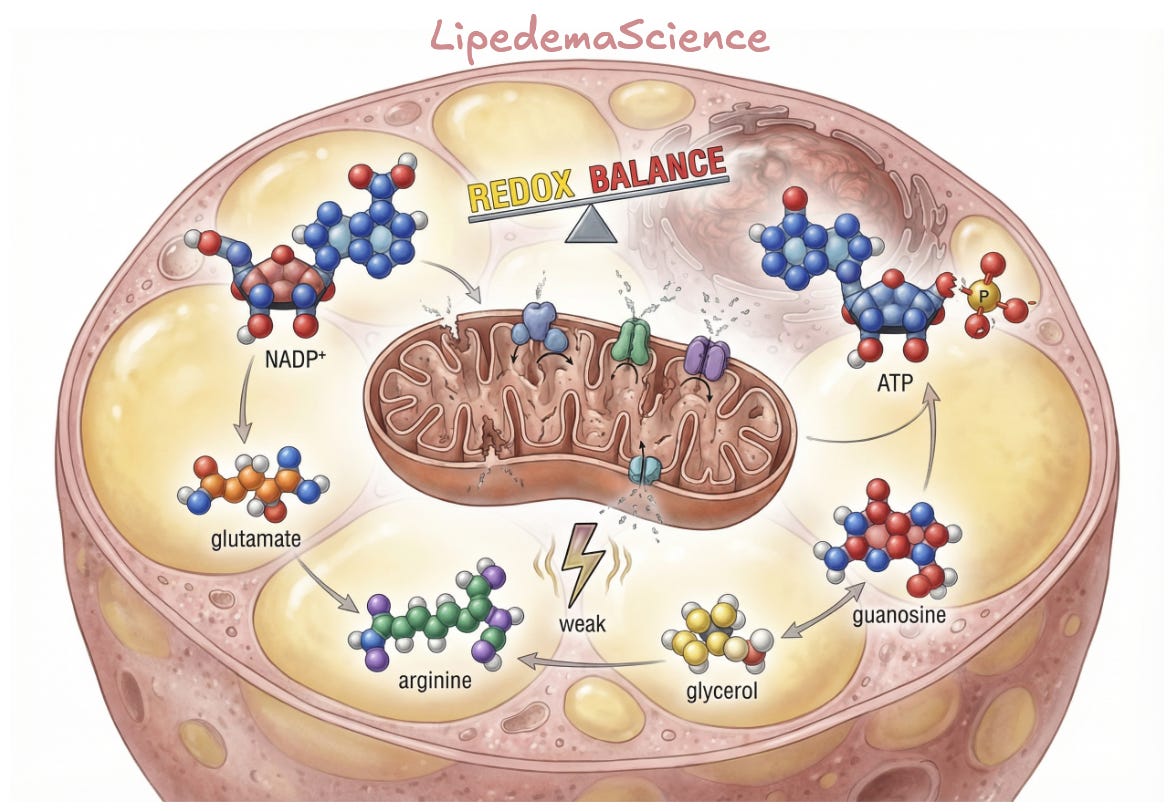
The metabolomics part of the paper strengthens the overall picture. The researchers found altered levels of metabolites linked to redox balance, amino acid metabolism, and energy production. Among the altered molecules were NADP+, ATP-related signals, glutamate, arginine, glycerol, guanosine, and several amino acids.
This points toward a tissue environment under metabolic pressure. The authors interpret this as evidence of disrupted bioenergetics and redox regulation, which fits with the mitochondrial findings. In simpler terms, the adipose tissue in advanced lipedema may be struggling to manage energy and oxidative balance normally.
That is important because it shifts the conversation away from the old and simplistic idea that lipedema is just stubborn fat. This paper supports a more complex model in which the tissue behaves differently at a cellular and metabolic level.
Why AKT1 stood out
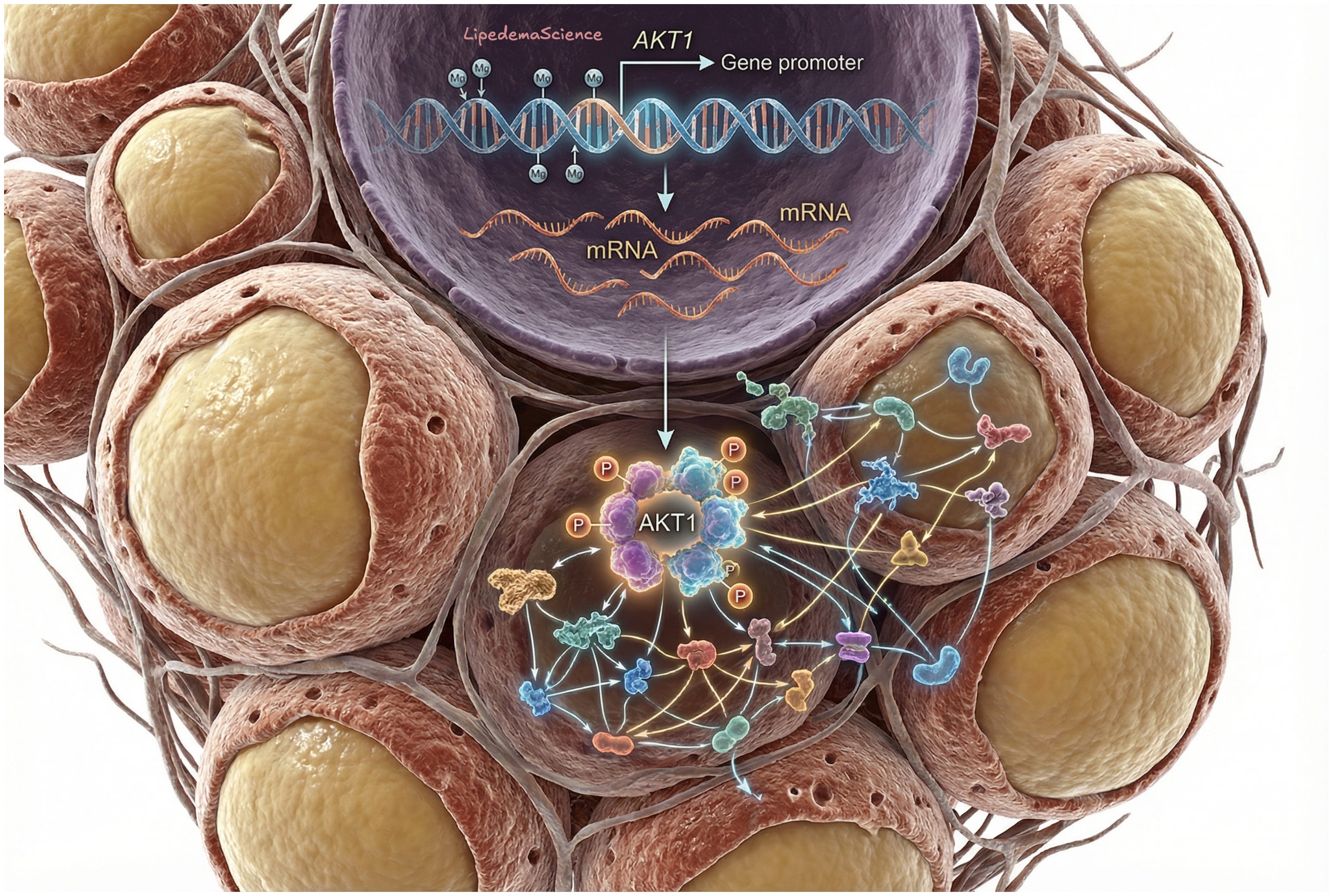
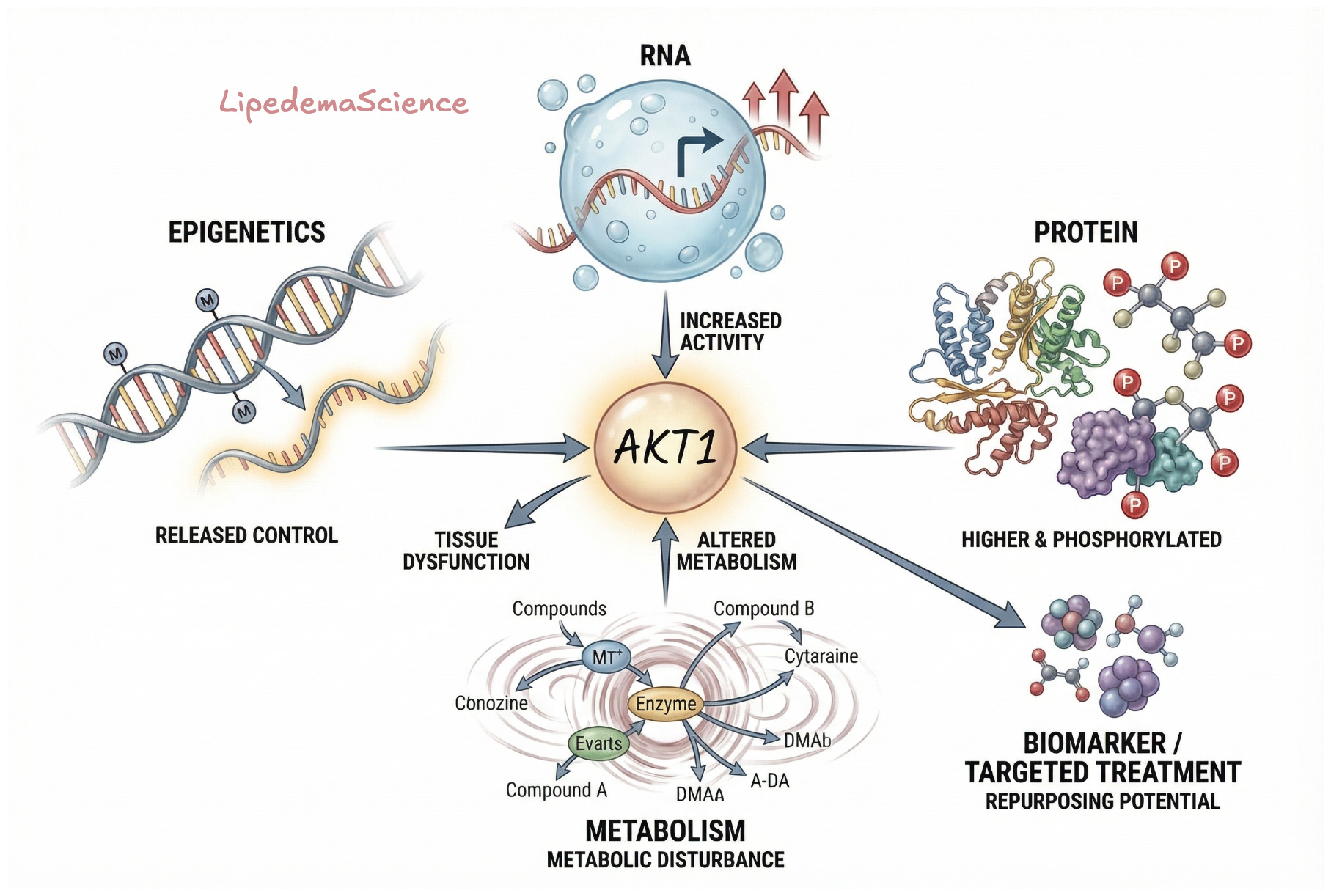
The most striking feature of the paper is that AKT1 sits at the intersection of the different datasets. The epigenetics suggested AKT1 was being released from normal control. The RNA data suggested the gene was more active. The protein data showed higher AKT1 and phosphorylated AKT1. The metabolomic network analysis placed AKT1 near key metabolic disturbances.
That is why the authors frame AKT1 as a central regulatory node. It may be acting like a hub that links epigenetic change to altered metabolism and tissue dysfunction.
This is where the paper becomes especially interesting from a translational perspective. If a single pathway sits near the center of disease biology, it might eventually help with disease stratification, biomarker development, or targeted treatment. The authors even note that AKT-related drugs are already being explored in other diseases, which raises the possibility of future repurposing.
That said, this is where caution is essential. A promising molecular target in a tissue study is not the same as a ready treatment. The paper gives us a hypothesis worth taking seriously, not a therapy that is ready for clinical use.
How good is this study really
This is a strong mechanistic exploratory study, but it is not a definitive study. Both things can be true at once.
Its biggest strength is the integrated design. The authors did not stop after one layer of analysis. They looked across methylation, RNA, metabolites, and protein validation. That makes the findings more persuasive than a single-method study. There is also a real strength in the fact that they focused specifically on advanced stage lipedema, because this remains much less explored than early-stage disease.
Another strength is that the results are biologically coherent. The different layers are not pointing in wildly different directions. Instead, they converge around metabolic stress, mitochondrial dysfunction, and AKT1 signaling. When a study shows this kind of internal consistency, it becomes easier to believe there is a real signal there.
But there are also important limitations.
The sample size is small. The methylation and RNA sequencing analyses were performed on only four lipedema samples and four control samples. That is a very limited number for this kind of work. Small studies can still be valuable, especially in difficult-to-obtain human tissue research, but they are more vulnerable to noise, individual variation, and overinterpretation.
The control tissue is another major issue. The lipedema samples came from arms and legs, while the controls came from abdomen and breast tissue. Fat tissue is not identical across body regions. Different depots can have different biology even in healthy people. That means some of the observed differences may reflect anatomical location, not lipedema alone. The authors openly acknowledge this, which is good, but it remains one of the most important caveats in the paper.
Another limitation is that this was an observational study. It shows association, not causation. AKT1 looks important, but the researchers did not manipulate AKT1 in cells or animal models to show that changing AKT1 actually drives the downstream abnormalities. Without that kind of functional experiment, we cannot yet say that AKT1 is the cause. We can only say it is a strong candidate.
The study also focused entirely on stage 3 lipedema. That is useful, but it means we do not know whether AKT1 activation is an early driver, a late consequence, or both. It may be part of disease progression rather than disease initiation. Future research will need to compare across stages and ideally follow the disease over time.
What this study tells us and what it does not
What this study tells us is that advanced lipedema tissue appears deeply altered at multiple biological levels. It supports the idea that lipedema is not simply ordinary fat accumulation and not merely a cosmetic issue. The tissue seems to be metabolically reprogrammed, with signs of mitochondrial dysfunction, redox imbalance, extracellular matrix changes, and altered signaling centered around AKT1.
It also tells us that epigenetic regulation may matter. That is important, because epigenetics offers a way of understanding how gene activity can change without inherited DNA mutations necessarily being the main story. In other words, the disease biology may partly involve changes in how the tissue is regulated, not only which genes a person was born with.
What the study does not tell us is whether AKT1 is the master cause of lipedema. It does not tell us whether targeting AKT1 will help patients. It does not tell us whether the same pattern exists in all lipedema stages, or in all lipedema phenotypes, or across different hormonal states such as premenopause and postmenopause. It also does not tell us how these molecular changes connect to symptoms like pain, bruising, or fluid shifts in everyday lived experience.
So this paper adds something important, but it does not close the case.
A few reflections that matter for patients
One of the most meaningful parts of this study is what it represents psychologically as well as scientifically. Lipedema patients have spent years being told versions of the same oversimplified story. Eat less. Move more. Try harder. This paper pushes in the opposite direction. It says that in advanced lipedema, the tissue itself may be operating under a very different biological program.
That does not mean lifestyle is irrelevant. It means biology is more complicated than blame.
Another reflection is that this study fits with a growing body of research suggesting lipedema involves much more than fat storage alone. The disease appears to involve metabolism, vascular changes, inflammation, connective tissue remodeling, and hormone-sensitive biology. AKT1 is interesting partly because it sits at the crossroads of many of these themes. It is the kind of molecule that could connect several pieces of the puzzle instead of explaining only one small corner.
At the same time, we should be careful not to let one exciting molecular finding become the new oversimplification. Lipedema is likely not an AKT1 disease in the narrow sense. It is more plausible that AKT1 is part of a larger disturbed network involving hormonal signaling, tissue remodeling, mitochondria, immunity, and nutrient sensing.
That is also why this paper feels important. It does not just identify one abnormal marker. It supports the idea that advanced lipedema is a systems-level disorder.
Want to read articles like this and actually understand what the research means for you. Become a member of LipedemaScience and get access to in-depth, easy-to-understand insights that connect science with real life.
The bigger picture
This study is a meaningful step forward because it gives researchers a stronger molecular lead in advanced lipedema. AKT1 now looks like a pathway worth testing more seriously. The mitochondrial findings are also important, because they may help explain why the tissue behaves differently from ordinary adipose tissue and why late-stage disease can become so disabling.
Still, this is the beginning of a line of inquiry, not the endpoint. The next steps would need to include larger cohorts, body-site matched controls, functional experiments, and studies across different lipedema stages. Ideally, researchers would also explore how these molecular findings relate to symptoms, hormonal status, inflammation, pain biology, and clinical outcomes.
For now, the take-home message is this. This paper does not prove that AKT1 is the answer to lipedema. But it does provide serious evidence that advanced lipedema tissue is epigenetically and metabolically reprogrammed, and that AKT1 may be one of the most important molecules involved in that process.
Final thoughts
For people living with lipedema, studies like this matter because they move the conversation toward biology, mechanism, and dignity. They remind us that lipedema is not a failure of willpower. It is a real tissue disorder, and the deeper scientists look, the more complex and distinct it appears.
This paper is not perfect, and it should not be overhyped. The sample size is small, the control tissue is imperfect, and the causal role of AKT1 still needs to be tested. But despite those limitations, it is one of the more interesting advanced lipedema studies we have seen, precisely because it brings together several layers of evidence into one coherent story.
That story is not that lipedema has been solved. It is that advanced lipedema tissue may be running on a distorted metabolic program, and AKT1 may be one of the signals helping to orchestrate it.
Epigenetic alterations of AKT1 orchestrate a metabolic reprogramming in advanced lipedema: translational insights from an integrated multi-omics study (DOI: 10.1186/s12967-026-07726-w)