

Training, pain, and hope – and why the LipidEx project truly matters
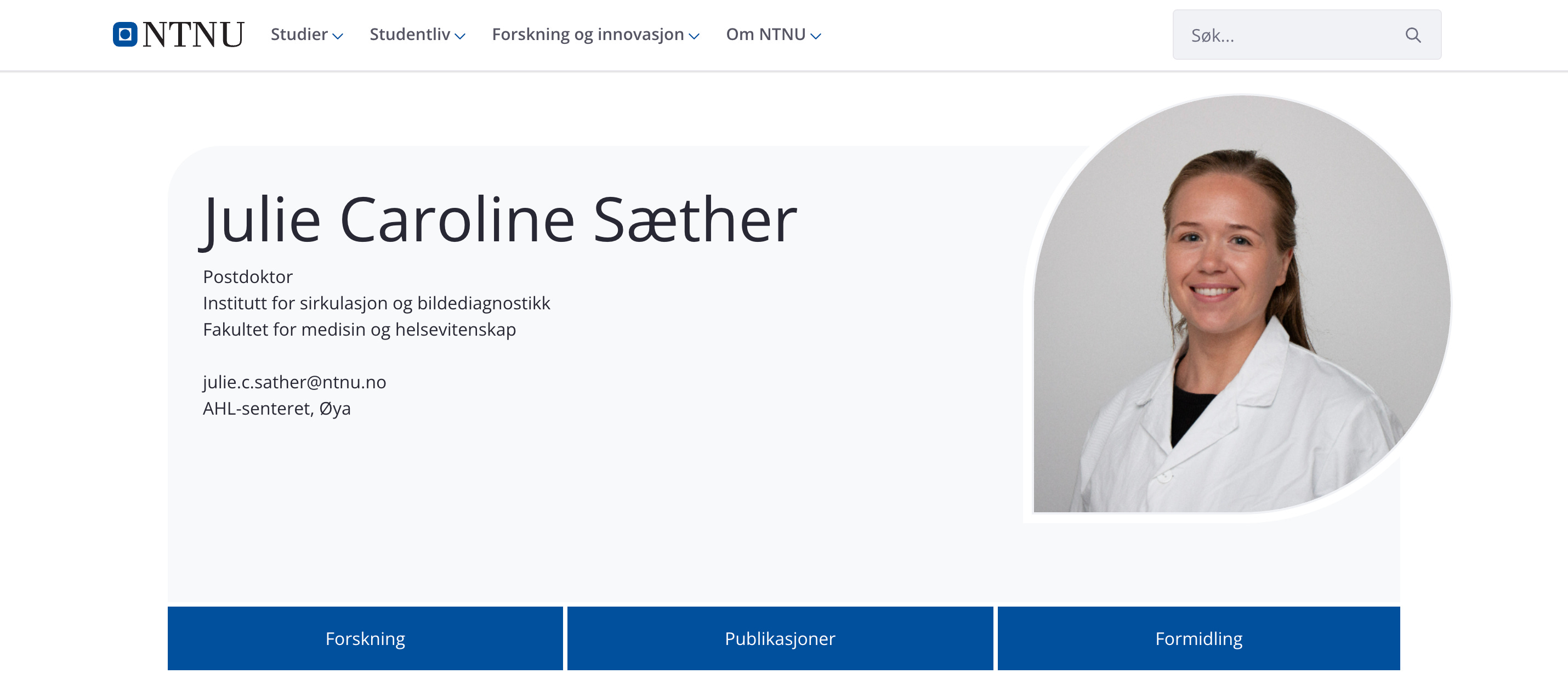
A couple of weeks ago, I had a very pleasant and inspiring meeting with lipedema researcher Julie. The goal was simple but important: to learn more about the research project she is working on, and how research can genuinely contribute to better understanding and treatment of lipedema. Our conversation offered both scientific insight and hope – especially for those of us living with a condition that has long been marked by limited recognition.
Julie works at the intersection of women’s health, exercise, and biology, and is involved in several research projects, including LipidEx, which explores training in women with lipedema – including running and high-intensity interval training.
From cardiovascular research to women’s health and lipedema
Julie has a background in cardiovascular research, where she has worked with biomarkers such as microRNA and lipoprotein subfractions for heart-attack risk prediction. She also has experience with large Norwegian data sources such as the HUNT Study and national health registries, including the Norwegian Myocardial Infarction Register, NORIC, DÅR, and NPR.
Today, her research focus is directed toward women’s health through the projects CorFemina and LipidEx, the latter specifically investigating exercise in women living with lipedema.
Her transition into lipedema research did not happen by chance.
“When I realised how deeply lipedema affects everyday life”
What truly sparked Julie’s interest in lipedema as a research field was understanding how profoundly the condition affects the daily lives of those affected – physically, psychologically, and socially.
She describes how many women live with pain, reduced function, and a persistent feeling of not being understood – by family, friends, employers, or the healthcare system. Recognising this significant unmet need for knowledge and awareness made it clear to her that lipedema research was the right path forward.
Growing attention – but major gaps remain
According to Julie, awareness and understanding of lipedema have improved in recent years. The condition is increasingly recognised as a genuine medical disorder, which has positively influenced research activity. More studies are being published on disease mechanisms, diagnostics, and treatment, and media coverage has helped raise public awareness.
At the same time, she is clear that substantial gaps remain.
Clinically, we still lack clear diagnostic criteria, national guidelines, and robust evidence for the effectiveness of commonly recommended interventions – including exercise and nutrition.
The biggest knowledge gaps today
Despite recent progress, we still know surprisingly little about lipedema at a fundamental biological level. Julie highlights several critical gaps, including:
the underlying biological mechanisms behind onset and progression
the relationship between lipedema and other female-predominant conditions such as fibromyalgia and arthritis
the effects of preventive measures, including strength and endurance training
These are precisely the kinds of questions the LipidEx project aims to help answer.
LipidEx: Exercise and lipedema – can it work?
LipidEx is a research project investigating structured exercise in women with lipedema. Participants completed a demanding training programme consisting of three high-intensity interval training (HIIT) sessions per week over 12 weeks.
Although the data have not yet been analysed, one thing is already clear to Julie: the dedication of the participants has been remarkable.
Women with extensive medical histories, chronic pain, fatigue, and previous negative experiences with exercise and healthcare showed up, committed, and completed the programme. Many also reported a sense of mastery, enjoyment of movement, and mutual support – both from each other and from the LipidEx team.
That alone is an important finding.
Exercise does work – but it must be tailored
One of the most persistent misconceptions Julie wants to challenge is the belief that “exercise doesn’t work” for people with lipedema.
She emphasises that physical activity has well-documented health benefits. The real issue is not whether exercise works, but which types of exercise, at what intensity, and how they are adapted for individuals with lipedema.
Many women avoid exercise due to fear of increased pain – often based on real, painful experiences. This is precisely why we need research-based guidance on safe, effective, and realistic training approaches.
Research must reflect the whole lived experience
Julie stresses that lipedema rarely exists in isolation. It often emerges during hormonally vulnerable life stages such as puberty, pregnancy, and menopause, and many women also live with comorbid conditions like arthritis, fibromyalgia, ME/CFS, fatigue, and depression.
Research therefore needs to reflect the full disease burden – not just fat distribution.
She also highlights the importance of qualitative studies that explore pain, function, hormonal fluctuations, stigma, and psychological consequences, to truly understand the lived experience of lipedema.
Strengthening lipedema research moving forward
To advance the field, Julie believes we need:
robust studies with standardised methodologies
the establishment of national research networks
stronger international collaboration (LipidEx already works with German research groups)
more long-term studies and research into preventive interventions
Equally important is patient involvement. User perspectives should be integrated throughout the entire research process – from idea development and study design to implementation, evaluation, and dissemination.
Hope for the future
Julie is optimistic about the future of lipedema research. She believes that in the coming years we may see an official diagnosis code, clearer diagnostic criteria, and more equal access to treatment and support at a national level.
The growing research interest, combined with the engagement of patients, clinicians, and advocacy organisations, provides genuine reason for hope.
For those of us living with lipedema, research projects like LipidEx represent something tangible: deeper understanding, better-tailored care – and, ultimately, a better quality of life.
Dette er en veldig spennende studie! Trener deltakerne med medisinsk kompresjonstøy? Eg opplevde stor bedring når eg starta bruke målsydd kompresjonstøy til treningen, både på sjølve økta og ikkje minst etterpå! 😍🥰👌