

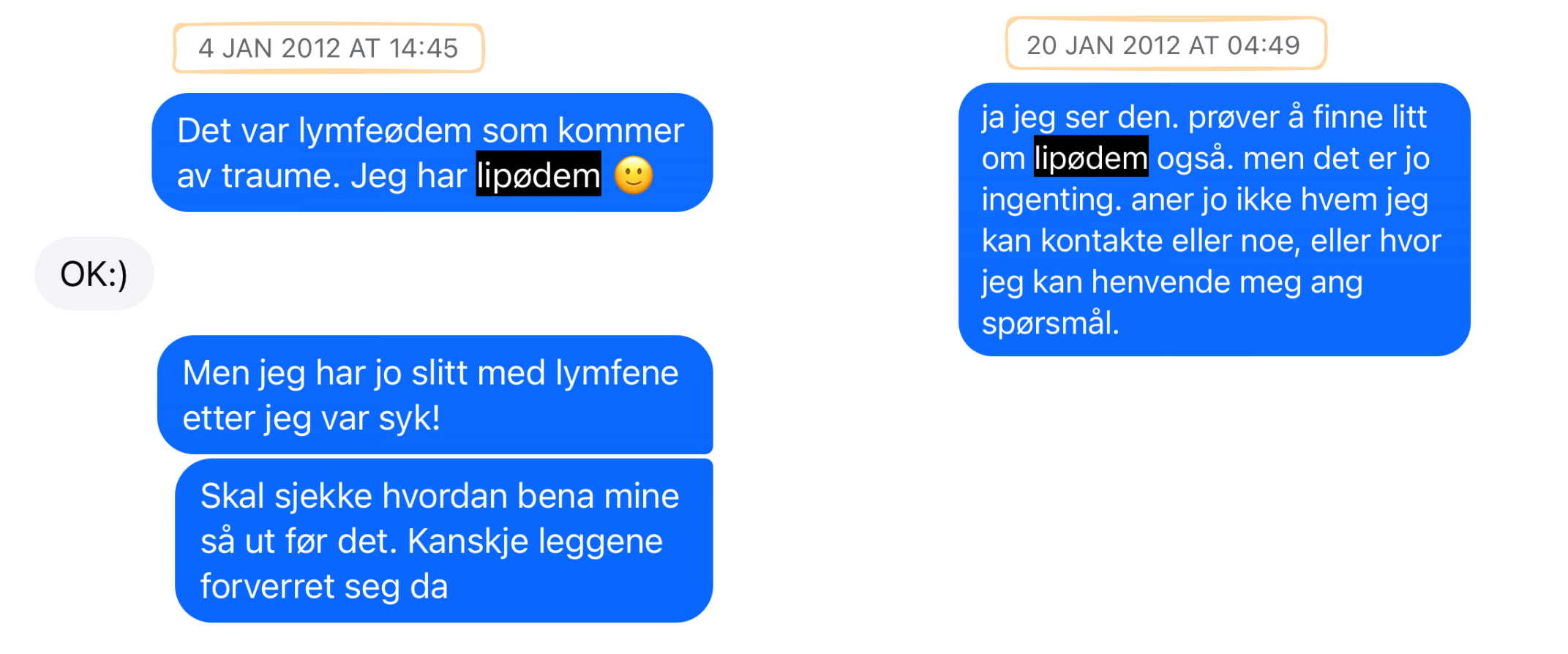
January 4, 2012, I was diagnosed with lipedema, at the age of 20. It’s interesting to look back at old messages from that time. Here’s what I wrote to my mom:
“It’s lymphedema that comes from trauma. I have lipedema.
But I’ve struggled with my lymphatic system after I was sick!
I’ll check how my legs looked before that. Maybe they got worse then.”
Reading this now takes me straight back to that moment — trying to understand what was happening in my body, connecting pieces, and searching for explanations.
January 20, 2012. Just a couple of weeks after my diagnosis. This is what I wrote:
“Yes, I see it. I’m trying to find some information about lipedema too, but there’s nothing. I don’t even know who to contact or where to turn with my questions.”
Reading this today reminds me how little information was available back then — and how alone I felt, trying to navigate something no one around me seemed to understand.
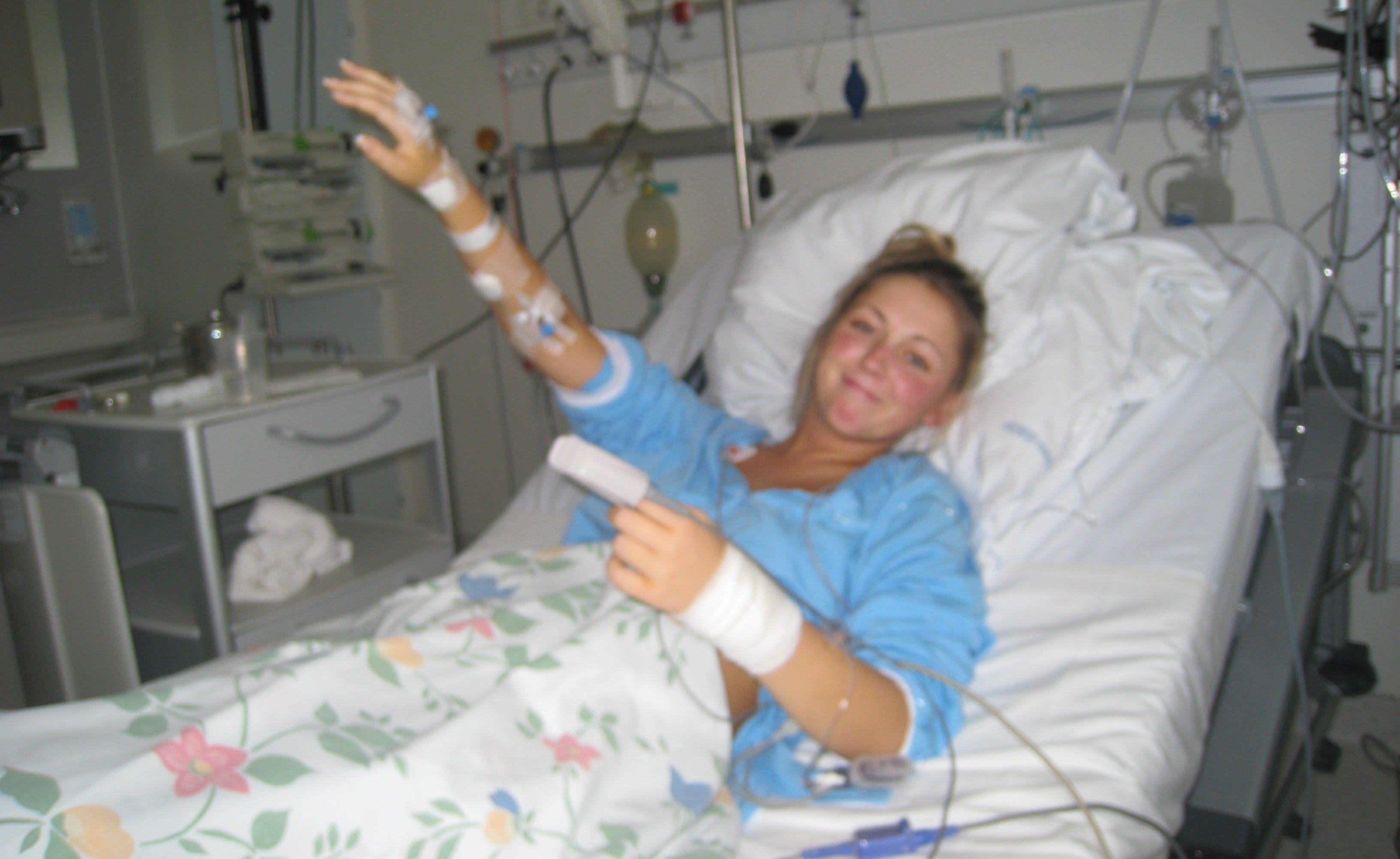
When I say “after being sick,” I’m referring to a period in my life when I developed sepsis in 2009 caused by a bacterium called Fusobacterium necrophorum. I became ill on my first girls’ trip to Greece, just three days after turning 18. It began with a severe streptococcal throat infection that essentially turned my tonsils into an incubator for bacterial growth.
The infection progressed into sepsis, and it was serious enough that I was hospitalized for several weeks. My recovery took nearly a full year. I was unable to attend school for the first six months and then had to complete almost an entire year’s curriculum in just a few months before graduation.
My school was incredible. They supported me in every possible way. A specialist came every Tuesday to help me rebuild my memory and cognitive function, and one of my teachers stayed after school each day to help me work through the curriculum so I could graduate with my class.
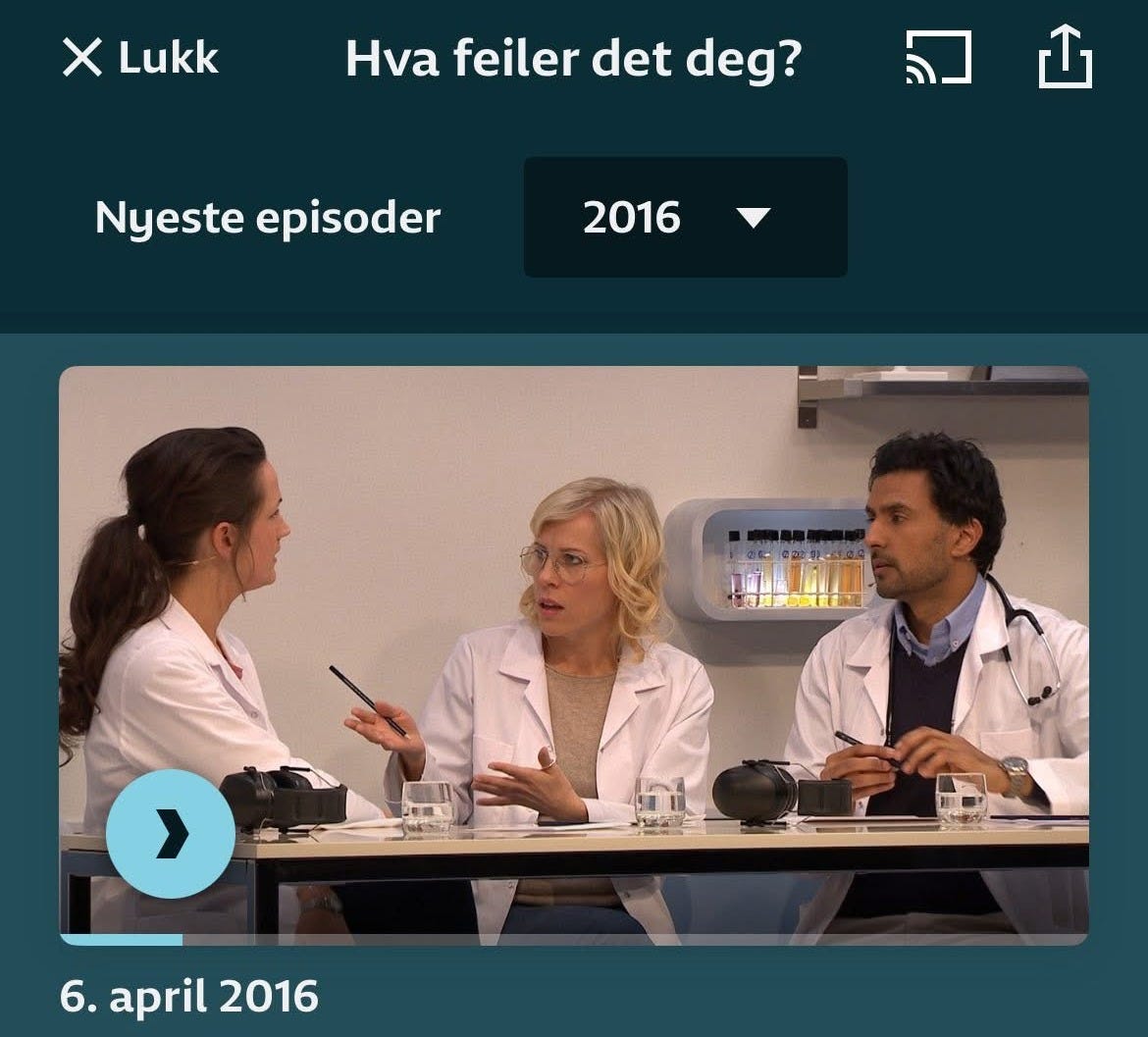
On April 7, 2016, I sent the link to a close friend because it felt like a milestone. NRK is the Norwegian public service broadcaster, and this was the first time I had seen lipedema mentioned in Norwegian mainstream media. The segment appeared through the TV program What’s Wrong With You?.
What’s Wrong With You? was a medical knowledge competition that ran from 2016 to 2021. A team of doctors competed against a team of regular people who used tablets, and the goal was to land on the correct diagnosis for real patients under time pressure. The purpose was public health education, helping viewers learn more about symptoms, conditions, and how diagnoses are made.
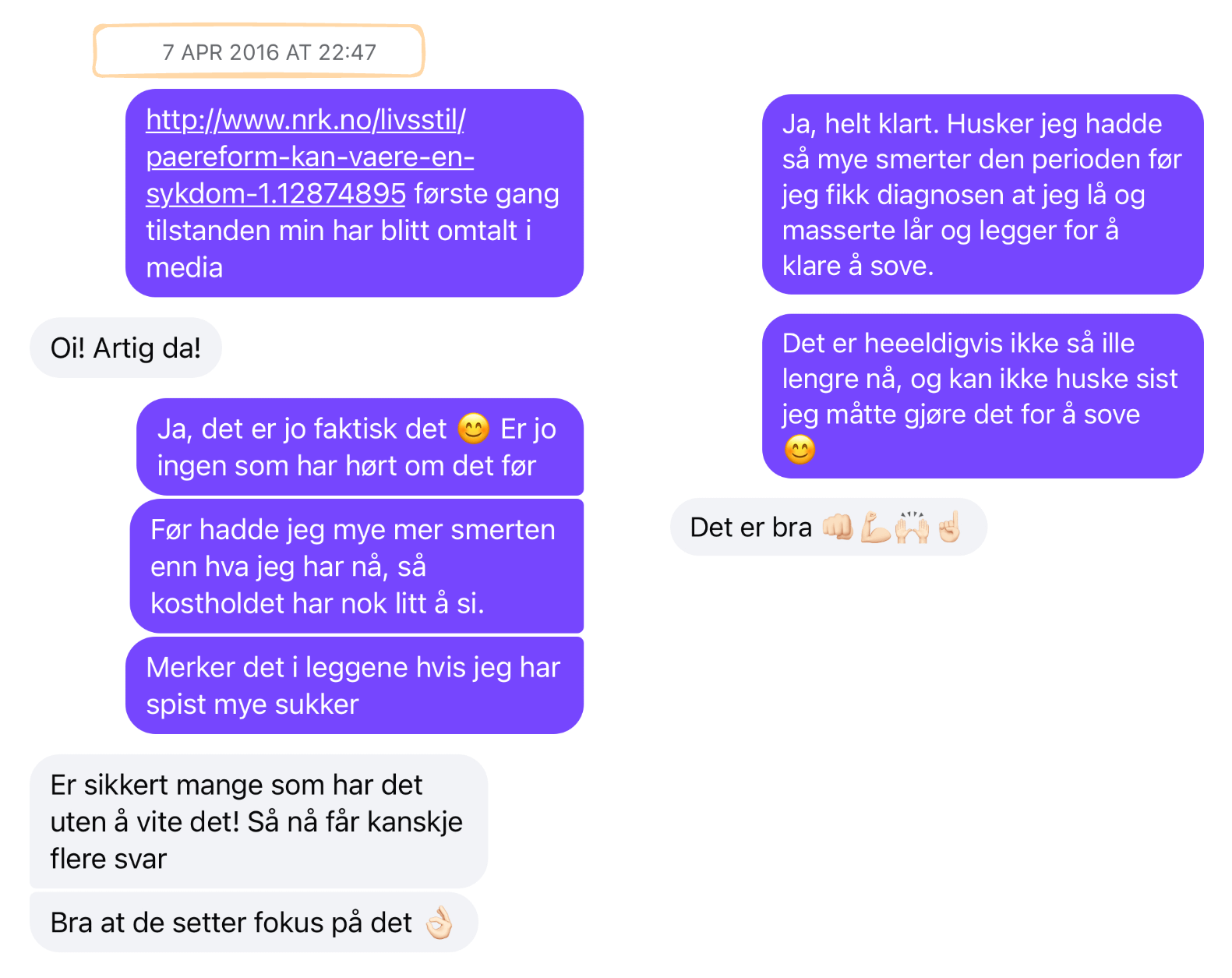
In the conversation with my friend, I also shared how severe the pain used to be before I got my diagnosis. There was a period when the pain was so intense that I lay in bed massaging my thighs and calves just to be able to sleep. I told my friend that it is thankfully not that bad anymore, and that I cannot even remember the last time I had to do that. I also reflected on how much my symptoms seem to be influenced by diet, especially how I can feel it in my legs if I have eaten a lot of sugar.
We ended by talking about how many people may have lipedema without knowing it, and how important it is that national media finally started putting attention on it, because awareness is often the first step toward better answers.
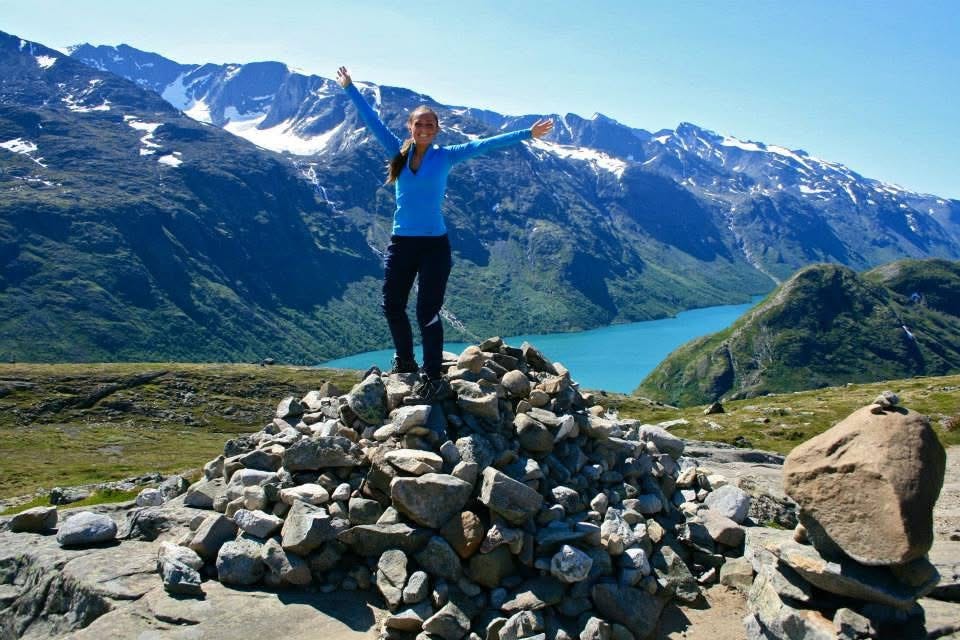
And this was me back then. It wasn’t obvious to others that I had a disease. I was diagnosed in 2012 because I kept going back and forth to my GP, trying to understand why I had such severe pain in my thighs, pain that was so intense I couldn’t sleep.
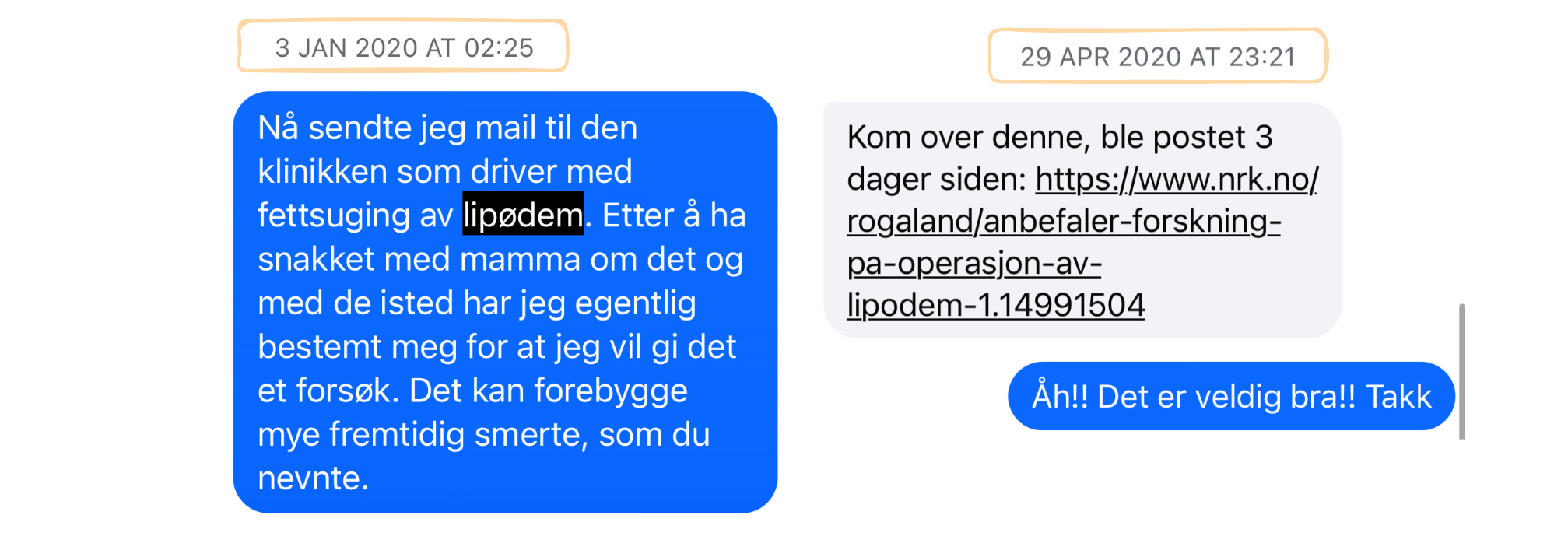
This conversation is from January 3, 2020. Exactly eight years after I was told I had lipedema.
In this chat, I am telling my partner that I have decided to move forward with lipedema surgery. I had already spoken extensively with my mother and been in contact with a clinic that specialized in liposuction for lipedema. After years of hesitation, reflection, and gathering information, I had made up my mind to at least try. My motivation was not cosmetic. It was about preventing future pain and progression.
When I first learned about my lipedema in 2012 at a Norwegian hospital, I was strongly advised not to consider surgery. At that time, I was told that surgery could potentially make things worse. And at that point in history, that concern was understandable. The techniques were less refined, and lymph-sparing approaches were not yet standard practice.
But in the eight years that followed, significant progress had been made. More advanced, lymph-sparing surgical methods had been developed, specifically adapted for lipedema patients. The field had evolved, and so had my understanding.
It is also important to clarify something about language. I consciously use the word “diagnosed” with lipedema, even though lipedema does not have its own official diagnosis code in the Norwegian ICD-10 system as of 2026. When I was evaluated in 2012, my doctors had to use alternative codes in my medical records, such as classifications related to lipid disorders. Lipedema is included in the newer WHO ICD-11 classification, but ICD-11 has not yet been implemented in Norway.
However, I do not define my health or my lived reality based on whether the Norwegian coding system has caught up. A condition does not become more or less real because of administrative categories. I was assessed by medical professionals, informed about my condition, and I have lived with its consequences. That, to me, is a diagnosis.
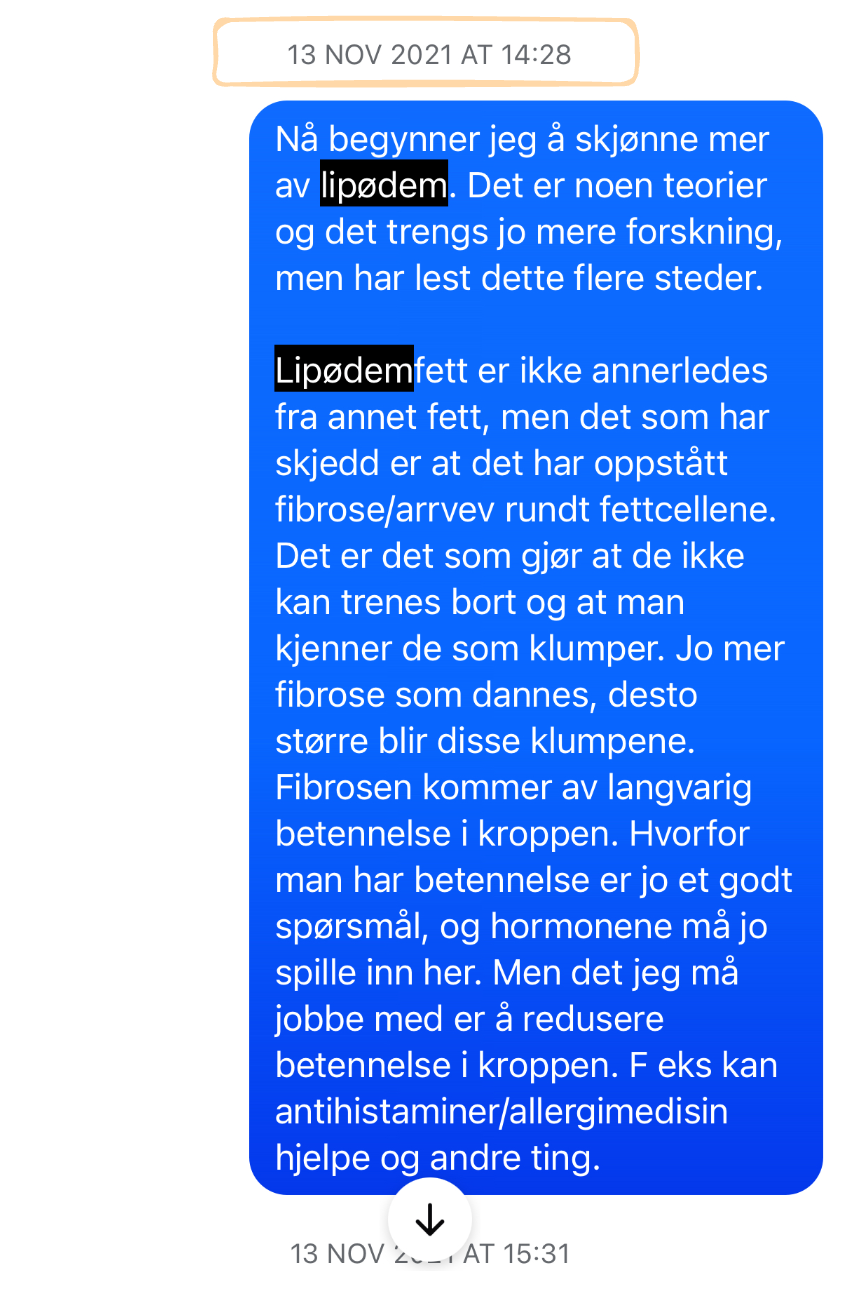
This message is from November 2021, during a very different phase of my lipedema journey.
By then, I had already undergone my first lipedema surgery and was preparing for my second. For the first time, I had started to actively seek out the lipedema community on Facebook. After years of navigating the condition mostly alone, I was finally entering spaces where women were sharing research, theories, experiences, and practical knowledge.
In this message, I reflect on something that felt like a breakthrough at the time. I had begun to understand that lipedema is not only about fat cells, but about fat tissue. I was learning about fibrosis, about how scar-like connective tissue can form around fat cells, creating the nodular texture so many of us feel. The idea that lipedema fat cannot simply be “trained away” because of structural changes in the tissue itself was starting to make sense.
I was also exploring the theory that chronic inflammation plays a role in the development of fibrosis, and that hormones may be part of the underlying mechanism. For the first time, I was thinking in terms of tissue biology, inflammation, and systemic processes rather than just symptoms. I was trying to understand what I could influence myself, such as reducing inflammation through diet or even considering whether antihistamines or allergy medications might have an effect.
This message captures a turning point. It shows the shift from confusion and isolation to active investigation and biological curiosity. It was the moment I began moving from simply living with lipedema to studying it.

In 2021, after my second of four surgeries, my lipedema surgeon told me I should use my background to help other women with lipedema. She said she could clearly see a growing demand for better, more accessible knowledge. She knew I had degrees in nutrition (BSc) and food science (MSc), and experience from both in vitro cell studies and DNA work, and she repeated several times that I had a responsibility to share more science based information about lipedema. At the time, I was working as a laboratory manager while going through my surgeries.
In January 2022, I registered my own lipedema company. But after completing all four surgeries, I needed a real break from lipedema. I had to focus on recovery and rebuilding myself, not educating others.
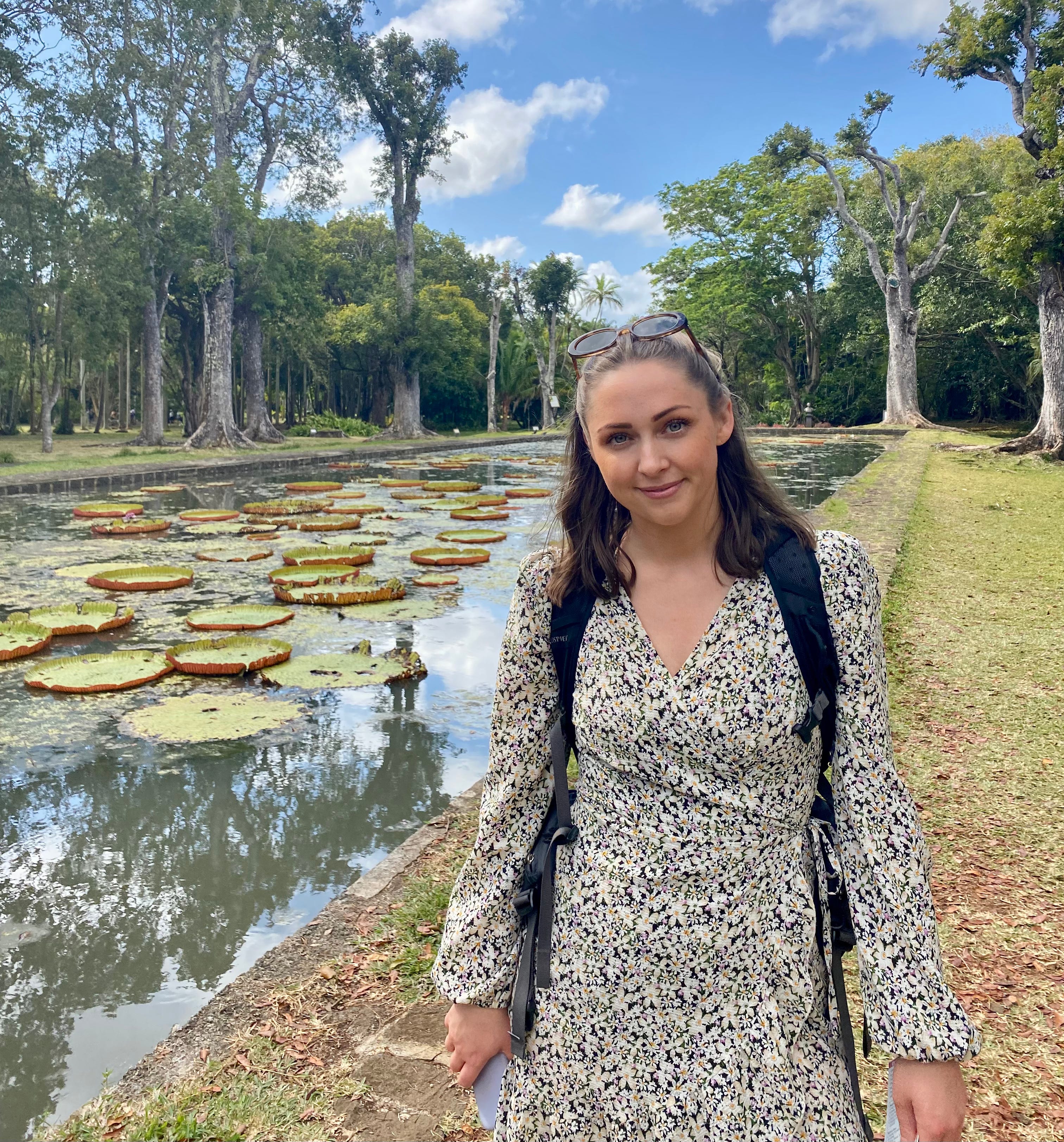
In 2022, 10 years after I began my lipedema journey, I had to take a break from lipedema. I needed to live, focus on myself, and forget about it for a moment. That year, I traveled the world in between my surgeries. This photo is from a trip to Mauritius. I know I have readers from Mauritius, so hi to you. I love your country.
It wasn’t until late 2024 that I truly began sharing more knowledge consistently. I started by writing for Norwegian women in Norwegian. Then, in late 2025, I expanded and began communicating internationally. Today, I have subscribers from all over the world, spanning 44 countries in total.
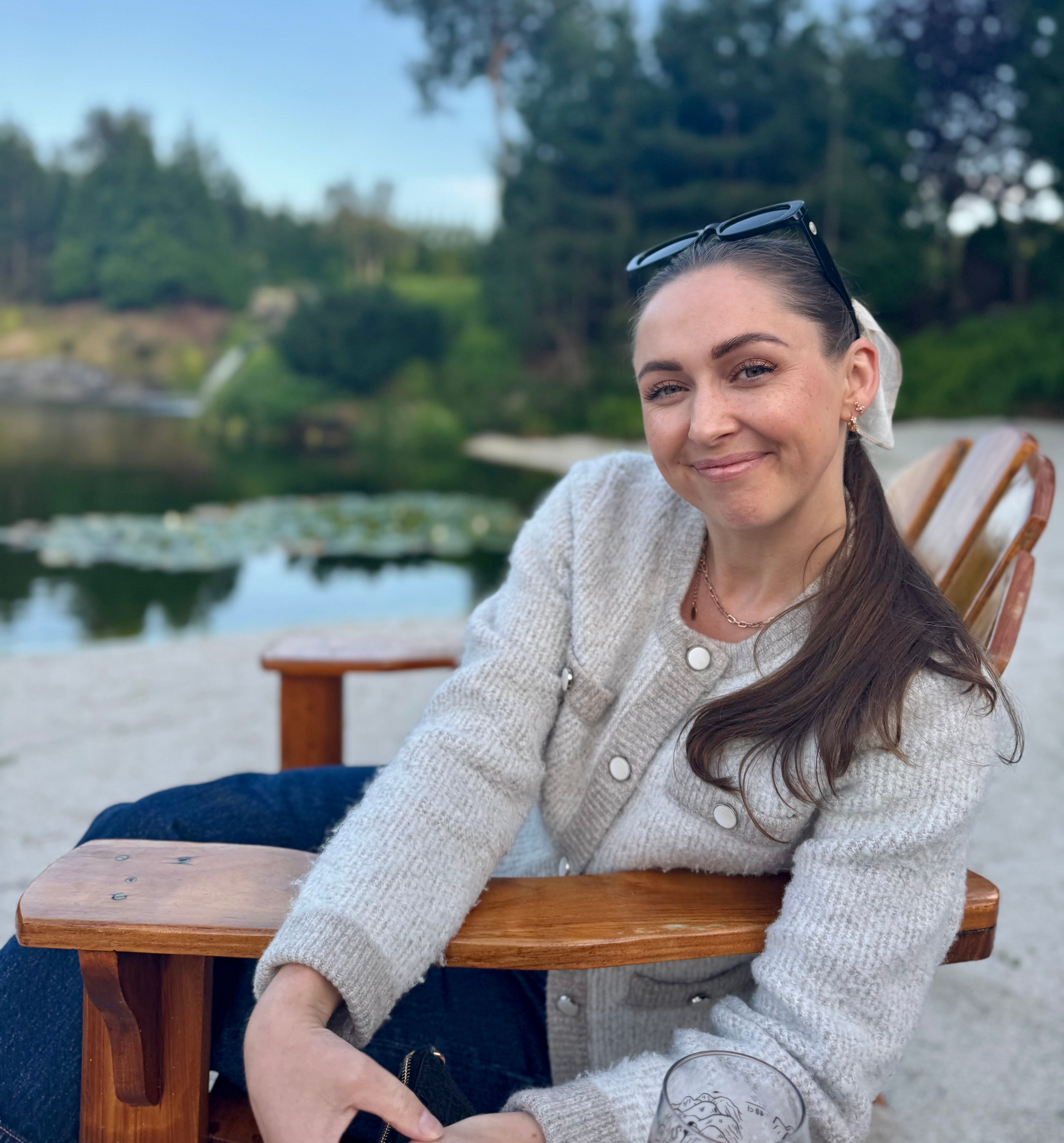
This is a big thank you to all of you who support my work and help make lipedema knowledge more accessible for all of us. I know what it’s like to navigate a lipedema journey on your own, and I want everyone to feel informed and to have a learning platform they can turn to as they move through their journey.
Takk til deg!! ❤️❤️