

One of the things I have been genuinely hopeful about for a long time is that surgery will not always be the only way we can directly treat lipedema tissue.
I say this as someone who has had lipedema surgery myself. My surgeries helped me enormously, particularly with pain, and I am very grateful that this treatment existed when I needed it. But I am also only in my mid-thirties. When I think about living with lipedema for another 40 or 50 years, I don’t expect that the management I have needed so far will necessarily be everything I need for the rest of my life.
Dercum’s disease (also known as Adiposis Dolorosa) is a rare chronic disorder characterized by multiple, painful growths of fatty tissue (lipomas) located just beneath the skin or deeper in the body.
I am actually being reminded of that at the moment. I am going through hormonal changes, and I can see changes in my body again. I know my body very well after living with lipedema for so many years, and something is changing. What I cannot tell from looking at myself is exactly what is changing. Is there more fluid in the tissue? Has the adipose tissue changed? Am I seeing actual progression? It would be very easy for me to look at my body and decide that I know the answer, but I don’t.

What reassures me is that the pain is still nowhere near what it was before my surgeries. At the same time, I cannot know what will happen as I get older. Lipedema has long been associated clinically with periods of hormonal change, although exactly how sex hormones contribute to its onset or progression is still not well understood. I still have many hormonal transitions ahead of me. That is one of the reasons I am so interested in what the treatment landscape might look like ten or twenty years from now.
Lipedema and Dercum’s disease both cause painful fat tissue, but they differ significantly in how the fat forms and where it spreads.
This is also why a small clinical trial in Dercum’s disease caught my attention this week.
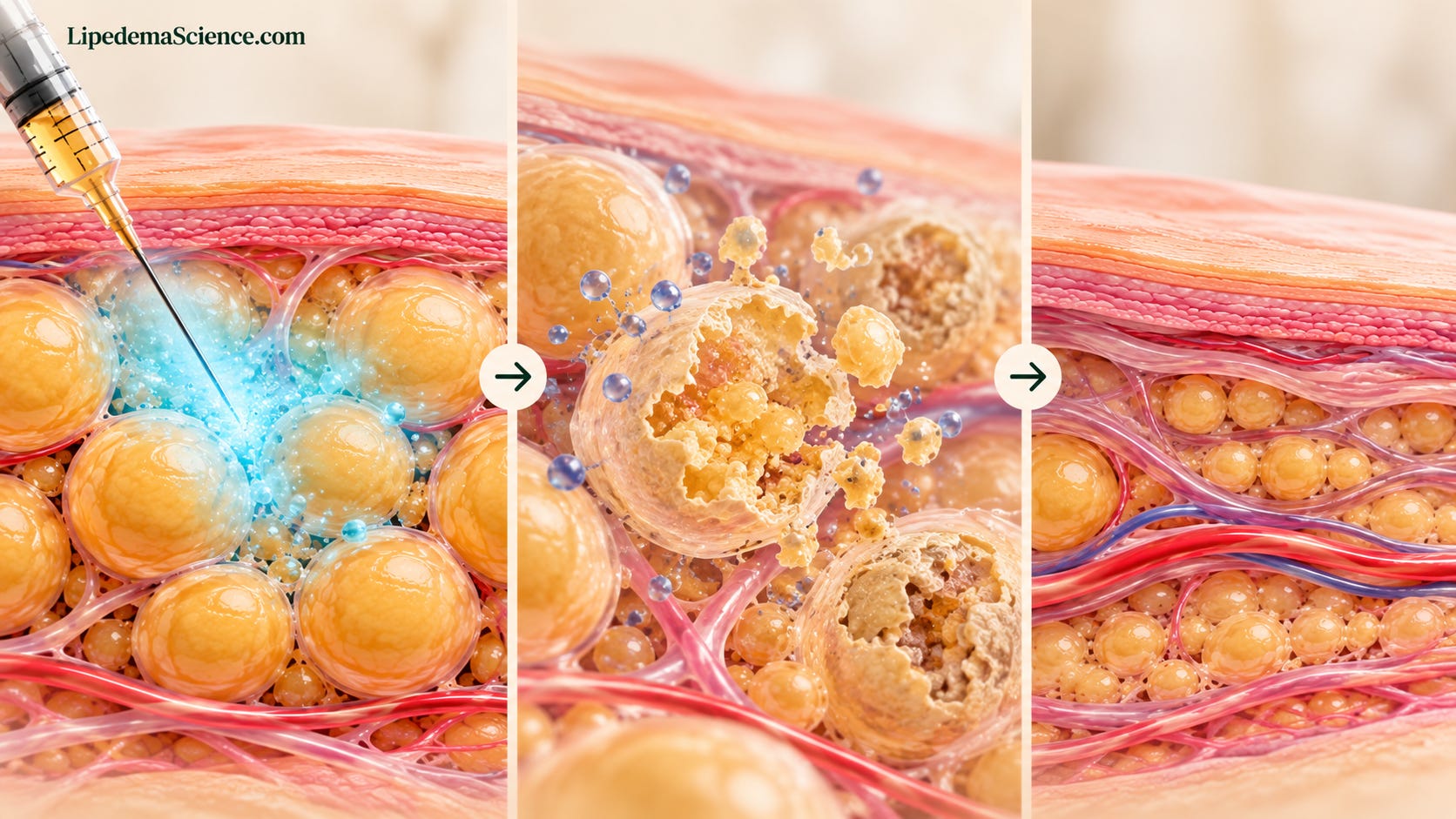
Not because we suddenly have a new treatment for lipedema. We absolutely do not. But because a drug designed to act directly on adipose tissue has produced interesting clinical results in another painful adipose-tissue disorder, and the company developing it has now explicitly said that it plans to investigate whether development for lipedema could be feasible.
The drug is called CBL-514.
A drug that targets adipocytes
CBL-514 is a locally injected small molecule developed by Caliway Biopharmaceuticals. It is designed to induce apoptosis, or programmed cell death, in adipocytes. This is conceptually very different from liposuction. Instead of physically removing adipose tissue, CBL-514 is injected into the target area to pharmacologically reduce adipose tissue.
The idea is not entirely new or limited to Dercum’s disease. CBL-514 has already been investigated in humans for localized subcutaneous fat reduction. A randomized Phase IIa study published in Aesthetic Surgery Journal in 2022 evaluated CBL-514 in abdominal subcutaneous fat, and subsequent clinical development has continued.
What makes the newer work particularly interesting to me is the move from treating ordinary localized subcutaneous fat to investigating a disorder in which adipose tissue itself is painful.
Lipedema causes a symmetrical, diffuse accumulation of fat that is confined strictly to the legs, hips, and arms, often sparing the hands and feet and creating a distinct disproportionate lower-body shape.
There has already been one peer-reviewed study of CBL-514 specifically in Dercum’s disease. Karen Louise Herbst and colleagues published a randomized Phase 2a study in JAAD International. Twelve adults with localized nodular Dercum’s disease received either 10 mg or 15 mg CBL-514 injections into painful lipomas. The study reported substantial reductions in lipoma volume, alongside reductions in pain that persisted through the eight-week follow-up.
It was an interesting early signal, but also a very small study. It was open-label, conducted at a single site, had no placebo group and followed participants for a relatively short period. The authors themselves identified the small sample, absence of a comparator and short follow-up as important limitations.
There is another detail I think readers should know. Caliway funded the study and manuscript writing and was involved in the study design, data collection, analysis, interpretation and writing. Three authors were Caliway employees and shareholders, while Herbst served as an investigator for the company. That does not make the results invalid, but it is relevant context when assessing the evidence.
The next study therefore matters because it introduced something the earlier Dercum’s study did not have: a placebo comparison.
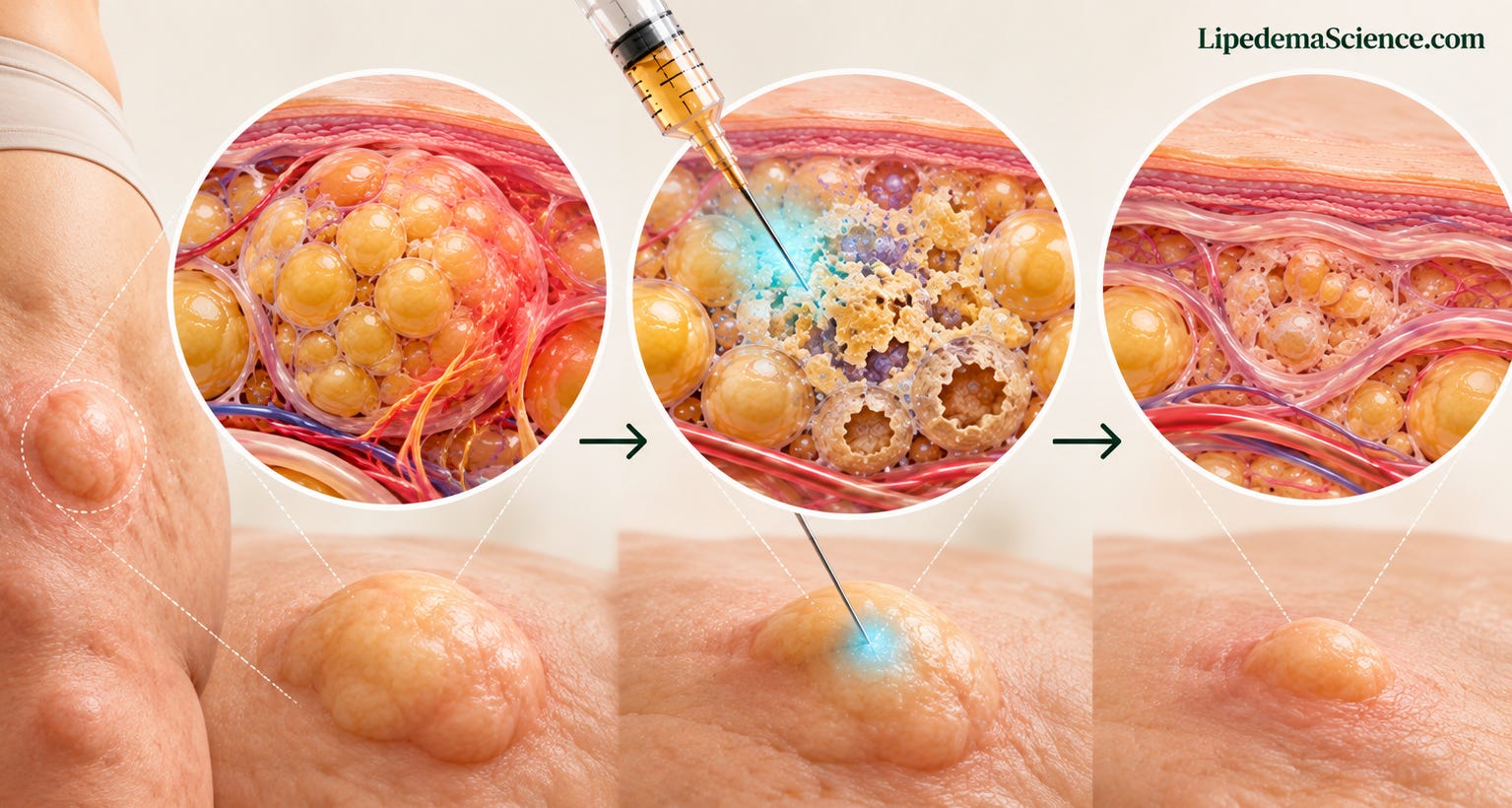
The new Phase 2 study
The newer trial is called CBL-0202DD and is registered as NCT06303570. It was designed as a randomized, single-blind, placebo-controlled Phase 2 study comparing CBL-514 with saline placebo in people with Dercum’s disease.
Participants were required to have between four and ten painful individual lipomas. They were randomized 1:1 to CBL-514 or placebo, administered once every four weeks for up to five treatments, with the amount injected into each lipoma determined by its size on ultrasound. The ClinicalTrials.gov record originally described an intended enrollment of approximately 25 participants.
The final enrollment was smaller. Secondary trial records now report 19 participants, while the ClinicalTrials.gov page accessible at the time of writing still displays the earlier protocol description of approximately 25 participants. I therefore think it is more transparent to state both rather than quietly presenting 19 as though that had always been the planned sample.
The study reached its primary completion in March 2026. Interestingly, ClinicalTrials.gov still lists the trial as “Active, not recruiting” and, importantly, no results have yet been posted to the registry.
That means the new results I am discussing here do not yet come from a peer-reviewed publication or a posted ClinicalTrials.gov results dataset. They come from Caliway’s September 21, 2026 announcement of the trial’s final statistical results. That distinction matters.
In contrast, Dercum’s disease is an extremely rare condition characterized by distinct, individual, painful fatty lumps called lipomas that can pop up anywhere on the body, most commonly scattered across the torso, upper arms, and upper legs.
What did they find?
The primary outcome was pain, and the result is what initially made me stop and read more.
According to Caliway, participants receiving CBL-514 experienced an average reduction in pain of 3.1 points by week 20, compared with a reduction of 1.9 points with placebo in the full-analysis population. The difference was statistically significant, with a reported p-value of 0.005. The company also reported statistically significant results in the per-protocol analysis.
This interests me because CBL-514 is not primarily being developed as an analgesic. It is designed to act on adipocytes and was injected directly into the affected lipomas. In the earlier peer-reviewed Dercum’s study, researchers had already observed both reductions in lipoma volume and reductions in pain after treatment.
But we need to be careful about what we infer from that association. The new study can tell us whether people receiving CBL-514 experienced a different change in pain from people receiving placebo. It cannot, by itself, tell us precisely why their pain changed. We should not turn adipocyte apoptosis followed by pain reduction into a complete theory of Dercum’s pain, and certainly not into a theory of lipedema pain.
Safety also needs context. Caliway reported no drug-related serious adverse events in the new Phase 2 study and described the most frequent treatment-emergent adverse events as mild-to-moderate local injection-site reactions.
The earlier peer-reviewed Dercum’s study gives us a little more detail about what local treatment can look like. All 12 participants experienced at least one treatment-related adverse event, mostly injection-site reactions. Erythema and swelling occurred in all participants, while injection-site pain was reported in 83.3%. Severe treatment-emergent adverse events occurred in four participants and two discontinued treatment, although the study reported no serious or fatal treatment-emergent adverse events.
That is useful context when we describe the treatment as “minimally invasive.” An injection is clearly different from surgery, but it does not mean the treatment is biologically trivial or free from meaningful local reactions.
While lipedema reshapes entire limbs with uniform fat buildup, Dercum’s disease manifests as localized, tender nodules beneath the skin.
Dercum’s disease is not lipedema
This is where I think the science becomes both exciting and frustrating.
Dercum’s disease and lipedema can both involve painful adipose tissue, but that does not mean they have the same underlying biology or that a treatment for one will work for the other. The CBL-514 studies have focused on individual, identifiable lipomas in people with localized nodular Dercum’s disease. Lipedema usually involves much larger and more diffuse areas of subcutaneous tissue.
That difference alone raises a long list of questions.
If CBL-514 were tested in lipedema, what exactly would be injected? How large an area could realistically be treated? How much drug would be required for a thigh compared with a small lipoma? Would repeated treatment of large areas be safe? Would reducing adipocyte number improve pain, or would other components of lipedema tissue continue to generate symptoms? What would happen to connective tissue, extracellular matrix, nerves and microvasculature as adipose tissue changed? Would any improvement last?
We simply do not know.
This is why I would never describe the Dercum’s results as evidence that CBL-514 treats lipedema.
To distinguish between them, look at the size, shape, and location of the lump. A lipedema nodule is very small and feels diffuse, like a grain of rice or small pebble embedded within a symmetrical buildup of fat restricted to the legs or arms.
Caliway explicitly stated that it plans to collaborate with clinical experts to evaluate the feasibility and clinical-development strategy of CBL-514 for lipedema.
I find that genuinely interesting.
It does not mean a lipedema trial has begun. It does not mean one has been approved. It does not even guarantee that Caliway will ultimately decide that a lipedema program is feasible. At this stage, it is a drug-development signal rather than lipedema evidence.
But it is a signal I think is worth following.
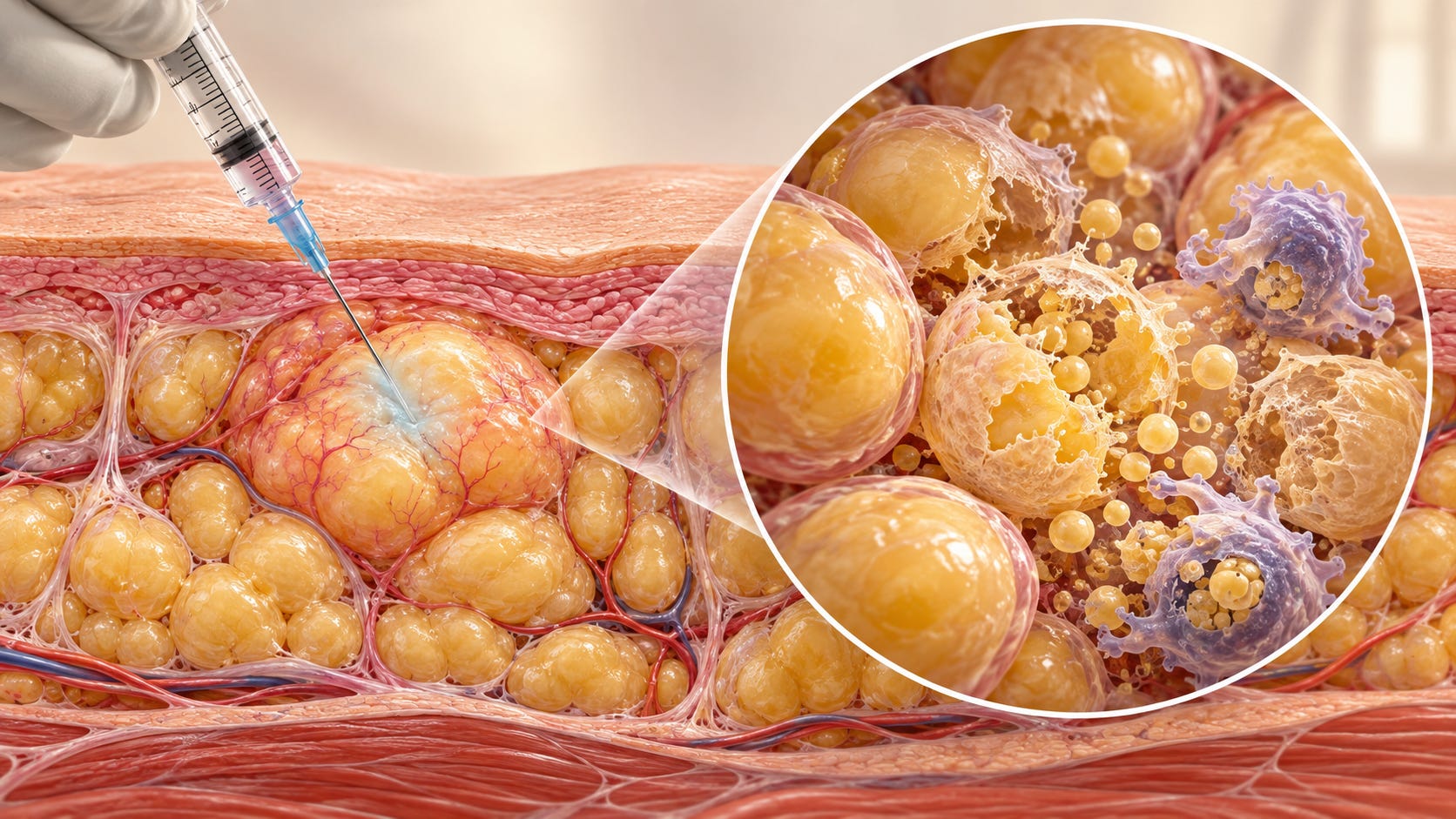
What gives me hope is bigger than CBL-514
Perhaps CBL-514 will never become a lipedema treatment.
The biology may not translate. The amount of tissue involved in lipedema may make this particular approach impractical. Safety may become more complicated when moving from individual lipomas to large anatomical regions. Or perhaps a future trial will simply show that reducing adipocytes in this way does not meaningfully change lipedema symptoms.
I am comfortable with not knowing that yet.
What gives me hope is not the belief that this particular drug will solve lipedema. It is seeing the range of questions medicine is beginning to ask about adipose tissue and how it might be treated.
When I was diagnosed, the treatment landscape felt relatively narrow. Today we know considerably more about lipedema, even though there are still enormous gaps in our understanding. Researchers are studying genetics, adipose-tissue biology, microvascular changes, lymphatic function, extracellular matrix, inflammation, metabolism and pain processing. At the same time, technologies developed outside the lipedema field may eventually become relevant to it.
CBL-514 is one example of why I think we should pay attention to research beyond papers that have “lipedema” in the title.

It has already moved beyond a laboratory hypothesis. It has been tested in human subcutaneous adipose tissue, then in painful Dercum’s lipomas, and now in a placebo-controlled Phase 2 Dercum’s disease trial. The peer-reviewed Phase 2a Dercum’s study reported median lipoma-volume reductions of approximately 45–59% at follow-up, depending on dose and time point, alongside reductions in pain.
None of this proves anything about lipedema. But it does demonstrate that pharmacologically modifying adipose tissue is no longer merely a theoretical idea.
For me personally, that changes how I think about my own future.
In contrast, a Dercum’s disease lump is a distinct, individual fatty tumor (lipoma) with clear, defined edges that can grow from the size of a pearl to a fist and is frequently found on the torso, back, or abdomen - areas lipedema does not affect.
I know I may need more lipedema management during my lifetime. I hope I don’t need another major intervention, but I also don’t think it would be realistic for me to assume that my body in my mid-thirties will behave exactly the same way after decades of hormonal change.
The changes I am seeing in my body at the moment make that especially tangible. I try not to panic when I notice them. My pain is still so much better than it was before surgery, and I don’t actually know whether what I am seeing represents progression. But I would be lying if I said I never wonder what my lipedema will look like when I am 45, 55 or 65.
What I am beginning to realize is that I also don’t know what lipedema treatment will look like when I am those ages.
That uncertainty can go both ways.
There may be changes in my body that I cannot predict, but there may also be treatments that I cannot predict.
I find a lot of hope in that.
Not the kind of hope that turns every cell experiment, supplement or preliminary result into a breakthrough. I actually think that kind of hype makes it harder for people with lipedema to understand where the science really stands. I mean something much more patient: accepting that the evidence is incomplete while remaining curious about where it is going.
CBL-514 may eventually become part of that story. It may not.
Either result would teach us something.
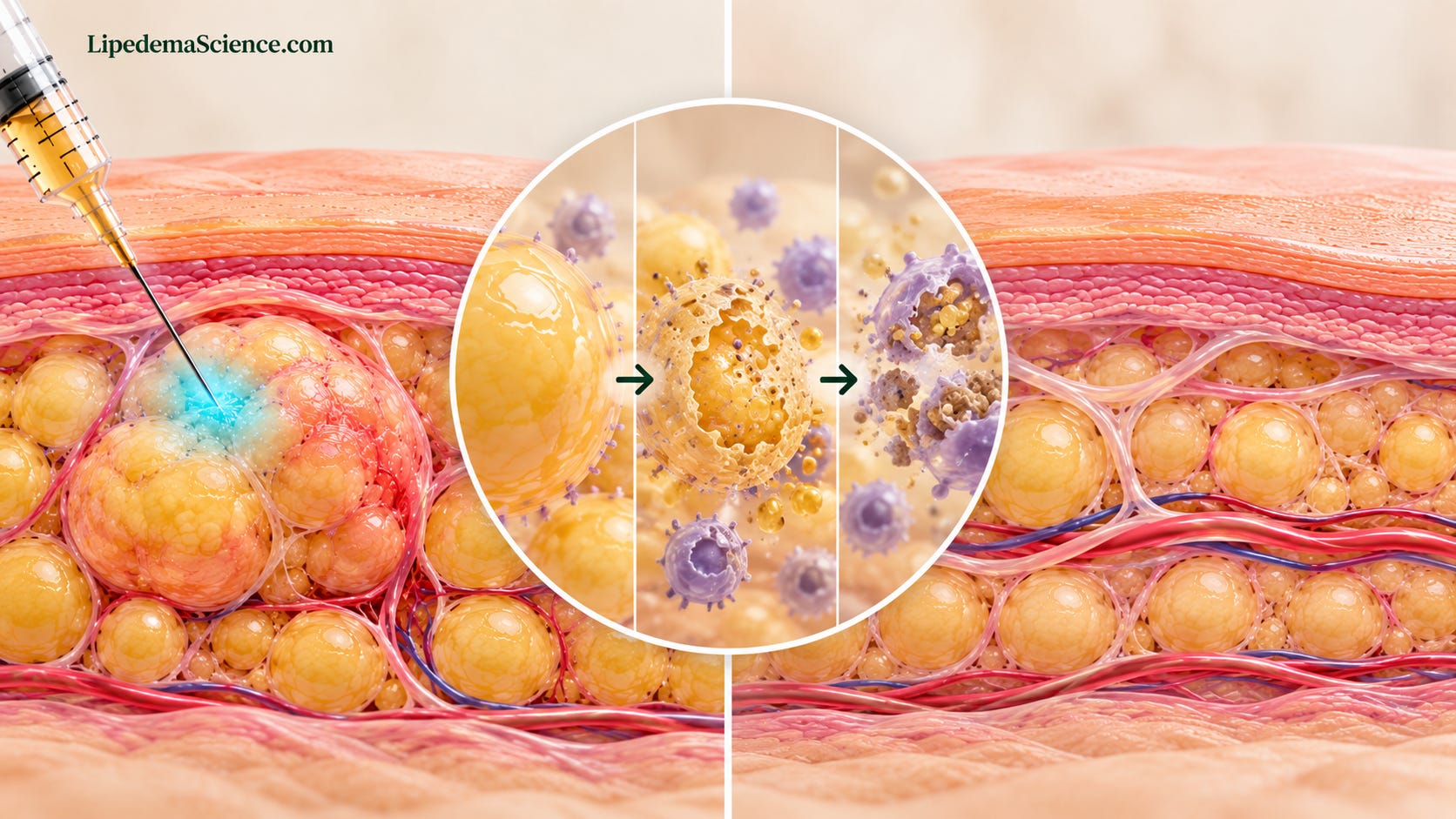
Why I want us to keep learning together
This is also one of the reasons LipedemaScience has become so important to me.
A surprising amount of what I research now begins with one of you asking me a question. Sometimes you send me a study. Sometimes you ask about something you have noticed in your own body. Sometimes you have heard a claim repeatedly in the lipedema community and want to know whether anyone has actually studied it.
CBL-514 is a small-molecule injectable drug candidate, not a peptide. Commercial products sold online under the same name should not be assumed to be identical to the formulation used in clinical trials.
Those questions often take me into areas of research I would not otherwise have looked at.
I am still only one person, and there is an extraordinary amount to follow. Reading papers, checking trial registries, tracing claims back to their original sources and trying to understand what a result actually means takes time. Doing it alone can also be lonely. The community around LipedemaScience is therefore not separate from this work. Increasingly, it helps shape it.
I hope we can continue doing that together.
I want us to remain interested when something promising appears without needing to turn it immediately into a treatment. I want us to be able to say, this is interesting, but we don’t know yet. And I want us to keep looking outside the boundaries of what is already established, because some of the treatments that may matter to us in the future probably do not exist as lipedema treatments today.
If Caliway progresses from considering lipedema to actually registering a clinical trial, I will follow it closely. I will want to know which patients they include, what tissue they target, how they approach dosing over large areas, what outcomes they choose, how they assess safety and, eventually, whether people with lipedema actually benefit.
Furthermore, Dercum’s lumps often cause a sharp, spontaneous, nerve-like burning pain, whereas lipedema tissue typically causes a heavy, deep ache when pressed.What changed on September 21, however, is that the connection to lipedema is no longer something we have to invent ourselves.Until then, CBL-514 remains a treatment being studied in Dercum’s disease, not lipedema.
But I think there is a larger message here that is worth holding on to. The treatment options we have today are not necessarily the treatment options we will have for the rest of our lives.
For someone in her mid-thirties who knows she may be managing lipedema for decades to come, I find that genuinely hopeful.
Efficacy and safety of CBL-514 for Dercum disease lipomas: A randomized phase 2a study (DOI: 10.1016/j.jdin.2025.11.022)
Efficacy and Safety of CBL-514 Injection for Reduction of Abdominal Subcutaneous Fat: A Phase IIa, Randomized, Open-Label Study (DOI: 10.1093/asj/sjac166)
Efficacy and Safety of CBL-514 Injection for Abdominal Subcutaneous Fat Reduction: A Randomized, Placebo-Controlled Phase 2 Study (DOI: 10.1093/asj/sjae282)
A Single-Blind, Placebo-Controlled, Randomized Phase 2 Study to Evaluate the Efficacy and Safety of CBL-514 in Participants With Dercum’s Disease Lipomas (ClinicalTrials.gov: NCT06303570)
CBL-514 CBL-0202DD Phase 2 Study Met Primary Endpoint (Caliway Biopharmaceuticals, September 21, 2026; no DOI)
I read it is currently in phase 3 global clinical trials for body-contouring and FDA approved for that purpose in the trial. The safety profile appears to be very good in comparison to surgery for Lipedema. Many of us are seniors and self-pay surgeries are out of reach. Medicare does not cover surgeries for us. So please follow this closely Carina because this may help so many of us that are losing our mobility. I regained 50 lbs when I hit menopause. Nothing has worked for me. Thank you for being our advocate!
I have a sibling with Lipedema AND Dercum’s lipomas on her scalp. Our father had them also. For this reason I think Lipedema and Dercums are one in the same.
Very interesting. I do think this is very positive for those who do not want to go the surgery route, but who are ok with drugs as an option.
Here in The States however, and any place where there is public healthcare, it gives me pause for those of us who do not want drug intervention- will this be a potential push to drugs being a required first step in "treatment" before surgery is considered. It is sad when insurance regulates treatments, rending this as not an option, but potentially a requirement.
I am hoping lipedema (and other issues) will have OPTIONS rather than requirements for insurable treatments. Drug route, Surgery route, Conservative route with options to change course if the PATIENT wants to, not if insurance requires it!
For many, this would be the treatment they are looking for- a drug that fixes it all! For some of us, we will stick with drug-free options...as long as options exists.