

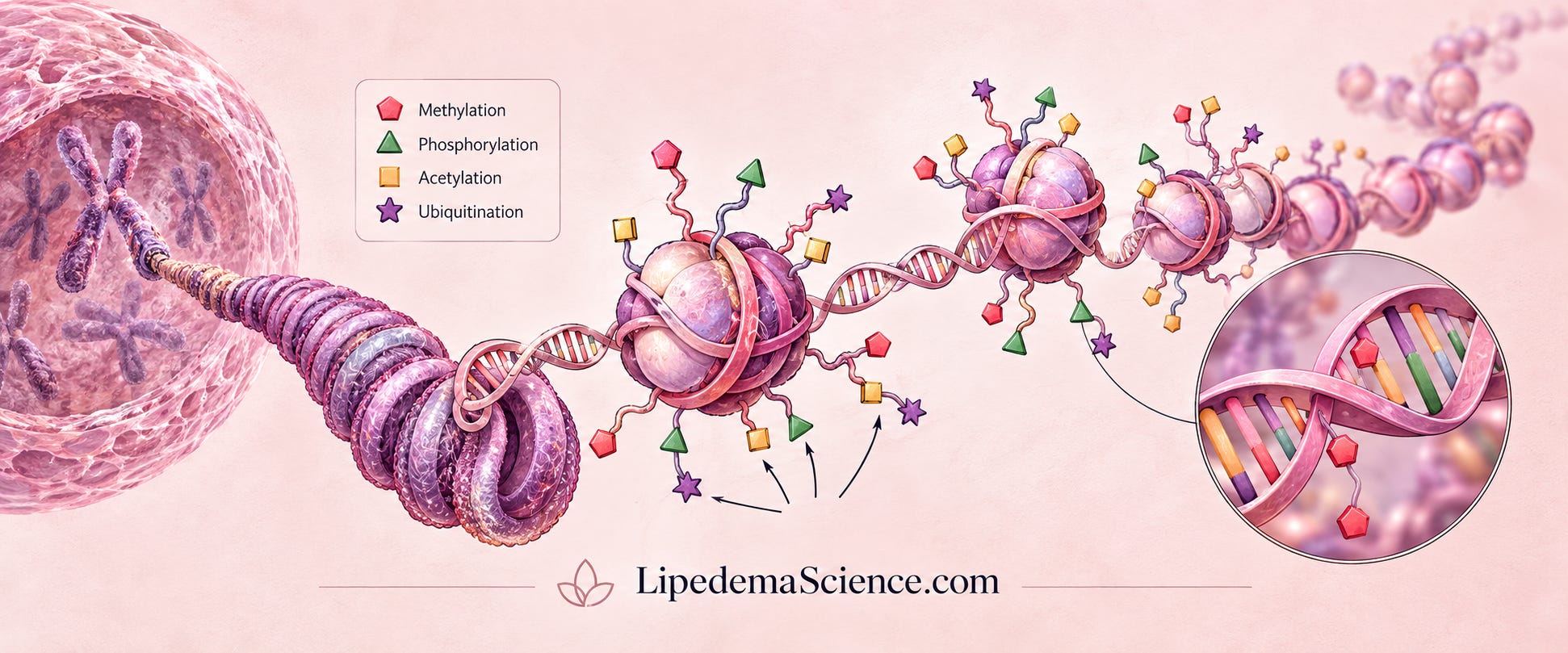
We know that lipedema often appears or becomes more noticeable during major hormonal changes, particularly puberty, pregnancy and menopause. But we still don’t fully understand why. I believe epigenetics is one of the most interesting areas to investigate.
To understand why, we first need to understand what epigenetics actually means.
And fortunately, the basic idea is quite simple.
Imagine your DNA as an enormous instruction book containing all the information your cells need to function. Almost every cell in your body contains the same book, but different cells read different instructions. A fat cell needs different instructions from a muscle cell, even though they contain essentially the same DNA.
Epigenetics helps control which instructions are used. You can imagine small switches that make certain genes more or less active, without changing the DNA itself. These switches are influenced by complex biological processes, including hormonal signals and environmental conditions.
What makes this particularly interesting is that some epigenetic changes can persist over time. In other words, a cell may continue behaving differently even after the original signal has disappeared.
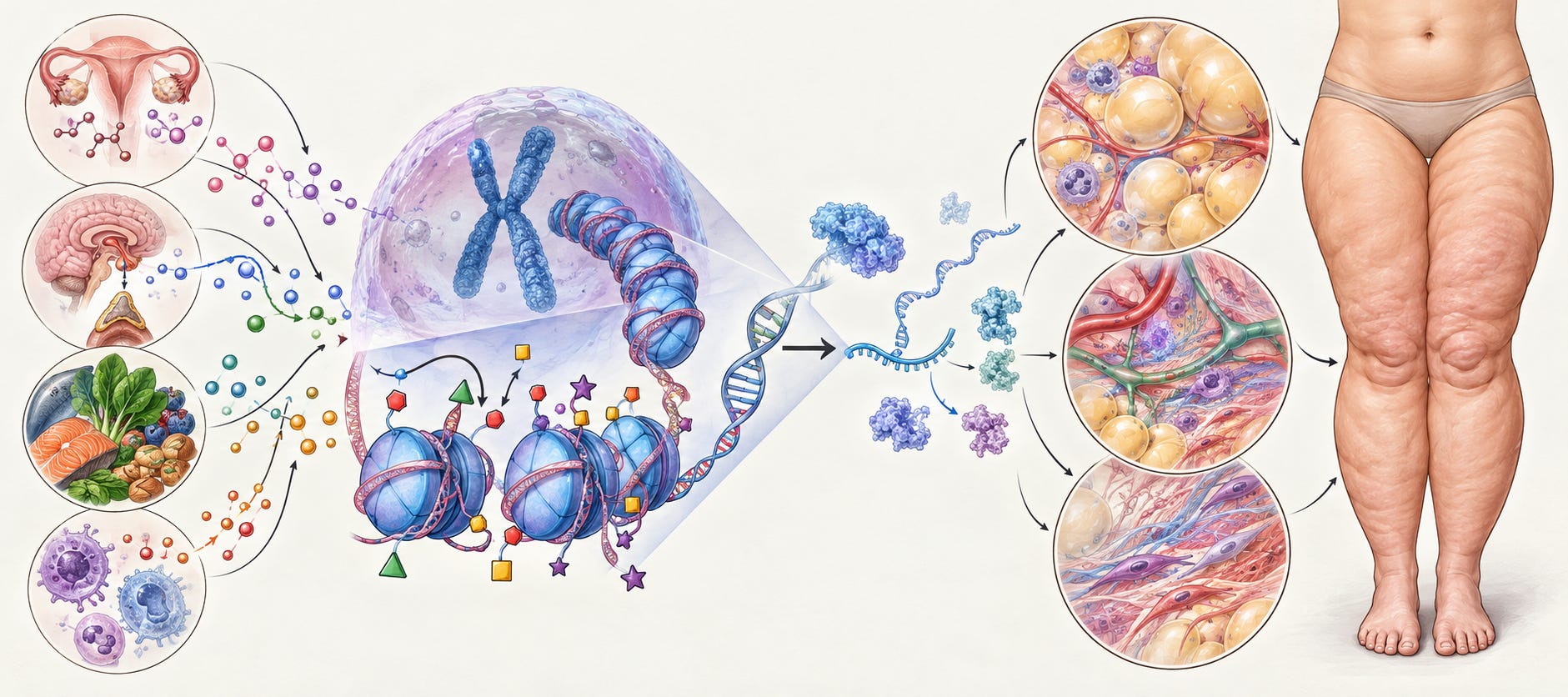
What might this mean for lipedema?
We already have evidence that genetics contribute to lipedema, and many women report that their symptoms began around puberty, pregnancy or menopause. These observations make hormonal regulation an important part of understanding the condition.
But genetics and hormones may not tell the entire story.
My hypothesis is that some women may inherit a predisposition to lipedema, while epigenetic changes could contribute to when and how that predisposition becomes noticeable.
