

Silje lives with lipedema. She is a mother of four daughters, a year round cold water swimmer, and a woman who refuses to disappear into pain.
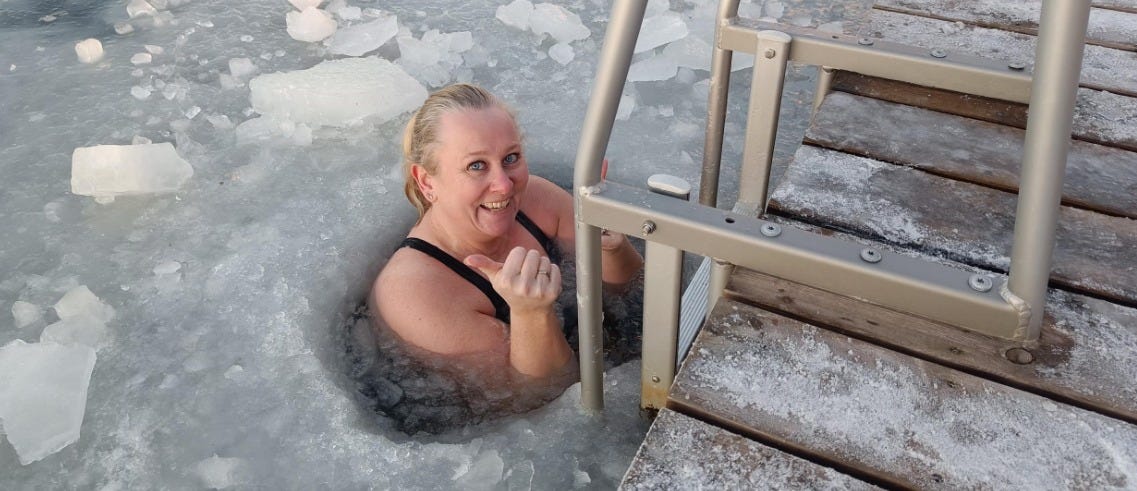
When Silje talks about herself, she does not start with illness. She starts with momentum. With humour. With responsibility. For most of her adult life, she was the one who kept going. The one who did not stop. The one who believed that giving up was not an option.
“I have always been a woman with drive, good spirits, and a strong will. I never gave up. I pushed myself so that my family and friends would be okay. I was not good at taking care of myself. I believed that if you stopped, you were weak. Until my body stopped me.”
That moment changed everything. Not because Silje lost her strength, but because she was forced to redirect it. Illness taught her something she had never allowed herself before. The right to take up space.
“After I became sick, I have become more ‘selfish’. I see how important alone time is. I need refilling for my body to function and feel well. I still give a lot of love and joy to others, but only to those who also give me something back. The greatest joy you can have is making other people happy.”
When the body no longer follows the rules
Silje first noticed that something was wrong after her fourth pregnancy. She lost weight quickly. She returned to work. She pushed through. And then, slowly, her body began to revolt.
“One to two years after maternity leave, I started having severe pain. I lost sensation in my body, especially in my arms and shoulders. My legs burned. It hurt when my husband touched me. It hurt at work, on walks, everywhere.”
The medical journey that followed was long and fragmented. She was referred to rheumatology. She went through extensive testing. Results came back. Answers did not.
“It never stopped. Finally, I found a physiotherapist who gave me the lipedema diagnosis. A compression device was ordered. At the same time, because I kept losing sensation in my arms, I was sent to MRI and CT. That is when they found thyroid cancer.”
Everything else was put on hold. For a year, Silje went through surgery, radioactive treatment, and recovery. Lipedema was pushed aside. The system had no capacity to hold more than one diagnosis at a time.
Her GP at the time had no formal knowledge of lipedema. Still, Silje felt understood.
“She knew me. She knew how rarely I had been sick before. My physiotherapist was amazing, but she became sick herself during my compression measurements. I never received the garments.”
Pain, fatigue, and the refusal to surrender
Living with lipedema, for Silje, is defined by pain that does not switch off.
“The worst part is the pain. The pain that causes fatigue. I love hiking in the mountains with my children and my husband. Now it feels impossible. The exhaustion never ends. The battery never recharges. The pain is deep, inside the bone marrow. It never stops. But I do not give up.”

Fatigue is not just tiredness. It is a system failure. And yet, Silje continues to search for ways to live inside her body rather than fight it.
Speaking out because silence costs too much
Silje is open about lipedema on social media. Not because it is easy, but because silence is more damaging.
“There is so little information, in one of the richest countries in the world. And lipedema affects us all so differently.”
The response from other women has confirmed what she already knew. Many recognise themselves in her story. Many have never been told that what they experience has a name.
Ice water as medicine
Cold water swimming entered Silje’s life during a year of sick leave. It was suggested by a new GP. Not as a miracle cure. As an experiment.
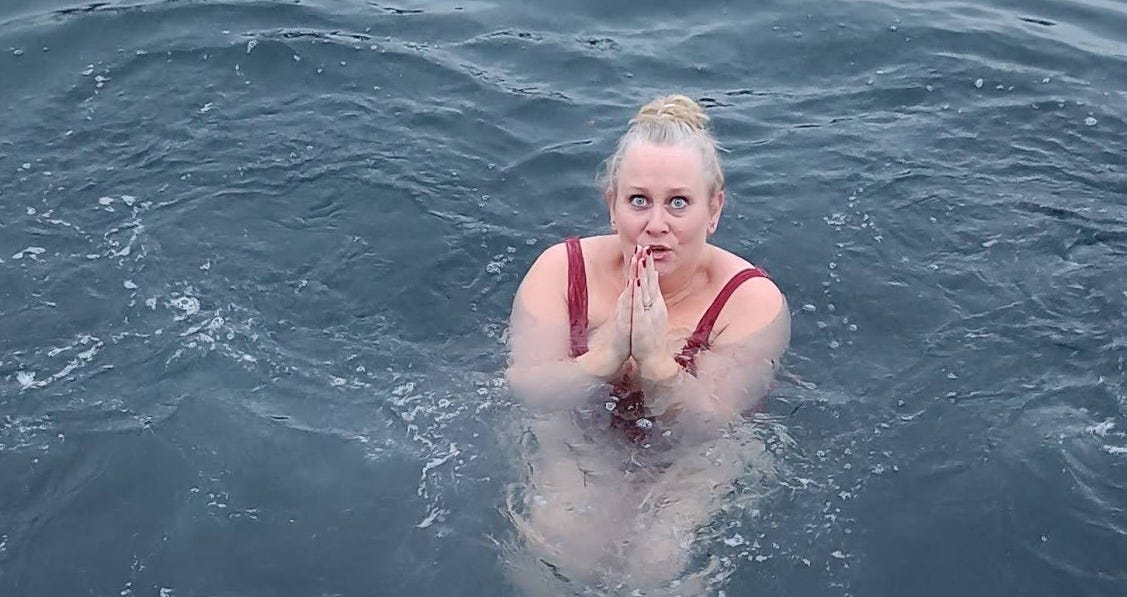
“I started on January 3rd. Three degrees in the sea. Ice cold. But the feeling was unbelievable. This became my thing.”
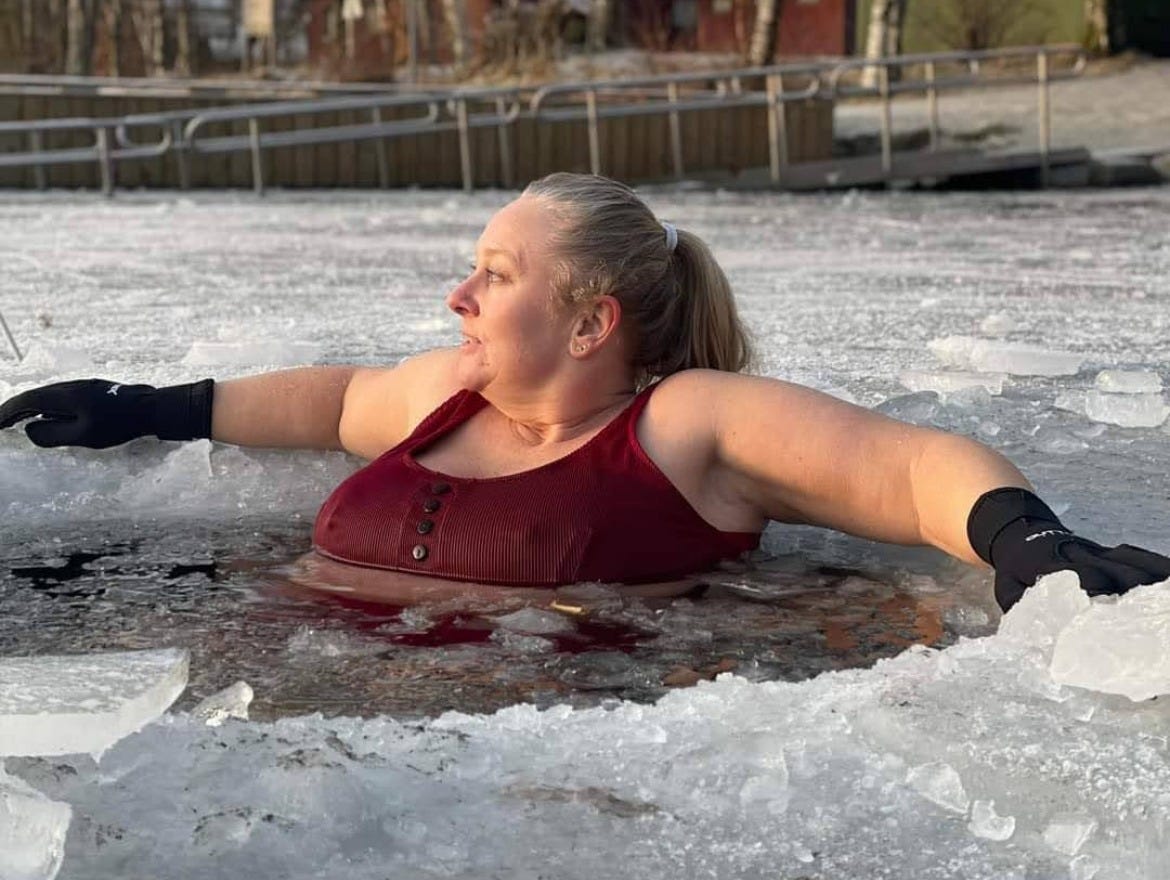
Ice bathing is now a cornerstone of her daily life. Not as performance. As regulation.
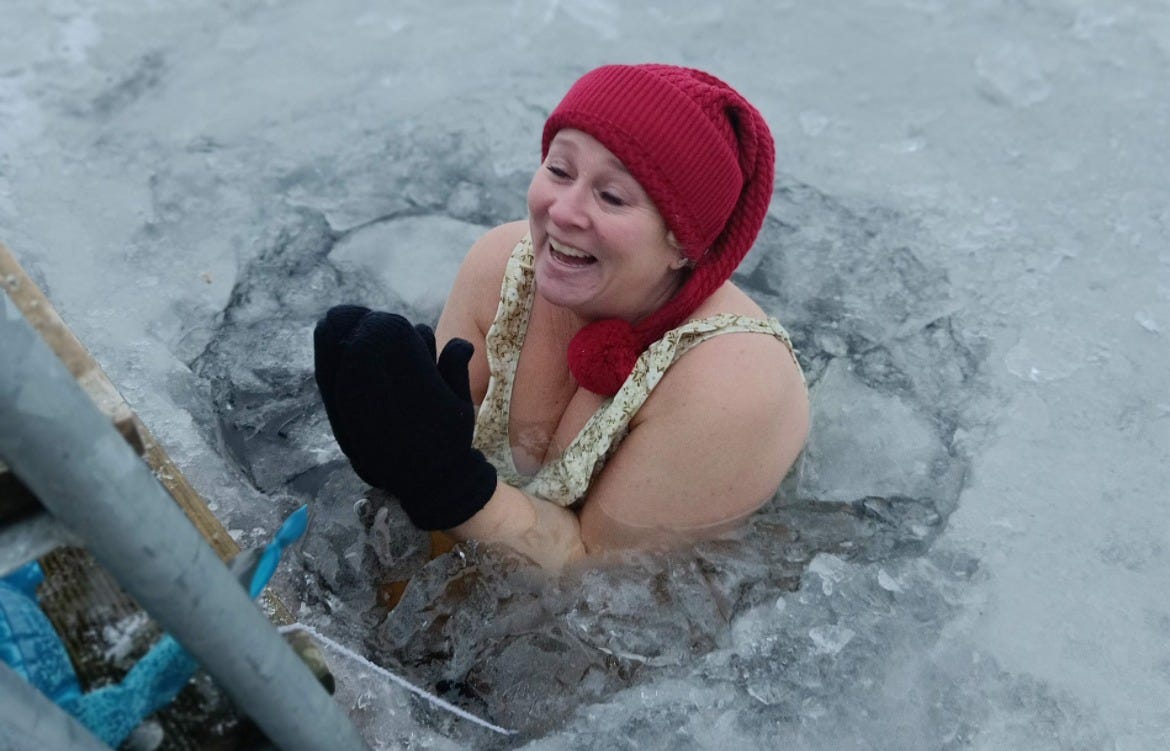
“I can go down with heavy legs, stress, and pain. When I enter the sea, something happens. Afterward, the pain is gone. There is lightness in my body. I feel like a new person. More energy. When the water is under five degrees, I feel the release immediately. It is strange. And fantastic.”
For Silje, the effect is both physical and mental. She stays submerged, shoulders included. She breathes. Muscles release. Stress dissolves.
“I find a calm I cannot describe. The breath goes deep. The body lets go.”
Ice bathing has changed how she relates to her illness. And to her body.
“My body is allowed to be the way it is. This is not my fault. I do the best I can with what I have. After ice bathing, I have less pain and less swelling. This is something I will do for the rest of my life.”
The garden as quiet resistance
Another sanctuary exists outside the sea. Silje’s garden.
Her flowers are not just decoration. They are grounding.
“My garden gives me memories and energy. A calm in my head. It is designed to be easy. I do not have to crawl on my knees. It is my safe place, apart from the sea.”
She talks about observing flowers, leaves, insects. About beauty without productivity.
“Just studying how beautiful each flower is. Each leaf. The life of insects that thrive in a blooming garden. That is gold.”
Choosing people who give life back
One of the most important turning points in Silje’s journey has been learning to curate her surroundings.
“I have become very good at clearing out my life. I surround myself with people who give energy, memories, and laughter. Negative environments, I stay away from them. Enough is enough.”
This, too, is treatment.
What the system still does not understand
If Silje could speak directly to decision makers, her message would be simple and uncompromising.
“Everyone deserves help. Everyone deserves to be believed. Treatment should not depend on your wallet. Health professionals need to actually learn about lipedema and lymphedema. Stop telling us to just lose weight. We need a diagnostic code. There are many types. No single solution. But many ways to live a good life.”
Right now, what would make daily life easier is not complicated.
“Access. Compression. Appointments with skilled professionals. Knowledgeable healthcare workers. It should not be a fight to get help.”
Hope, for herself and her daughters
What gives Silje hope is collective effort.
“That we keep working to be believed. That we spread information.”
As a mother of four girls, that hope carries weight.
To other women with lipedema
Her advice is direct. And hard-earned.
“Do not talk yourself down. Do not bury yourself in the dirt. Find your small lights. The things that work for you. Find your own way to a good life.”
The interview will be open to all readers.
Sharing, as Silje says, is caring.